


What is Canthaxanthin Color?
Canthaxanthin Color is a carotenoid-based coloring agent that is used in industrially prepared products to provide a uniform look of red, orange-red, and red in formulated products where appearance and consistency of a process are highly valued. It is provided as a standardized color solution, as opposed to a consumer-facing additive, which is designed to fulfill the technical requirements of large-scale production, with predictable tinting power, good dispersibility, and a high degree of compatibility with diverse carriers and formulation systems. In perspective, it can be appreciated in respect to its marketing statement as well as the functional response in product differentiation, which allows the manufacturers to fine-tune the visual quality without modifying the underlying formulations. Its specified chemical identity, defined range of specification, as well as its availability in various formats, facilitate the effective quality control, regulatory conformity, and cross-market commercialization. It continues to be a viable and flexible color choice in professional applications as the world supply chains require greater traceability, transparency in formulation, and stability of performance in standardized manufacturing processes that require innovation-capable color solutions to be scalable.

COA
| Test Item | Specification | Result | Method / Reference |
| Identification | Orange to red-orange powder, matches reference standard | Conforms | UV/Vis / HPLC |
| Assay (Canthaxanthin) | 10% (on dry basis) | 10.20% | HPLC |
| Loss on Drying | ≤ 5% | 3.80% | 105°C, 3 h |
| Residue on Ignition | ≤ 1% | 0.50% | 550°C, 3 h |
| Lead (Pb) | ≤ 2 ppm | 1.5 ppm | ICP-MS / AAS |
| Cadmium (Cd) | ≤ 1 ppm | 0.5 ppm | ICP-MS / AAS |
| Mercury (Hg) | ≤ 0.1 ppm | <0.1 ppm | ICP-MS / AAS |
| Arsenic (As) | ≤ 3 ppm | 1.2 ppm | ICP-MS / AAS |
| Microbial Limit | Total Plate Count ≤ 1000 CFU/g | 450 CFU/g | ISO 21528 / USP <61> |
| Yeast & Mold ≤ 100 CFU/g | 25 CFU/g | ISO 21527 | |
| E. coli: Not detected | ND | ISO 9308 | |
| Salmonella: Not detected | ND | ISO 6579 | |
| Particle Size | 80% through 100 mesh | Conforms | Sieving / Laser diffraction |
| Color Value (APHA / Lovibond) | 1000 – 2000 APHA or equivalent | 1500 APHA | Visual / Spectrophotometry |
Are you interested in our products? Just leave a message on this page or Contact Us Directly to get free samples and more professional support!
Features
A clear carotenoid molecular structure with conjugated double bonds contributes to Coranthaxanthin Powder; it gives the color its high chromatic intensity and, as a result, enables formulators to obtain bright red-orange hues with comparatively small levels of inclusion. It is also lipophilic and is well soluble in oils and fats and insoluble in water, which is a factor used in carrier choice and dispersion strategies in formulation. With respect to chemical stability, Canthaxanthin Powder is stable in controlled heat and pH conditions to allow the reliable processing during typical industrial manufacturing processes, and the tolerance of oxygen and light can be addressed by encapsulation, antioxidant systems, or protective packaging. The homogenous size distribution of the pigment and the profile of uniform purity allow it to be used in the same dosing and color consistency in a batch, which is important in scale-up and quality control. All these physical and chemical properties render it a technologically viable colorant to formulators and give them clear parameters on solubility, stability control, and optimization of its use in professional formulation settings.
How to Store Properly?
1. Controlled Temperature Environment
Keep the product under cool and stable temperature environment to reduce thermal stress on the pigment to help maintain the color intensity over time.
2. Protection From Light Exposure
The container should not be in contact with a bright light or intense artificial light because the effects of prolonged light contact might slowly diminish chromatic performance.
3. Sealed Original Packaging
Keep the product in its unopened original packaging as provided by our company, that is, to ensure that it is limited in contact with the air and other contaminants.
4. Dry Storage Conditions
When using storage facilities, make sure that the area is dry because too much moisture can affect handling properties or result in dispersion when further processing is done.
5. Limited Oxygen Contact After Opening
When containers have been opened, reseal them immediately and firmly to minimize exposure to oxygen to enhance stability in the long term in the event of multiple use.
6. Dedicated Storage Area
E161g Canthaxanthin should not be kept in close proximity with highly odorous or reactive substances, and the physical integrity and quality of the product must not be affected before formulation.

Recommended Usage
Manufacturing Canthaxanthin color is typically formulated as a functional coloring ingredient to be incorporated with process-specific handling to fit the desired dosage form, such that in capsule production it is typically pre-blended with an appropriate lipid carrier or flow aid to allow uniform distribution and reliably consistent fill weight, and in tablet formulation is typically added during the premix step with excipients that can support a uniform distribution of a uniform color, and not interfere with mechanical performance; in liquid systems, it is preferably added In all forms, it is suggested that gradual increment, sufficient shear regulation, and canthaxanthin confirmation by pilot-scale testing are necessary to match the color intensity with the target formulation, and to sustain batch-to-batch uniformity, it is a technically feasible ingredient in uniform manufacturing processes of the standard industry.
Certifications
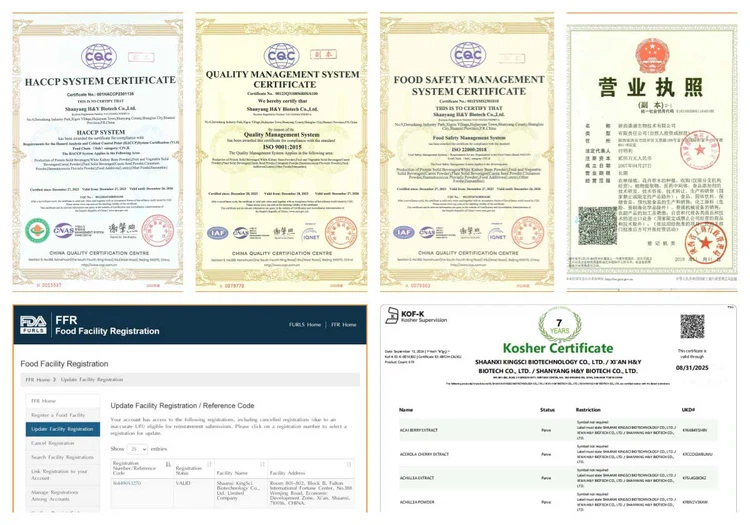
American warehouse

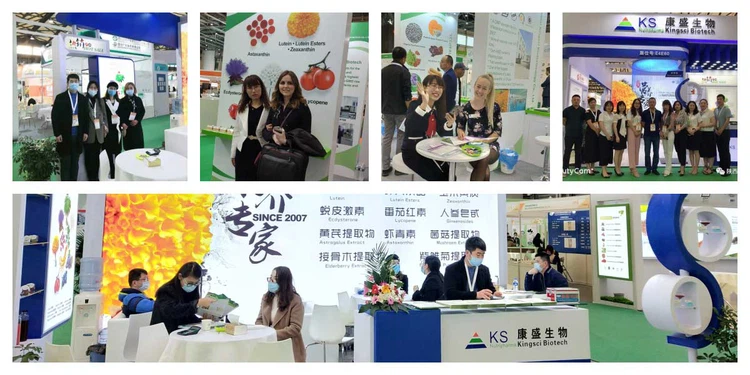
Exhibitions
Hot Tags: canthaxanthin color, China, manufacturers, suppliers, factory, wholesale, price, pricelist, quotation, bulk, in stock, KOSHER, ISO, HACCP


