



What is Zeaxanthin Oil?
Marigold-Derived Zeaxanthin for Oil-Based Formulations
Zeaxanthin Oil is an orange suspension oil, a concentrated carotenoid ingredient from the Tagetes erecta marigold flower. It comes in 10% and 20% zeaxanthin; it is designed for manufacturers who require zeaxanthin in oil-filled, lipid-based, or liquid nutritional formulations.

Product Snapshot
|
Item |
Specification |
|
Ingredient |
Zeaxanthin Oil |
|
Botanical Source |
Tagetes erecta L. |
|
Plant Part |
Flower |
|
Zeaxanthin |
10% / 20% |
|
Test Method |
HPLC |
|
Appearance |
Orange suspension oil |
|
Physical Form |
Oil suspension |
|
MOQ |
1 kg |
|
Sample |
Available |
An Oil-Phase Approach to Zeaxanthin
The decision of which oil format to use is not an easy one for manufacturers. It determines the way in which the ingredient is incorporated in the formulation.
Zeaxanthin Oil provides the carotenoid to the oil phase, enabling formulation scientists to formulate directly in the systems they already know and like that are compatible with the oil.
This can make the development process easier, with the final product being an oil fill or liquid lipid system. It also shifts the emphasis on the key technical issues, from the primary emphasis on powder dispersion and dry blending to the consideration of carrier compatibility, uniformity of suspensions, mixing, controlling oxidation, and stability of the finished product.
This is a format-friendly ingredient that is more likely to fit in the product structure of manufacturers with an oil phase.
Physical Profile for Processing
The orange color of the suspension is due to the natural appearance of the concentrate material. Physical behavior should thus be considered during the formulation process in relation to the type of carrier used and processing conditions.
Suspension Behavior
Carotenoid Fraction is supplied as a suspension. Good mixing during the processing should be ensured to ensure uniformity and consistency.
Oil Compatibility
Combination of two or more lipid-soluble nutrients should be checked for compatibility with the carrier chosen.
Color Contribution
An orange carotenoid color is imparted to the oil phase from the ingredient. When applying in clear or light coloured formulations, finished product colour should be evaluated.
Processing Temperature
Don't expose to unnecessary excessive heat. The processing conditions are to be determined based on the entire formulation and stability needs.
What Formulators Should Evaluate?
For each product that is oil-based, the manufacturer should assess the product against the characteristics of the system in which it will be used instead of using a single formulation rule.
Carrier compatibility
Decide upon the 'fitness for purpose' of dispersion and physical stability of the selected oil.
Mixing efficiency
Provide adequate mixing, but not excessive agitation.
Oxidative environment
Take into account oxygen exposure, antioxidant systems, and packaging during development of the final product.
Light exposure
Assess the degree of light protection for processing, filling, and storage.
Long-term stability
Always test the finished formulation under suitable 'real time' and 'accelerated' conditions, rather than using only raw material data.
Assay retention
Be sure that the desired zeaxanthin concentration is maintained during the storage period.
Are you interested in our products? Just leave a message on this website or contact donna.zh@kingsci.com directly to get free samples and more professional support!
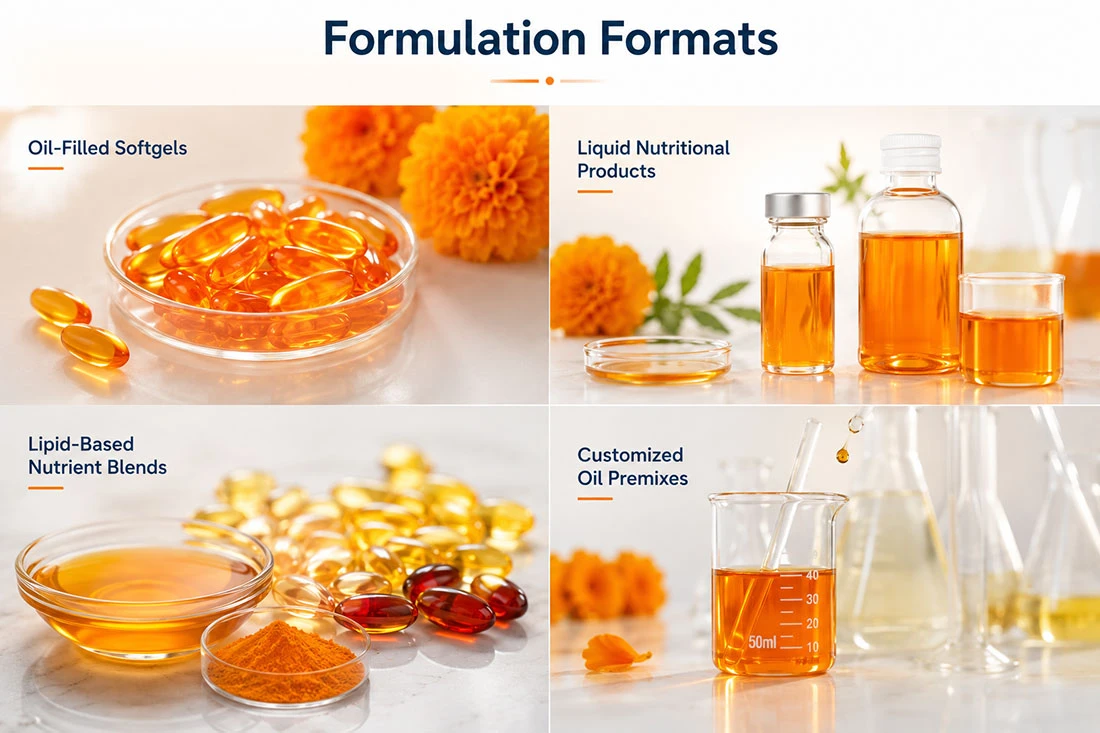
Formulation Formats
Zeaxanthin Oil is especially important if the product that is to be manufactured contains an oil phase or lipid phase.
Oil-Filled Softgels
An exact match formulation for softgel manufacturers who need to formulate with carotenoids. Compatibility of the selected oil carrier/fill system and long-term physical stability should be evaluated.
Liquid Nutritional Products
May be used for some liquid products with a suitable lipid phase. Validation of dispersion and finished product homogeneity should be done during the development.
Lipid-Based Nutrient Blends
May be mixed with other oil-soluble carotenoids, vitamins, or nutritional supplements to make specific lipid blends.
Customized Oil Premixes
It can be added to a custom-made oil-phase premix as per the required active concentration for manufacturers that have a proprietary combination of ingredients.
From Marigold to Standardized Oil
Zeaxanthin Oil starts with marigold flowers (Tagetes erecta L.), which are a botanical source naturally containing xanthophyll carotenoids.
The manufacturing process consists of extraction, concentration of the desired carotenoid fraction, preparation into an oil-based suspension, and standardization to the desired concentration of zeaxanthin.
The goal is not just to acquire a carotenoid extract but to create a uniform oil-based product which can be used in formulated product sets.
Manufacturers can use standardization as a practical basis for calculation of addition levels, comparison of batches, and control of the active content of finished products.

Where This Format Makes Sense
The best application of Zeaxanthin Oil depends on more than just the product category. It depends on whether it is advantageous to incorporate zeaxanthin in the formulation architecture by using an oil phase.
Best suited to:
Oil-filled softgels
Lipid-based supplements
Liquid nutritional systems which have an oil phase
Carotenoid oil blends
Customized lipid premixes
Less suited to:
Dry tablet blends (traditional)
Powder sachets
Dry premixes
Other formulations such as those needing a free-flowing dry ingredient
A suitable Zeaxanthin Powder specification might be preferred for these applications.
Documentation & Bulk Supply
Kingsci provides Zeaxanthin Oil for formulation and manufacturing, and offers normal technical evaluation and procurement assistance.
Documentation & services that are available can include:
COA
TDS
MSDS
Specification sheet
Sample supply
Bulk packaging
Stability-related technical support
OEM & ODM support
Standard MOQ: 1 kg
Customized requirements can be discussed according to formulation, specification, and purchasing volume.
FAQ
What is Zeaxanthin Oil?
Zeaxanthin Oil is an ingredient that is produced from marigold and is supplied as an orange suspension oil for the formulation of products based on oil or lipids.
What concentrations are available?
Kingsci has two specifications for zeaxanthin: 10% and 20%.
Why use Zeaxanthin Oil instead of Zeaxanthin Powder?
The major differences are in the formulation process. Zeaxanthin Oil is added to an oil phase, and Zeaxanthin Powder is formulated for dry formulation systems.
Is Zeaxanthin Oil suitable for softgels?
Yes. It is available in an oil-based format for evaluation in oil-filled softgel systems with appropriate carriers.
What is the botanical source?
The zeaxanthin is extracted from Tagetes erecta L. (marigold).
What should be considered when formulating with Zeaxanthin Oil?
Carrier compatibility, mixing, uniformity in suspension, exposure to oxygen and light, processing temperature, and stability of the finished product are key factors to consider.
Can I request a sample?
Yes. A sample of Zeaxanthin Oil is available for qualified B2B customers interested in evaluating a formulation for Zeaxanthin Oil.
Develop Your Zeaxanthin Oil Formulation
The amount of zeaxanthin needed will depend on the architecture of the formulation (softgel oil or lipid-based) and the desired active level of the product, including the case of a customized carotenoid blend.
Request a Sample or Contact Kingsci for the 10% and 20% Zeaxanthin Oil specifications, COA, and bulk supply information.
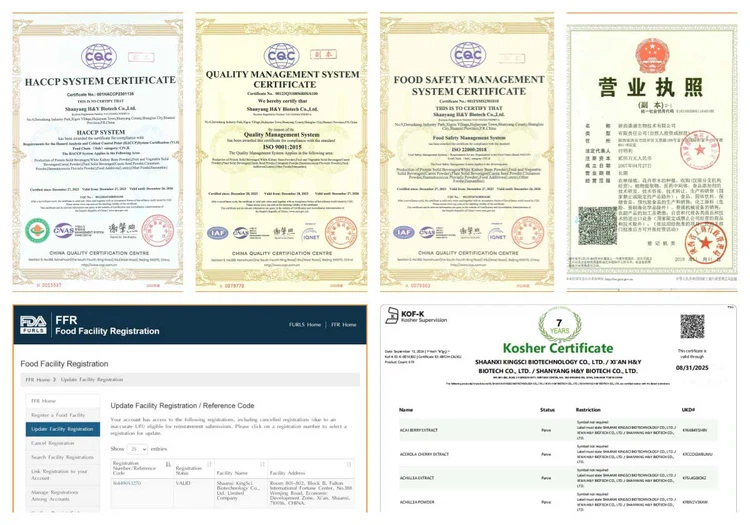
Certifications
American warehouse

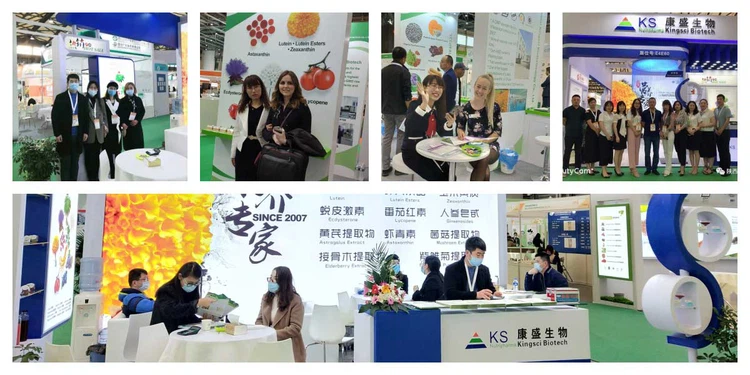
Exhibitions
Hot Tags: zeaxanthin oil, bulk zeaxanthin oil, China, manufacturers, suppliers, factory, wholesale, price, pricelist, quotation, bulk, in stock, KOSHER, ISO, HACCP


