

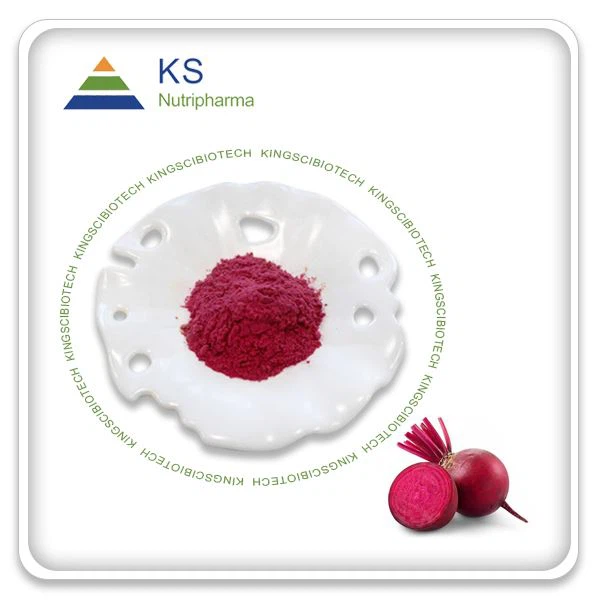
What is Red Beet Root Extract?
Red Beet Root Extract generally has a historical meaning of the beet-obtained coloring preparation, standardized to its natural red colour, and utilized as a food and beverage colourant as opposed to a complete-plant botanical extract. This extract is made commercially viable in manufacturing situations by controlled processing of water from red beetroot to produce pigment-rich fractions that confer a stable reddish-purple colour to finished products, and is a commercially viable substitute for synthetic red dyes. It is also distributed to manufacturers in concentrated liquid or powder amounts that are easily handled, can be dosed precisely, and obtain a uniform coloration even when large quantities of production are involved. It is used in a wide range of formulations, including beverages, confectionery, frozen desserts, bakery fillings, dairy, and plant-based products, where visual appearance, ingredient transparency, and clean label positioning are major commercial motivation factors. Its supplier and formulator perspective is its predictable performance in color, acceptance across regulations as a naturally created coloring ingredient in most markets, and compatibility with the current trends of product development.

COA
| Item | Specification | Method |
| Appearance | Red to dark red fine powder | Visual |
| Odor & Taste | Characteristic | Organoleptic |
| Identification | Positive | TLC |
| Assay (Betanin) | Present | UV-Vis |
| Loss on Drying | ≤ 5.0% | USP <731> |
| Ash | ≤ 5.0% | USP <281> |
| Bulk Density | 0.40 – 0.60 g/ml | USP |
| Particle Size | ≥ 95% pass 80 mesh | Sieve |
| pH (1% solution) | 4.5 – 6.5 | pH Meter |
| Heavy Metals (Total) | ≤ 10 ppm | ICP-MS |
| Lead (Pb) | ≤ 2.0 ppm | ICP-MS |
| Arsenic (As) | ≤ 2.0 ppm | ICP-MS |
| Cadmium (Cd) | ≤ 1.0 ppm | ICP-MS |
| Mercury (Hg) | ≤ 0.1 ppm | ICP-MS |
| Total Plate Count | ≤ 10,000 CFU/g | USP <2021> |
| Yeast & Mold | ≤ 1,000 CFU/g | USP <2021> |
| E. coli | Negative | USP <2022> |
| Salmonella | Negative / 25g | USP <2022> |
Are you interested in our products? Just leave a message on this page or Contact Us Directly to get free samples and more professional support!
Recommended Dosage
Commercial food and beverage manufacturing. In commercial food and beverage manufacturing, the standardized betalain content of Beetroot Red is traditionally used as the basis of the recommended amount of this coloring ingredient to be used, but a practical range of formulation is usually quoted using an active pigment basis as opposed to the total weight of the extract. Dosage. Typically, dosage is also conformed to provide around 20 -150 mg/kg of total betalains to the final product, although the specific dosage depends on the required level of color intensity, product formulation, processing parameters, and shelf-life requirements. Liquid concentrates can be added at lower rates because of greater instant color dispersion, whereas spray-dried powders with carriers can be added at proportionally higher levels. The manufacturers will be required to prove final use levels by pilot test and maintain that any applications are in line with the relevant local food additive regulations, label requirements, and also maximum levels of the category that are applicable by the relevant authorities in the target market.
Application
1. Food and Beverage Manufacturing
It has been extensively used to add a red to reddish-purple hue to foods, including flavored beverages, confectionery, and frozen desserts, bakery inclusions, and plant-based foods, and where brand positioning matters are a source of color derived naturally.
2. Dairy and Dairy-Alternative Processing
Used in yogurts, desserts, ice creams, and non-dairy analogues to provide the desired consistency of coloration and, at the same time, to maintain compatibility with protein and fat-based matrices under constant processing conditions.
3. Processed and Packaged Foods
Applied to ready-to-eat meals, sauces, fillings, and specialty food preparations in which a stable and uniform color is needed to help the product to be identified and recognized by consumers.
4. Nutraceutical and Functional Food Production
Beetroot Red Colouring is added as a natural ingredient into gummies, powders, and formulated foods, with no positioning introduced based on any health-related claims.
5. Pet Food and Animal Nutrition
Selectively applied to selective special pet food and treats to improve the visual consistency and product differentiation, and subject to category-specific regulatory standards.
6. Cosmetic and Personal Care Manufacturing
In some external use cosmetic and personal care formulations, which do not use synthetic dyes, are often as a plant-derived colorant, due to regulatory compliance on non-food use.

Safety
Industrial and regulatory-wise, Beetroot Red E162 as a coloring ingredient is generally considered acceptable for commercial food and other related usage as long as it is produced and utilized as per the accepted standards. Commercial grade materials are generally backed by toxicological assessment which are pertinent to food additive safety and are produced under regulated quality systems like cGMP and ISO certified procedures in order to provide consistency, traceability, and risk management through the vast production. The extract is based on a botanically well-characterized source, and when purified and standardized appropriately, it is usually thought to be devoid of allergenic potential, and there are no common allergen categories linked with its common use as a colorant. To the buyers, safety assurance is also reinforced by regular batch testing, its extensive documentation, and adherence to the rules and regulations that apply in the target markets, so that the ingredient can safely be incorporated into the completed products.
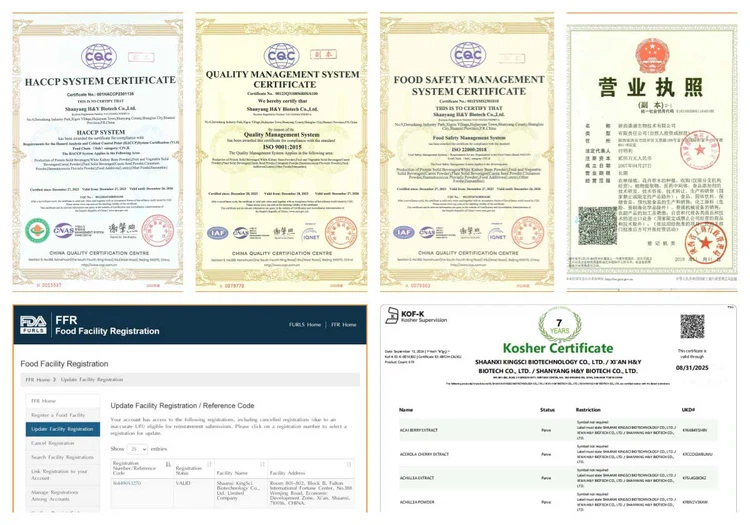
Certifications
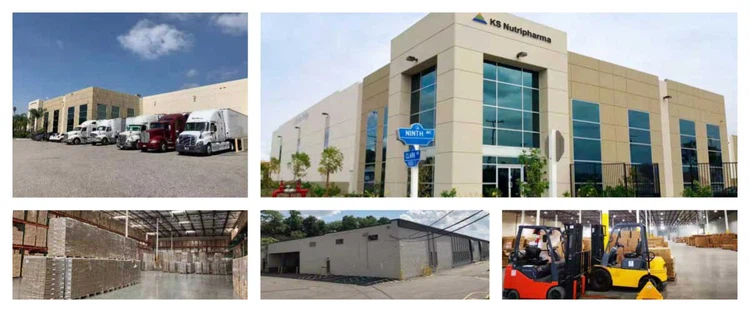
American warehouse
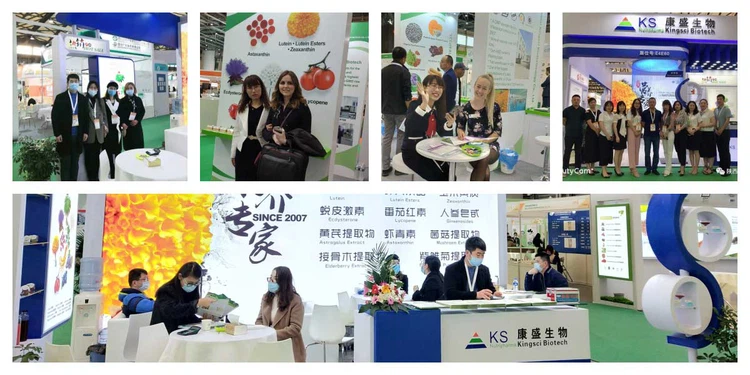
Exhibitions
Hot Tags: red beet root extract, China, manufacturers, suppliers, factory, wholesale, price, pricelist, quotation, bulk, in stock, KOSHER, ISO, HACCP


