


What is Curcumin Yellow Powder?
Curcumin Yellow Powder refers to a yellow food additive colorant (a by-product of turmeric) that is a standardized extraction product of curcuminoids, a rhizome of Curcuma longa. It is placed as a plant-based coloring solution that has a bright yellow-orange hue, strong tinting properties, and can be used in clean-label and naturally positioned formulations. The powder is commonly produced under food-grade quality systems, and the specifications given on the level of curcumin content, particle size, moisture, and solvent residues to maintain consistency between batches demanded by the commercial manufacturers. Depending on the formulation design, it is widely incorporated by food, beverage, and ingredient companies to provide a stable yellow color in their products, namely, seasonings, sauces, bakery mixes, confectionery coatings, functional food bases, and some beverage systems. The color output is dependent on its pH, light exposure, and processing temperature, and hence, technical support and formulation guidance take up a significant role in procurement decisions. Moreover, the ingredient is also generally considered in terms of regulatory compliance, traceability of botanical raw materials, as well as in terms of consistency with regional standards of natural colorants.

COA
| Item | Specification | Test Method | Result |
| Description | Fine yellow to orange-yellow powder, free-flowing | Visual | Complies |
| Curcuminoid Content (Total) | 90–95% | HPLC | 92.30% |
| Moisture | ≤5% | Loss on Drying | 3.80% |
| Ash | ≤1% | AOAC 923.03 | 0.60% |
| pH (5% solution) | 4.5–6.5 | pH meter | 5.60 |
| Solubility | Soluble in ethanol, slightly soluble in water | Visual / Solubility Test | Complies |
| Bulk Density | 0.45–0.65 g/mL | USP <616> | 0.52 g/mL |
| Particle Size | 100% pass 80 mesh | Sieving | Complies |
| Loss on Ignition | ≤1% | AOAC 942.05 | 0.70% |
| Residual Solvent (Ethanol) | ≤5000 ppm | GC | 4200 ppm |
| Heavy Metals – Lead (Pb) | ≤2 ppm | ICP-MS | 1.5 ppm |
| Heavy Metals – Arsenic (As) | ≤1 ppm | ICP-MS | 0.6 ppm |
| Heavy Metals – Cadmium (Cd) | ≤1 ppm | ICP-MS | 0.3 ppm |
| Heavy Metals – Mercury (Hg) | ≤0.1 ppm | ICP-MS | <0.1 ppm |
| Microbial – Total Plate Count | ≤1000 cfu/g | ISO 4833 | 450 cfu/g |
| Microbial – Yeast & Mold | ≤100 cfu/g | ISO 21527 | 25 cfu/g |
| Microbial – E. coli | Negative | ISO 16649-2 | Negative |
| Microbial – Salmonella | Negative | ISO 6579 | Negative |
Are you interested in our products? Just leave a message on this page or Contact Us Directly to get free samples and more professional support!
Main ingredients
The structure of Curcumin Yellow is determined by a family of naturally occurring polyphenolic pigments (curcuminoids) that impart the yellow-coloured ability and functionality to the product in industrial applications. Curcumin is the most common and the most technically important one, and it usually constitutes the highest percentage of total curcuminoids, and it is the primary source of color intensity and chromatic stability. Demethoxycurcumin and bisdemethoxycurcumin, which are minor corresponding ingredients, occur in smaller, consistent proportions and serve a beneficial function in tuning hue, variety of shade, and uniformity between production lots. With this curcuminoid profile, this is the key active part, and thus, it is a dependable vegetable-derived color additive to use in a situation where controlled composition, colorable consistency, and regulatory compatibility are needed.
Process
1. Raw Material Selection and Pre-Processing
Dried Curcuma longa rhizomes are obtained after assessing approved suppliers and are then cleaned, sliced, and dried under controlled conditions in order to remove moisture content and assure homogenous quality prior to extraction. This step is concerned with consistency, traceability, and the ability to process in large batches.
2. Solvent Extraction of Curcuminoids
The solvent extraction is done on the prepared turmeric material, which is mostly done by food-grade ethanol or ethanol-water systems. It is the most commonly used industrial process, as it is the selective solvent of curcuminoids and other unextraction of unwanted insoluble vegetable residues at minimal cost, thereby scalable, efficient, and regulator-approved.
3. Solid–Liquid Separation and Concentration
Solids are then filtered or centrifuged after extraction. The liquid extract is then concentrated under low pressure to intensify curcuminoid density and decrease solvent volume to make the extract available to undergo further purification.
4. Purification and Standardization
The extract is concentrated and then refined to leave behind the surplus oils, waxes, and non-coloring substances. Curcuminoid content is modified and standardized by manufacturers and made to specific commercial specifications to guarantee evenness of the curcuminoid color strength and activity in the operation of each batch.
5. Drying and Powder Formation
The extract obtained is a purified mixture of curcumin, and it is then turned into a free-flowing powder by the use of spray drying or vacuum drying. The carrier materials can be utilized based on the target application needs that accommodate flowability and handling during downstream production.
6. Milling, Blending, and Quality Control
The dried substance is then milled to a desired particle size and mixed to obtain a homogeneous substance. Bulk packaging is done under final quality checks to ensure that Turmeric Extract Color conforms to agreed-on specifications regarding color value, moisture level, residual solvents, and microbiological limits.

Suitable For
As a manufacturer, Curcumin Powder is used in finished products that serve the broad, general populations of consumers, but not niche or medically defined ones. It is usually used to coincide with the daily food and beverage products, food seasonings, confectionery, and other visually varied consumer products that are attractive to individuals who make natural-posed, plant-based derivatives as a standard commodity of consumption or way of life. End consumers are generally the ones who appreciate recognizable botanical ingredients, clean-label formulations, and attractive products without the ingredient being predetermined to particular dietary control. Consequently, it is suitable for mass-market use in a wide range of applications in terms of age and consumption situation, as a functionality color additive that improves the appearance of the product without being incongruent with the generally accepted standards of consumer behavior.
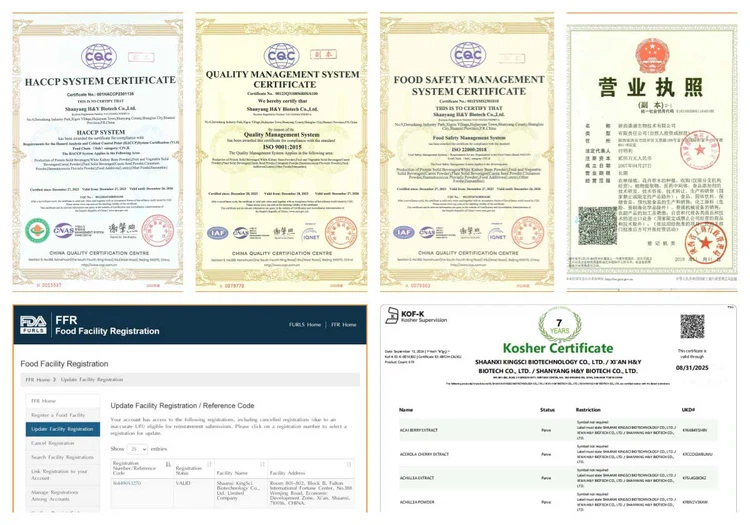
Certifications
American warehouse

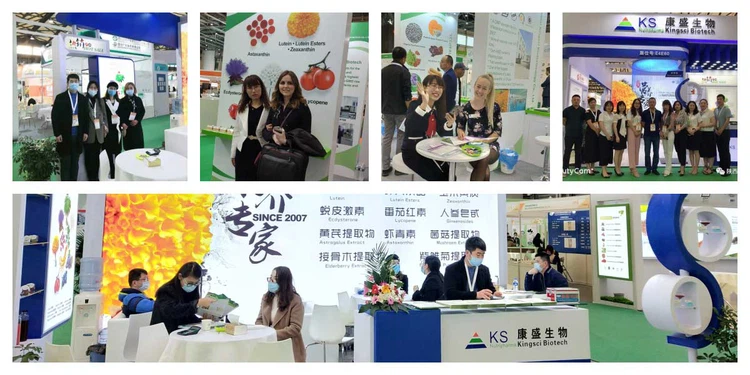
Exhibitions
Hot Tags: curcumin yellow powder, China, manufacturers, suppliers, factory, wholesale, price, pricelist, quotation, bulk, in stock, KOSHER, ISO, HACCP


