


What is Vitamin B2 Riboflavin Powder?
Vitamin B2 Riboflavin Powder is a standardized type of riboflavin that has been synthesized to be used on an industrial and commercial basis and is commonly utilized as an industrial and commercial functional ingredient and a color-supporting micronutrient in food manufacturing, beverage manufacturing, animal feed manufacturing, and nutraceutical manufacturing. The main commendation of this ingredient is its constant purity, stable physicochemical characteristics, and predictable behaviour with processing. Most is yellow to orange-yellow in color as a crystalline, well-flowing, but heavy powder. This enables accurate dosing and is uniformly distributed in a dry blend, premix, or formulated system. It exhibits poor aqueous solubility, as well as stability of its structure in controlled processing conditions. It is applicable in tablet and capsule formulations, fortified food matrices, and compound formulations where formulation accuracy and batch-to-batch reproducibility are of paramount importance. Its activity in food is normally associated with nutritional fortification, formulation balance, and addition of color under standardized usage levels. Consequently, it has been positioned as an obedient, full-fledged raw material that fits the formulation requirements of the industry, the reliability requirements of the supply chains, the global regulatory demands, and hence a viable option for companies that seek reliable long-term ingredient solutions.

COA
| Parameter | Specification | Test Method | Result |
| Appearance | Yellow to orange-yellow crystalline powder | Visual Inspection | Yellow crystalline powder |
| Odor | Characteristic, slight | Organoleptic | Characteristic |
| Assay (Riboflavin content) | 98.0–102.0% | HPLC | 99.20% |
| Loss on Drying | ≤ 1.0% | 105°C, 2 h | 0.50% |
| Residue on Ignition | ≤ 0.1% | 550°C, 2 h | 0.05% |
| Solubility | Soluble in water, insoluble in ethanol | Visual / Solubility Test | Pass |
| pH (1% aqueous solution) | 5.0–7.0 | pH Meter | 620.00% |
| Lead (Pb) | ≤ 2 ppm | ICP-MS | < 2 ppm |
| Cadmium (Cd) | ≤ 1 ppm | ICP-MS | < 1 ppm |
| Mercury (Hg) | ≤ 0.1 ppm | ICP-MS | < 0.1 ppm |
| Arsenic (As) | ≤ 1 ppm | ICP-MS | < 1 ppm |
| Microbial Limits | |||
| Total Plate Count | ≤ 1000 CFU/g | AOAC 990.12 | 250 CFU/g |
| Yeast & Mold | ≤ 100 CFU/g | AOAC 997.02 | <10 CFU/g |
| E. coli | Negative | AOAC 966.24 | Negative |
Are you interested in our products? Just leave a message on this page or Contact Us Directly to get free samples and more professional support!
How it works?
Molecular and biochemical Vitamin B2(Riboflavin) is essentially a biochemical precursor of the flavin cofactor flavin mononucleotide (FMN) and flavin adenine dinucleotide (FAD), all of which are required as prosthetic groups of most flavoproteins involved in cellular redox reactions. These flavin-dependent enzymes are involved in the transfer of electrons, maintaining core metabolic pathways such as the conversion of oxidative energy, the transformation of lipids, and the use of amino acids, since they participate in reversible oxidation-reduction reactions but are not themselves oxidised. The isoalloxazine ring structure of riboflavin allows it to accept and donate electrons in a reversible manner, which is the basis of its redox regulatory activity of keeping intracellular redox balance stable, as well as enzymatic efficiency under normal physiological conditions. This mechanism can be translated into industrial uses, which is an important source of a metabolically stable cofactor that can be used to predictably support biochemical activity at the cellular scale, as opposed to being an active agent with direct pharmacological consequences, making it a useful standardized compound to use in regulated manufacturing processes as a nutritional and functional raw material.
Process
1. Raw Material Preparation and Medium Formulation
The commercial production normally starts with the cooking of the carbohydrate and mineral nutrient raw materials, which are carefully fed into a fermentation medium. Quality verification on all inputs has been done to provide uniformity, traceability, and large-scale manufacturing appropriateness.
2. Controlled Microbial Fermentation
The medium that is ready is put into industrial fermenters, whereby desired production strains are cultured under regulated temperature, pH, aeration, and agitation parameters. At this point, riboflavin is synthesized in normal cellular metabolism and is shown to build up in the fermentation system.
3. Fermentation Broth Separation
When the target level of production is achieved, fermentation is stopped. The broth is then solid-liquid separated by filtration or centrifugation to collect biomass and insoluble residues, resulting in a clarified riboflavin-rich solution or slurry.
4. Extraction and Concentration
The extracted material is condensed to enhance concentration to extract more riboflavin. This can either be pH adjustment, thermal treatment, or concentration through a membrane, which is based on the design of the plant and the throughput demanded.
5. Crystallization
The solution of riboflavin is concentrated and cooled or made to bring about a controlled crystallization. This is essential towards creating stable crystals of riboflavin that are of homogeneous morphology and purity, which can be subjected to downstream processing.
6. Solid Recovery and Washing
After filtration, crystals are washed to eliminate the presence of impurities, by-products of fermentation, and salts to achieve the end product within specifications.
7. Drying
To meet the necessary moisture content and physical stability of the wet riboflavin cake, the cake is dried under specific temperature and humidity conditions, usually by use of tray dryers or fluidized-bed dryers.
8. Milling, Sieving, and Blending
Riboflavin is dried and then sieved to a homogeneous particle fractionation. Blending may be done in case it is necessary to make a batch uniform in a large-volume commercial supply.
9. Packaging and Quality Release
The completed Riboflavin Powder is filled into food-grade and light-protective packaging. Final quality testing and review of documentation are done, after which it is released to customers in batches.

Suitable For
Vitamin B2 Powder is being used in a great variety of finished products, which are off-the-shelf, non-selective consumers. The final products that have been developed using riboflavin are usually placed as products to be consumed in general by various age groups and lifestyles, where standardized nutritional composition, formulation balance, and regulatory compliance are needed. The common consumer segments are the general adult sector, teenagers, and other day-to-day consumers who consume fortified foods, beverages, or other nutrition-oriented products as part of regular food habits. Moreover, mass-market uses formulations are frequently of a non-nutritional nature, e.g., fortification of staple food, multi-nutrient supplements, and in this case, consistency, safety, and suitability to be ingested on a long, regular dosage are the order of the day. Likewise, the producers consider it to be a formulation ingredient that is universally applicable and one that promotes the wide accessibility among consumers.
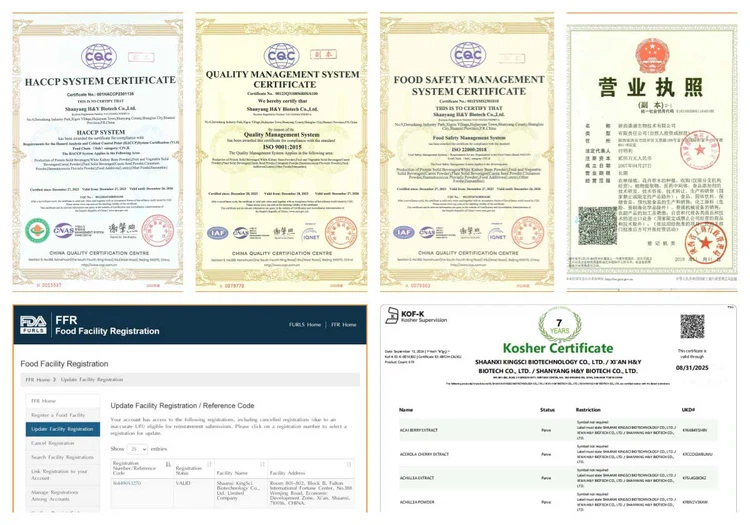
Certifications
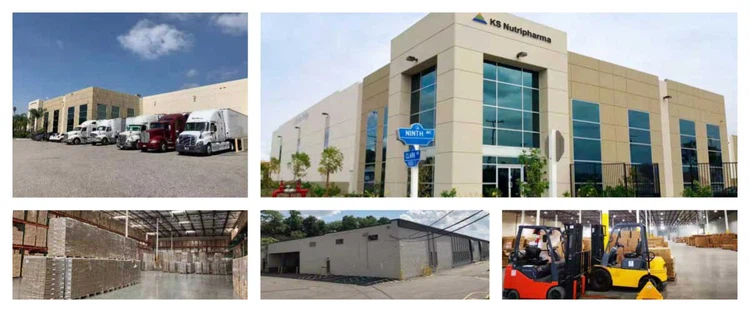
American warehouse
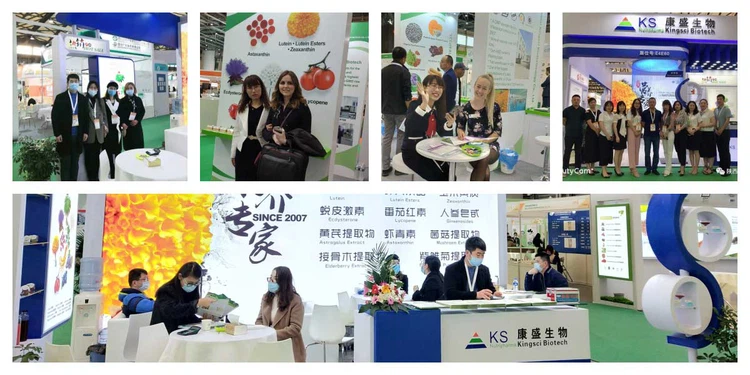
Exhibitions
Hot Tags: vitamin b2 riboflavin powder, China, manufacturers, suppliers, factory, wholesale, price, pricelist, quotation, bulk, in stock, KOSHER, ISO, HACCP


