

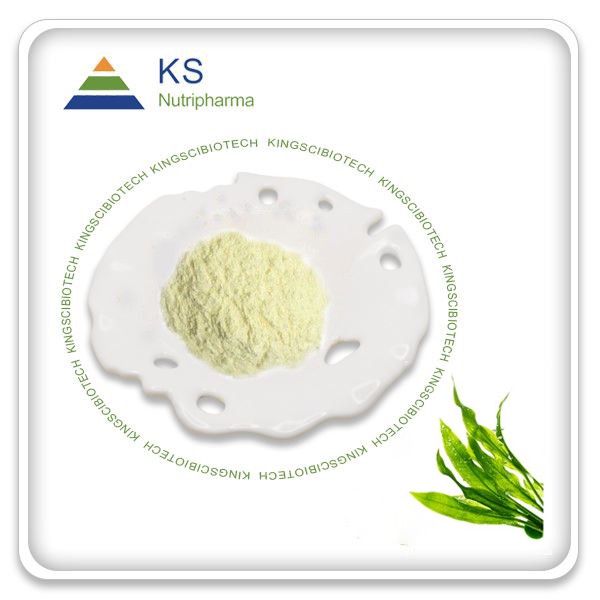
What is DHA Powder?
The DHA Powder is a highly functional omega-3 ingredient, which is made through advanced technology, including microencapsulation, spray drying, or emulsification of the DHA-rich oil, to produce a free-flowing powder. It is formulated specifically for large-scale production and industrial formulation applications and provides superior handling, dispersibility, and compatibility with dry-mix applications compared to the liquid oil format. It can come from several sources, such as marine microalgae or refined fish oil, and can be formulated in a variety of strengths depending on the specific application. The powder form offers great benefits in product development, such as low oxidation potential, improved storage stability, ease of transport, and improved incorporation into powder systems. Due to its excellent processing adaptability, it can be used in nutritional premixes, protein powders, meal replacement products, instant beverage mixes, nutrition bars, bakery products, dairy products, and more value-added food and supplement products. In an ever-changing consumer market where convenience and shelf stability are key factors in product development, alongside a desire for innovation, it is becoming an integral part of companies' product portfolios to enable formulation flexibility and production efficiency.

COA
| Item | Specification | Result | Test Method |
| Product Name | DHA Powder | DHA Powder | - |
| Botanical Source | Algal Oil / Fish Oil | Algal Oil | - |
| Active Ingredient | Docosahexaenoic Acid (DHA) | DHA | - |
| Appearance | Off-white to Light Yellow Powder | Light Yellow Powder | Visual Inspection |
| Odor | Characteristic | Conforms | Organoleptic |
| DHA Content | ≥10.0% | 10.65% | GC |
| Particle Size | 95% Pass 80 Mesh | 98.2% Pass 80 Mesh | USP <786> |
| Loss on Drying | ≤5.0% | 3.12% | USP <731> |
| Ash Content | ≤5.0% | 2.46% | USP <281> |
| Bulk Density | 0.30–0.70 g/mL | 0.52 g/mL | USP Method |
| Peroxide Value | ≤5.0 meq/kg | 1.87 meq/kg | AOCS Official Method |
| Acid Value | ≤3.0 mg KOH/g | 1.24 mg KOH/g | AOCS Official Method |
| Lead (Pb) | ≤1.0 ppm | 0.08 ppm | ICP-MS |
| Arsenic (As) | ≤1.0 ppm | 0.05 ppm | ICP-MS |
| Cadmium (Cd) | ≤0.5 ppm | 0.03 ppm | ICP-MS |
| Mercury (Hg) | ≤0.1 ppm | 0.01 ppm | ICP-MS |
| Total Plate Count | ≤1,000 CFU/g | 120 CFU/g | USP <2021> |
| Yeast & Mold | ≤100 CFU/g | 25 CFU/g | USP <2021> |
| Coliforms | Negative | Negative | USP <2022> |
| Escherichia coli | Negative | Negative | USP <2022> |
Looking for bulk supply or product details?
Request A Free Sample or Bulk Quote to get COA, pricing, and fast delivery options.
Features
The most unique feature about Algal DHA Powder is its unique capability of converting a very unsaturated lipid ingredient to a free-flowing powder format using state-of-the-art microencapsulation methods. Generally has good flowability and low moisture, will also be uniform particle size distribution, which will help it to blend easily with other powdered ingredients, and ensure batch-to-batch uniformity. The dispersibility in water-based formulation will vary depending on the encapsulation method, but it can be used to help the formulation distribute evenly, which is beneficial for nutritional drinks, protein powders, meal replacement formulations, and premixes. This protective matrix will help reduce contact with oxygen, light, and environmental conditions during the process and during storage, resulting in better product stability. Furthermore, it is typically more efficient in transportation, easier to control and dose, has less oil leakage risk, and is easier to integrate with automated manufacturing systems. Easily incorporated into compression, granulation, sachet filling, powder blending, and dry-mix processes, it is a key ingredient for formulators with the need to incorporate omega-3 into a variety of processes. The physical and functional properties enable creative product development and satisfy the practical needs of the contemporary food, beverage, and nutrition manufacturing processes.
How to Store Properly?
1. Controlled Temperature Storage
Product should be stored in a cool place after receiving properly sealed bulk packaging, generally below the ambient room temperature, to ensure the physical stability of the product and minimize the possibility of oxidation during long-term warehouse storage.
2. Protection from Light Exposure
In the storage area, it should be stored out of direct sunlight or bright artificial light sources, as DHA-rich ingredients decompose in the presence of light. Opaque and/or shaded storage is preferred.
3. Moisture-Controlled Environment
The storage condition in the dry warehouse with low relative humidity is important. High moisture content can impact powder flowability and the integrity of the capsule shell; therefore, dehumidified storage conditions are suggested for inventory management in industry.
4. Airtight Handling After Opening
After the first opening of the packaging for production, the rest must be kept tightly closed or moved to clean, airtight packaging, as much as possible, to reduce the contact with air and environmental oxygen.
5. Oxygen Exposure Minimization
Avoid unnecessary contact with air when handling and moving material inside. The quality of the products can be further assured by the use of nitrogen-flushed or sealed storage systems in high-volume manufacturing.
6. Separated Storage from Odorous Materials
The DHA Powder should be kept away from strong-smelling chemicals, spices, and volatile raw materials, which could lead to cross-odor contamination without affecting the neutral sensory properties of the powder.
7. First-In-First-Out (FIFO) Inventory Management
Manufacturers should adopt a FIFO stock rotation approach for the best industrial use, as this allows for more consistent material turnover and minimises the length of time items spend stored in a warehouse system.

Recommended Usage
During capsule production, Docosahexaenoic Acid Powder is usually mixed with complementary excipients (flow agents or carrier powders) to provide a more uniform fill weight distribution and to provide a stable production of capsules, but still achieve good powder flow during high-speed capsule filling. For tablet systems, Omega 3 Algae Powder is typically added at the end of the dry granulation or direct compression process, when care should be taken to control the intensity of the mixing to ensure that content uniformity is achieved and segregation of the DHA lipid-encapsulated particles from other functional ingredients does not occur. Typically, the powder formulation is pre-dispersed in a compatible aqueous/emulsified formulation under moderate shear to promote uniform dispersion, depending on the type of encapsulation matrix that determines the dispersion behavior and stability of the powder in hydrated formulations. In all applications, the mixing sequence, shear exposure, and temperature are typically optimized to maintain the integrity of the encapsulation and to ensure uniformity in the performance of the formulation downstream. The engineered powder structure also makes it easier to integrate it into premix systems, as producers can add it to multi-ingredient formulations without needing to use more complex processing methods and with enhanced handling efficiency in production.
Certificate

Factory

Exhibitions

Hot Tags: dha powder, China, manufacturers, suppliers, factory, wholesale, price, pricelist, quotation, bulk, in stock, KOSHER, ISO, HACCP


