

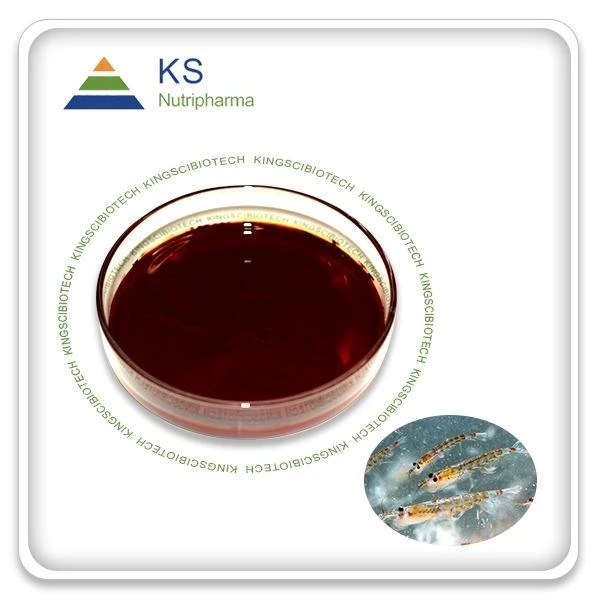
What is Krill Oil Liquid?
Krill Oil Liquid represents a concentrated marine-derived nutritional oil made from Antarctica's Antarctic krill (Euphausia superba), which exists in fluid form for use across dietary supplements and wellness products, and functional foods. This liquid formulation offers naturally occurring phospholipids alongside omega-3 fatty acids (EPA and DHA) and astaxanthin antioxidant while providing essential nutrients in a highly absorbable format with extended stability and low oxidation potential. Standard fish oils differ from krill oil because their omega-3 fatty acids attach to phospholipids, which permits better absorption throughout the body for cell membrane integration. The liquid form is well-suited for manufacturers because it simplifies incorporation into emulsions and capsules and delivery systems, allowing for adequate integration of product quality markers like color and smell. This versatile formulation allows for exact dosing measurements and works best for patients with swallowing problems and users of oil-based nutritional mixtures.

COA
| Item | Specification | Result |
| Appearance | Clear, dark red to ruby-red oily liquid | Conforms |
| Odor | Mild characteristic marine odor, free from rancid notes | Conforms |
| Specific Gravity (20°C) | 0.920–0.960 | 0.938 |
| Refractive Index (20°C) | 1.470–1.500 | 1.485 |
| Phospholipid Content | ≥ 40.0% | 40.40% |
| Peroxide Value | ≤ 2.5 meq O₂/kg | 0.9 meq/kg |
| Acid Value | ≤ 2.5 mg KOH/g | 1.3 mg KOH/g |
| Moisture Content | ≤ 0.5% | 0.16% |
| Lead (Pb) | ≤ 0.1 ppm | <0.05 ppm |
| Arsenic (As) | ≤ 0.1 ppm | <0.05 ppm |
| Mercury (Hg) | ≤ 0.1 ppm | <0.02 ppm |
| Cadmium (Cd) | ≤ 0.1 ppm | <0.02 ppm |
| Total Aerobic Microbial Count | ≤ 1,000 CFU/g | <100 CFU/g |
| Yeast & Mold Count | ≤ 100 CFU/g | <10 CFU/g |
| Escherichia coli | Negative in 10 g | Not detected |
| Salmonella spp. | Negative in 25 g | Not detected |
| Staphylococcus aureus | Negative in 10 g | Not detected |
Are you interested in our products? Just leave a message on this website or contact donna@kingsci.com directly to get free samples and more professional support!
Features
The deep red to reddish-brown appearance Liquid derives from astaxanthin antioxidants that remain naturally in the product while maintaining the oil's oxidative stability. Such oil exhibits a smooth semi-viscous texture and mild marine odor while remaining odorless after extraction, refinement, and purification techniques. The chemical composition features predominantly omega-3 fatty acids, EPA and DHA bound to phospholipids primarily, which differs from triglyceride binding. The phospholipid arrangement in Omega Krill Oil enables higher absorption by human cells because it improves both the oil's water boundary crossing and dissolution capacity. Naturally occurring choline in it performs an important role in brain and liver function. Astaxanthin within the oil provides robust protection against oxidation and extends shelf life better than typical fish oil products.The physical and chemical properties create a stable, nutrient-dense ingredient that functions as a versatile component in high-tech wellness formulations.

Storage of Krill Oil
1. Store in a Cool, Dry Environment
Every product needs storage between 5°C and 20°C (41°F to 68°F) in a temperature-controlled environment to stop sensitive lipid deterioration and safeguard nutrient composition.
2. Protect from Light Exposure
Early product oxidation, along with reduced quality, is prevented by keeping Good Quality Krill Oil in dark storage areas or opaque UV-resistant containers.
3. Avoid Air and Moisture Contact
Keep the sealed container unopened until the moment of usage. All container access should happen fast with minimal exposure to air, then use the original container to tightly reseal right after you withdraw the amount needed. To preserve product quality when using only partial quantities, practitioners must flush the container with inert gas like nitrogen before resealing.
4. Protect your oil from contact with both strong smells and chemical compounds.
You should keep Liquid Krill Oil away from strong-smelling substances, along with solvents and volatile chemicals, because the oil will absorb any scents or contaminants in its storage environment.
5. Use Food-Grade Containers for Transfers
When converting the oil into smaller dosage containers, use stainless steel or HDPE food-grade vessels, which are both clean and have secure sealing mechanisms.
6. Keep track of product freshness along with batch history
The batch label's "best before" date should guide your usage while implementing FIFO rotation techniques to maintain product freshness.
7. Avoid Frequent Temperature Fluctuations
Most stable storage solutions must be maintained for the oil. The product's consistency and oxidation rate can be negatively affected by multiple heating and cooling cycles despite maintaining the product seal.
Certificate

Factory

Exhibitions

Hot Tags: krill oil liquid,krill liquid oil,China, manufacturers, suppliers, factory, wholesale, price, pricelist, quotation, bulk, in stock, KOSHER, ISO, HACCP


