


What is Sophora Japonica Extract?
Sophora Japonica Extract is a standard botanical extract that is produced using the flowers or flower buds of Sophora japonica, a leguminous tree that is commonly grown in East Asia and is frequently used as a commercial source of plant flavonoids. In the industrial production of ingredients, the extract is made by extraction and purification using controlled conditions, so that the naturally occurring polyphenolic compounds, especially flavonoids, rutin, and its derivatives, are concentrated into a stable powder that can be used in large-scale formulation. The final ingredient is normally presented to specifications of active constituent, moisture, particle size, and purity, and enables the downstream manufacturers to incorporate it with confidence in nutraceutical, functional food, and botanical formulation systems. The reason why it has been regarded as the most promising plant-based raw material is that the source plant naturally has high concentrations of identifiable flavonoid compounds that can be standardized systematically by using modern extraction technology. Preparation of raw materials, solvent, filtration, concentration, and drying are the usual steps involved in industrial production to produce a concentrated botanical extract of controlled composition.

COA
| Item | Specification | Result | Test Method |
| Assay (Rutin) | ≥ 95.0% | 95.62% | HPLC |
| Appearance | Yellow to yellow-green powder | Conforms | Visual |
| Odor | Characteristic | Conforms | Organoleptic |
| Particle Size | 95% pass 80 mesh | Conforms | Sieve |
| Loss on Drying | ≤ 5.0% | 3.21% | USP |
| Ash | ≤ 5.0% | 2.14% | USP |
| Heavy Metals | ≤ 10 ppm | <10 ppm | ICP-MS |
| Heavy Metals Lead (Pb) | ≤ 2 ppm | 0.41 ppm | ICP-MS |
| Heavy Metals Arsenic (As) | ≤ 1 ppm | 0.18 ppm | ICP-MS |
| Heavy Metals Cadmium (Cd) | ≤ 1 ppm | 0.09 ppm | ICP-MS |
| Heavy Metals Mercury (Hg) | ≤ 0.1 ppm | 0.02 ppm | ICP-MS |
| Total Plate Count | ≤ 10,000 CFU/g | 320 CFU/g | AOAC |
| Yeast & Mold | ≤ 100 CFU/g | 22 CFU/g | AOAC |
| E. coli | Negative | Negative | AOAC |
| Salmonella | Negative | Negative | AOAC |
Are you interested in our products? Just leave a message on this page or Contact Us Directly to get free samples and more professional support!
Recommended Dosage
To manufacturers who design products containing Rutin Extract, the recommended level of use is generally set depending on the concentration of its major flavonoid constituents, most of which are usually expressed as rutin-equivalent concentration. Common products in the commercial formulation practice that are standardized to moderate or high flavonoid levels are aimed at providing a range of 100- 500 mg of total flavonoid in the form of rutin equivalents per day based on the extract specification and the final format of the product. In cases where extracts with high levels of concentration (such as extracts that are standardized to high levels of rutin) are used, the respective level of inclusion in a tablet, capsule, in powdered combinations, or as a beverage premix is scaled back proportionally to obtain the desired amount of active substance in each serving. In the case of manufacturers, the standardization level of the extract, type of formulation, and regional regulatory guidelines must always be used to adjust the exact amount of dosage that is used in a finished product because the acceptable levels of the ingredients may differ in various markets and in various product lines, e.g. dietary supplements, functional foods, or blends of botanical ingredients. Consequently, responsible product development is generally concerned with matching the active flavonoid dosage with local control, safety considerations, and labeling needs, whilst also ensuring consistent ingredient specifications in addition to confirming quality between batches using supplier documentation and analytical testing.
Application
1. Nutraceutical Manufacturing
It is an effective botanical extract in the nutraceutical industry used as a standardized raw material in capsules, tablets, and powder supplement mixtures. Its characterized flavonoid profile enables it to be used by formulators in multi-ingredient plant extract items in which the uniformity of the amount of active constituents is of concern in large-scale manufacturing.
2. Functional Food and Beverage Industry
It is commonly incorporated in food by food developers in functional foods, beverage premixes, and nutritional powders promoting plant-based ingredients. The extract may be applied in dry blends or liquid-compatible systems in which botanical flavonoid ingredients are incorporated into a larger concept of formulation.
3. Cosmetic and Personal Care Formulations
It has been employed in topical preparations, including creams, lotions, and cosmetic concentrates in the cosmetic industry as a formulation ingredient where plant-derived polyphenols are required. Ingredient suppliers usually offer standardized extracts that would be used in the manufacturing of cosmetics.
4. Botanical Ingredient and Herbal Product Industry
It is one of the flavonoids used by companies that manufacture herbal ingredient blends and plant-based formulations in complex botanical blends. It has a well-defined phytochemical composition and could be easily developed into a standardized botanical product.
5. Research and Ingredient Development
Sophora Japonica Bud Extract is also used in laboratory studies, formulation research, and ingredient acquisition ventures. When learning about plant polyphenols, extraction technologies, and formulation compatibility in new product concepts, universities, ingredient developers, and R&D teams make use of standardized extracts.

Safety
In terms of ingredient safety, Sophorae Immaturus Extract used in the industry is normally manufactured in a regulated production facility under controlled conditions and subjected to various quality and safety verification procedures before it enters the commercial supply chain. We carry out toxicological tests, authentication of raw material, and contamination testing to make sure that the extract is safe to the internationally accepted standards of botanical ingredients. Besides checking the active compound levels by performing such analysis processes as chromatographic testing, the suppliers also check heavy metals, microbial contamination, residual solvents, and pesticide residues in routine, which is in line with the global ingredient compliance requirements. Formulation plant is, in general, considered by the manufacturers as a low-allergen botanical system, especially when manufactured as a purified flavonoid-rich extract and processed in accordance with the established standard processing guidelines. Like most of the plant-derived components, the safety profile of the final product will entirely rely on aspects like raw material source, method of extraction, purification degree, and compliance with the regulatory standards in the targeted market.
Certifications
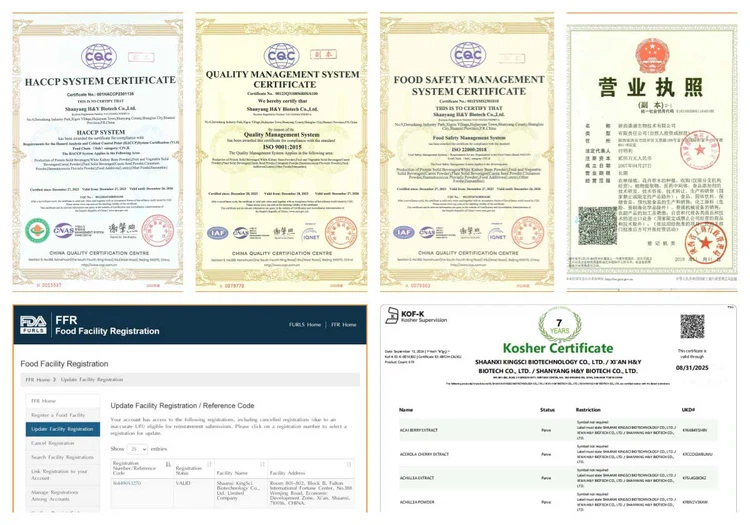
American warehouse

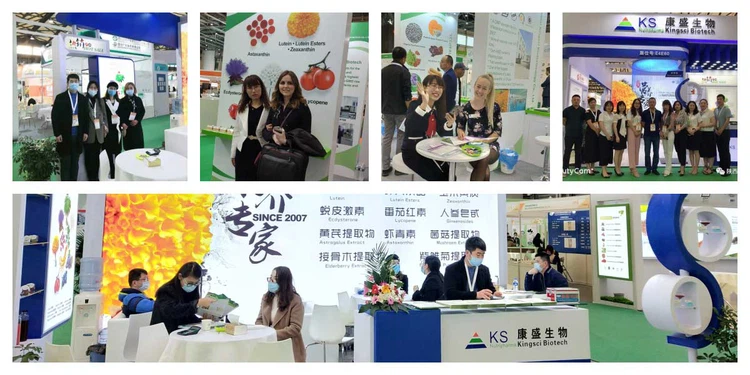
Exhibitions
Hot Tags: Sophora Japonica Extract, China, manufacturers, suppliers, factory, wholesale, price, pricelist, quotation, bulk, in stock, KOSHER, ISO, HACCP


