


What is Grape Seed Extract Powder?
Grape Seed Extract Powder is a concentrated botanical ingredient derived from the seeds of Vitis vinifera and standardized for its naturally occurring polyphenolic compounds, including proanthocyanidins, catechins, and related flavonoids. Produced through controlled extraction, purification, and drying processes, it is widely utilized by manufacturers seeking a high-value plant extract with well-defined quality specifications and broad formulation flexibility. It is commonly selected for use in dietary supplements, functional food systems, nutritional beverage premixes, beauty-from-within concepts, and plant-based wellness product portfolios due to its naturally sourced origin and measurable polyphenol content. The ingredient typically exhibits good handling characteristics, compatibility with various dosage forms, and adaptability to both conventional and clean-label product development strategies. Available in multiple polyphenol standardization levels, it allows formulators to tailor ingredient strength and positioning according to specific product requirements and target markets. With increasing demand for traceable botanical ingredients and scientifically characterized plant extracts, it continues to be a commercially important raw material for brands and manufacturers focused on developing premium formulations supported by consistent quality control, supply chain reliability, and internationally recognized manufacturing standards.

COA
| Item | Specification | Result |
| Product Name | Grape Seed Extract Powder | Conforms |
| Botanical Name | Vitis vinifera L. | Conforms |
| Plant Part Used | Seed | Conforms |
| Active Ingredient | Polyphenols | Conforms |
| Appearance | Fine Reddish Brown Powder | Conforms |
| Odor & Taste | Characteristic | Conforms |
| Assay (Polyphenols) | ≥ 95.0% | 95.62% |
| Loss on Drying | ≤ 5.0% | 2.38% |
| Ash Content | ≤ 5.0% | 1.27% |
| Bulk Density | 0.40–0.70 g/mL | 0.55 g/mL |
| Particle Size | 100% Pass 80 Mesh | Conforms |
| Solubility | Partially Soluble in Water | Conforms |
| Lead (Pb) | ≤ 2.0 ppm | < 0.10 ppm |
| Arsenic (As) | ≤ 1.0 ppm | < 0.05 ppm |
| Cadmium (Cd) | ≤ 1.0 ppm | < 0.05 ppm |
| Mercury (Hg) | ≤ 0.1 ppm | < 0.01 ppm |
| Total Plate Count | ≤ 10,000 CFU/g | < 1,000 CFU/g |
| Yeast & Mold | ≤ 100 CFU/g | < 10 CFU/g |
| Escherichia coli | Negative/10 g | Negative |
Request A Free Sample or Bulk Quote to get COA, pricing, and fast delivery options.
Recommended Dosage
For product formulation purposes, Grape Seed Extract is commonly incorporated into finished products based on its total polyphenol or proanthocyanidin content rather than the raw extract weight alone. In the global dietary supplement and functional nutrition sectors, formulations typically provide the equivalent of approximately 50–300 mg of active polyphenols per serving, although actual usage levels may vary depending on extract specification, product format, target market positioning, and intended serving size. Manufacturers developing capsules, tablets, powdered blends, beverages, or other delivery systems generally determine inclusion rates according to active compound standardization, stability requirements, sensory characteristics, and formulation objectives. Because regulatory frameworks, ingredient classifications, and labeling requirements differ across countries and regions, the final dosage and recommended serving level should always be established in accordance with applicable local regulations, product category requirements, and the guidance of qualified regulatory and product development professionals. As with any standardized botanical ingredient, formulation decisions should be based on verified analytical specifications and compliance considerations rather than a fixed universal dosage level.
Application
1. Dietary Supplement Manufacturing
Widely used as a botanical raw material in capsules, tablets, and powder blends, where it serves as a standardized source of plant-derived polyphenols for formulation development and product diversification.
2. Functional Food & Beverage Industry
Applied in fortified foods, ready-to-mix powders, and beverage systems to enhance ingredient positioning, support clean-label concepts, and improve overall botanical profile in product formulations.
3. Cosmetic & Personal Care Industry
Incorporated into skincare, haircare, and topical cosmetic formulations due to its polyphenol content, contributing to product marketing focused on plant-based and antioxidant-rich ingredient positioning.
4. Nutritional Ingredient Blending Industry
Used by compound ingredient manufacturers to create customized premixes and multi-ingredient blends for downstream brands in sports nutrition, wellness nutrition, and general health-focused product lines.
5. Pharmaceutical Auxiliary Ingredient Field (Non-Active Role)
Sometimes utilized as an excipient or functional botanical component in formulation research and development contexts, where plant-derived polyphenols are integrated into non-drug product concepts or prototype systems.
6. Animal Nutrition and Feed Additive Industry
OPC Grape Seed Extract is applied in selected feed formulations as a botanical additive to support plant-based ingredient diversification strategies in premium animal nutrition products.

Safety
Grape Seed Proanthocyanidin Extract is generally regarded as a well-characterized botanical ingredient with a long history of use in food, beverage, cosmetic, and nutritional formulation systems, and its safety profile is primarily associated with its plant-derived origin and standardized production processes. In industrial applications, its safety is supported by controlled extraction using food-grade solvents, purification steps that reduce non-target plant constituents, and routine quality control testing for parameters such as heavy metals, residual solvents, microbiological limits, and contaminant screening, all of which help ensure consistency and compliance with relevant specifications. From a manufacturing and formulation standpoint, it is commonly handled as a stable powdered ingredient with good compatibility across various product matrices, and its use is typically guided by established internal formulation standards and regional regulatory frameworks governing botanical ingredients. As with any standardized plant extract used in large-scale production, final application levels, labeling, and usage conditions are determined in accordance with applicable local regulations and product category requirements to ensure appropriate quality and safety management throughout the supply chain.
Certifications
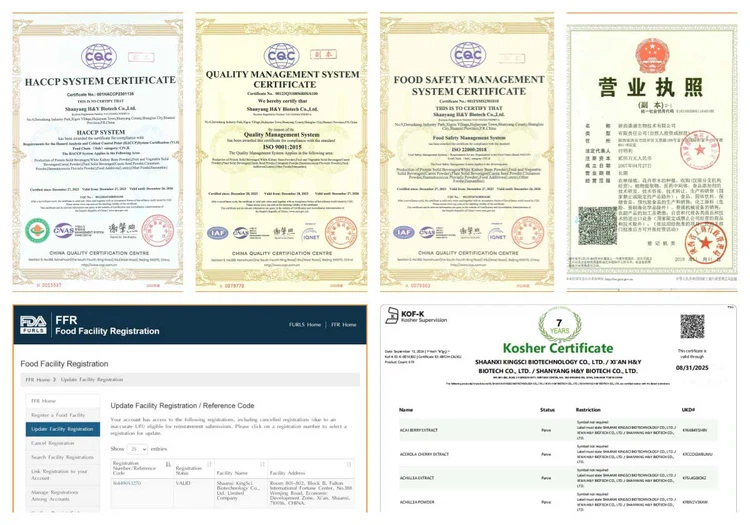
American warehouse

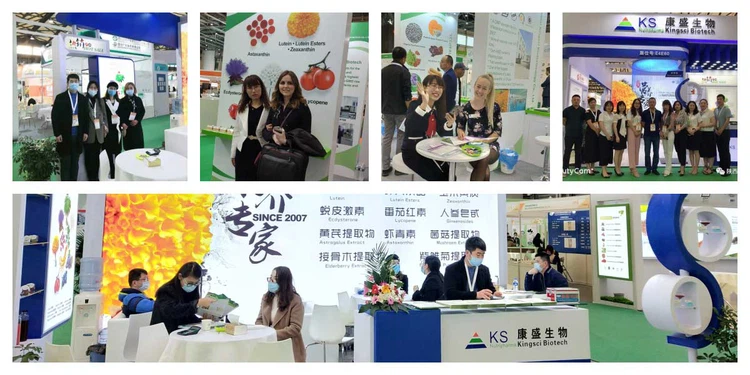
Exhibitions
Hot Tags: grape seed extract powder, China, manufacturers, suppliers, factory, wholesale, price, pricelist, quotation, bulk, in stock, KOSHER, ISO, HACCP


