


What is Lycopene Powder?
Tomato-Derived Carotenoid Powder for Standardized Formulation
Lycopene Powder is a standardized carotenoid ingredient with a specified concentration from tomatoes for dietary supplements, nutritional products, functional foods, and other applications as an ingredient. Kingsci provides this powder with specifications ranging from 1- 98%, and HPLC can be used for specification control.

Ingredient Profile
|
Parameter |
Specification |
|
Botanical Source |
Tomato |
|
Ingredient Type |
Carotenoid |
|
Key Active |
Lycopene |
|
Appearance |
Dark red powder |
|
Assay |
1–98% options |
|
Analytical Method |
HPLC |
|
Particle Size |
Typically 80 mesh |
|
Sample Availability |
10–20 g |
|
Supply Format |
Powder |
|
Bulk Supply |
Available |
It is a fat-soluble carotenoid that is naturally present in tomatoes and other red fruits. The deep red color is one of its distinguishing features, which is also vital for concentrated materials that are visually appealing.
Select the Lycopene Grade Around Your Formula
No need to choose the lycopene powder solely for its concentration. The specification will vary based on the amount of active lycopene to be used in the final product, the formulation space, and how it will be used.
|
Lycopene Grade |
Typical Formulation Consideration |
|
1–6% |
Suitable when lower active concentration is preferred for blend development |
|
10–20% |
Practical range for standardized nutritional formulations |
|
90–98% |
High-concentration option where a higher active loading is required with less ingredient volume |
Final product formula, intended dosage, carrier system, and processing conditions are the factors that determine the actual grade.
Can't decide which grade to go with? Please submit your desired lycopene formulation and content.
What Makes Lycopene Powder Different From Other Lycopene Formats?
The decision for the manufacturer is not only dependent on the lycopene concentration used. The physical format will dictate the behaviour of the ingredient in formulation.
1. Standard Powder
A conventional powder is formulated to be dry blended and to be used when the manufacturing process allows for a fat-soluble carotenoid ingredient.
2. High-Concentration Powder
High assays, for instance 90%, 95%, and 98%, can decrease the quantity of ingredient needed to provide a given quantity. This can be beneficial for formulation space or active loading considerations.
3. Beadlets
Lycopene Beadlets are recommended for use where handling properties are of interest or particular dispersion properties are required.
4. Oil
The oil-based formulation (softgel fill and other lipid-phase formulations) is more natural for lycopene oil.
Not all ingredients should be stored in the same format, as this depends on the manufacturing environment.

Where Lycopene Powder Fits
It isn't just suitable for use in any finished product, but it can also be tested under multiple formulation conditions.
1. Capsules & Tablets
Dry Lycopene Powder can be used as part of solid dosage forms, in combination with other nutritional ingredients. The chosen concentration should correspond to the amount of lycopene to be loaded and the total amount of the blend.
2. Nutritional Premixes
Lycopene can be used as a vitamin, mineral, botanical extract, and other carotenoid premix ingredient. For high-potency grades, blend uniformity is especially critical.
3. Functional Foods & Nutrition Products
Powdered nutritional formulations using a fat-soluble carotenoid ingredient may be suitable for use in the end product.
4. Carotenoid Blends
When the final formulation has a wider spectrum of carotenoids, it may also include other carotenoids like lutein, zeaxanthin, or beta-carotene.
Formulation Points to Check Before Ordering
An appropriate lycopene specification should be checked in light of the process used in its production.
1. Active loading
Determine the amount needed and consider both low and high assay grades.
2. Blend uniformity
High-potency powders are a smaller percentage of the product, and particle distribution and/or premixing procedures should be evaluated.
3. Light and oxygen exposure
It is a carotenoid that is easily oxidized. The amount of exposure to high levels of light, oxygen, and heat in the processing and storage phase should be reduced.
4. Carrier compatibility
Verify compatibility of other ingredients/excipients in the final formulation.
5. Finished-product stability
The stability of Pure Lycopene Powder should be considered in the actual packaging, processing, and storage conditions, and not just be based on the stability of raw materials.
COA
| Test Item | Specification | Result | Test Method |
| Botanical Source | Solanum lycopersicum fruit | Complies | Documentation Review |
| Identification | Positive for Lycopene | Complies | HPLC |
| Lycopene Content | ≥ 10.0% | 10.18% | HPLC |
| Appearance | Dark Red Fine Powder | Complies | Visual |
| Odor | Characteristic | Complies | Organoleptic |
| Taste | Characteristic | Complies | Organoleptic |
| Particle Size | ≥ 95% pass 80 mesh | 98.20% | USP <786> |
| Bulk Density | 0.30–0.70 g/mL | 0.48 g/mL | USP <616> |
| Loss on Drying | ≤ 5.0% | 3.26% | USP <731> |
| Total Ash | ≤ 5.0% | 2.91% | USP <561> |
| Total Heavy Metals | ≤ 10 ppm | 3.12 ppm | ICP-MS |
| Lead (Pb) | ≤ 2.0 ppm | 0.42 ppm | ICP-MS |
| Arsenic (As) | ≤ 1.0 ppm | 0.11 ppm | ICP-MS |
| Cadmium (Cd) | ≤ 1.0 ppm | 0.18 ppm | ICP-MS |
| Mercury (Hg) | ≤ 0.1 ppm | 0.02 ppm | ICP-MS |
| Residual Solvents | Complies with applicable requirements | Complies | GC |
| Total Plate Count | ≤ 1,000 CFU/g | 180 CFU/g | USP <2021> |
| Yeast & Mold | ≤ 100 CFU/g | 20 CFU/g | USP <2021> |
| Escherichia coli | Absent/10 g | Absent | USP <2022> |
| Salmonella spp. | Absent/25 g | Absent | USP <2022> |
| Staphylococcus aureus | Absent/10 g | Absent | USP <2022> |
You can Contact Us Directly or email donna.zh@kingsci.com to obtain further information and free samples.
How Kingsci Can Support Lycopene Sourcing
Kingsci's lycopene product range is not a single grade, but a wide range of concentrations. The current product range includes 1%, 3%, 5%, 6%, 10%, 20%, 90%, 95%, and 98% options.
It lets manufacturers initiate the sourcing process based on the finished formulation requirement and not be limited to a single specification.
1. Specification Matching
Tell us your desired level/amount, dosage, finished product type, and we can find an appropriate grade to evaluate.
2. Sample Evaluation
Samples can be obtained to test and formulate in advance of bulk orders.
3. Documentation
Technical documentation for qualified products, such as COA and other product-support documents for the evaluation of raw materials, can be supplied.
4. Bulk Supply
Bulk Lycopene Powder can be supplied for manufacturing use, and the packaging and supply plan can be discussed based on the order requirements.
Storage & Handling
Lycopene Powder should be stored in a cool, dry, and well-ventilated place away from direct sunlight/heat, moisture, and exposure to air.
Tightly close the container when not in use. Keep unnecessary exposure to oxygen, heat, and strong light to a minimum during the production period.
Always check the storage conditions listed in the specification and stability data for the grade against the recommendation.
FAQ
What is Lycopene Powder?
Lycopene Powder is a powdered carotenoid ingredient in which the level of lycopene has been standardized, typically from tomatoes. It is provided for use in food supply and nutrition products.
What lycopene concentrations are available?
Kingsci currently lists 1%, 3%, 5%, 6%, 10%, 20%, 90%, 95%, and 98% lycopene powder specifications.
Which lycopene concentration should I choose?
The optimum concentration will be determined by the lycopene level desired in the final product, dosage size, and the composition and production of the blend. The strong and weak grades can be used interchangeably in some dry blends to lower the amount of raw material required, or to increase the concentration.
Is lycopene powder suitable for tablets and capsules?
Yes. Standard lycopene powder can be used for assessment of dry formulations like tablets, capsules, and nutritional premixes, if suitable for formulation and processing.
What is the difference between lycopene powder and lycopene oil?
Lycopene powder is most suitable for dry formulations; lycopene oil is for formulations that include an oil or lipid phase. Depending on the manufacturing system to be used for the finished products, the appropriate format is used.
How is lycopene content tested?
HPLC is generally used for the control of lycopene content. The HPLC method is mentioned in the specification of Kingsci's lycopene powder.
Can I request a sample before placing a bulk order?
Yes. Kingsci currently provides evaluation samples of 10- 20 g of lycopene powder.
Develop Your Lycopene Formula With the Right Starting Specification
An assay doesn't necessarily have to be the highest in order to be the first on a lycopene project.
The first step is to consider the correlation between active content, formulation space, physical format, processing conditions, and stability requirements.
Provide your desired amount of lycopene and the final product type to Kingsci, and we'll be able to help you determine the right powder specification for you.
Certifications
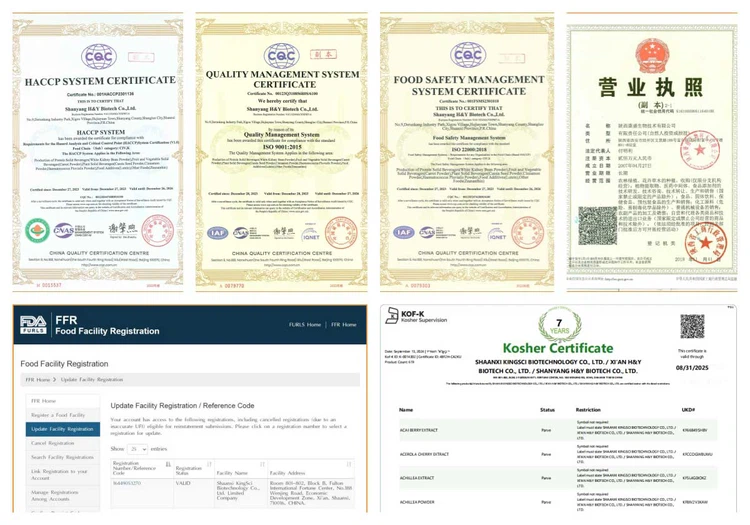
American warehouse

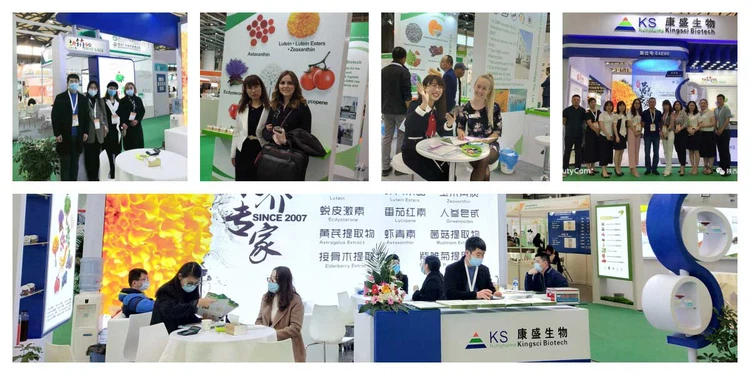
Exhibitions
Hot Tags: lycopene powder, wholesale lycopene powder, China, manufacturers, suppliers, factory, wholesale, price, pricelist, quotation, bulk, in stock,free sample


