


What is Pomegranate Seed Extract?
Pomegranate Seed Extract is a botanical extract that is harvested from the seeds of Pomegranate and is widely used in personal care, cosmetic, nutraceutical, and functional foods industries throughout the world for its naturally occurring fatty acids, polyphenols, and compounds with active properties derived from fruits. While the ingredients from pomegranate peel are mainly used for their tannin properties, it is more popular for formulation applications and is compatible with high-quality plant-based product concepts, and has the advantages of punicic acid. The ingredient is normally manufactured by commercial manufacturers using cold pressing, supercritical extraction, or standardised extraction technologies. Depending on the target specification and intended application in industry, the product can be supplied in a variety of forms, including oil, powder extract, water-soluble powder, and custom forms of active content ingredients for OEM and private label production. Recognizable botanical origin and wide formulation versatility make it a popular ingredient in capsules, softgels, powdered nutrition products, beverage mixes, skin care products and serums, emulsions, shampoos, and beauty products development programs, especially in clean-label and plant-based products.

COA
| Test Item | Specification | Result | Method |
| Appearance | Fine, free-flowing powder | Conforms | Visual |
| Color | Brownish-red to reddish brown | Conforms | Visual |
| Odor | Characteristic mild botanical odor | Conforms | Organoleptic |
| Particle Size | 80–100 mesh or customized | Conforms | Sieve analysis |
| Moisture | ≤ 5.0% | 3.20% | Loss on drying |
| Ash Content | ≤ 5.0% | 2.80% | Gravimetric |
| Bulk Density | 0.30–0.60 g/mL | 0.45 g/mL | Tap density |
| Punicic Acid | ≥ 1.0% (or customized) | 1.25% | GC-MS |
| Total Lipids | ≥ 10.0% | 11.80% | Soxhlet extraction |
| Total Polyphenols (as GAE) | ≥ 2.0% | 2.30% | UV-VIS |
| Heavy Metals (Total) | ≤ 10 ppm | < 5 ppm | ICP-MS |
| Lead (Pb) | ≤ 2.0 ppm | 0.8 ppm | ICP-MS |
| Arsenic (As) | ≤ 1.0 ppm | 0.3 ppm | ICP-MS |
| Cadmium (Cd) | ≤ 1.0 ppm | 0.2 ppm | ICP-MS |
| Mercury (Hg) | ≤ 0.1 ppm | ND | ICP-MS |
| Total Plate Count | ≤ 10,000 cfu/g | 1,200 cfu/g | USP |
| Yeast & Mold | ≤ 100 cfu/g | 30 cfu/g | USP |
| E. coli | Negative | Negative | USP |
| Salmonella | Negative | Negative | USP |
Looking for bulk supply or product details?
Request A Free Sample or Bulk Quote to get COA, pricing, and fast delivery options.
Features
Typically comes as a fine, free-flowing powder that is easily dispersible, has a controlled moisture content, and consistent bulk density, facilitating easier incorporation with capsule filling, tablet compression, stick packs, sachets, powdered beverage blends, and dry premix systems. Manufacturers can adjust the particle size distribution, flow ability, hygroscopicity, and water dispersibility by the extraction and drying technology, which is helpful to enhance the efficiency of large-scale production and avoid the phenomenon of segregation when blending. The powder is also suitable for use with the most common carrier materials like maltodextrin or gum arabic, for spray drying and formulation in a downstream process. The powder form of Punica Granatum Seed Extract is especially appealing to water-based formulations and dry applications, as it has relatively good handling properties at controlled storage conditions, which is desired for formulation by formulators. Industrial users often recommend using low-humidity environments, oxygen-limited packaging, and ensuring products are not exposed to excessive heat or direct light to help maintain product stability, color uniformity, and sensory consistency during storage, transport, and commercial-scale manufacturing operations, due to the presence of naturally occurring unsaturated compounds.
How to Store Properly?
1. Maintain Sealed Original Packaging
The product has been packed following standard export packaging orders. Manufacturers are recommended to maintain the original sealed container until the product is used, in order to reduce the unnecessary contact with air, humidity, and external contamination during the storage process in the warehouse.
2. Store in a Cool and Dry Environment
It is recommended for long-term storage in a temperature-stable and low-humidity warehouse environment to ensure the powder flowability, color uniformity, and physical stability during storage.
3. Avoid Direct Light Exposure
Exposure to direct sun or intense artificial heat in warehouse areas should be avoided, as high levels of light and heat can, over time, have a significant effect on the sensory profile and physical uniformity of naturally occurring unsaturated powders from the botanical extract.
4. Control Moisture During Secondary Handling
Manufacturers should employ dry handling conditions to minimize the potential of moisture absorption and powder agglomeration during repacking, blending, or batch subdivision processes; and complete all these operations quickly and close used containers properly as soon as possible, when moisture is likely to be present in the production environment.
5. Keep Away from Strong Odor Materials
Pomegranate Extract Powder must not be stored in the vicinity of volatile chemicals, strong-smelling raw materials, or industrial solvents, as the botanical powders can absorb the other surrounding smells during the long storage period in common warehouse facilities.
6. Apply FIFO Inventory Management
Generally, industrial users are encouraged to have a First-In-First-Out (FIFO) inventory rotation system to maintain consistent usage of batches, efficient production planning, and a stable usage of raw materials in large-scale production.

Recommended Usage
1. Capsule Formulations
Pomegranate Seed Extract from Pomegranate can be easily incorporated with the standard powder blending system and is used in capsule products. It is usually used in combination with carriers like maltodextrin and microcrystalline cellulose to enhance the flowability, uniformity of filling, and production efficiency in the process of encapsulation.
2. Tablet Applications
The extract can be processed directly into tablets or by granulation processes as needed for tablet formulations. Optimization of particle size and appropriate excipients can help to increase the compression stability and minimize sticking in large-scale tableting operations.
3. Powdered Beverage Blends
Often used in instant drink powders and nutrition sachets. Supporting dispersion and mixing performance with pre-blending with soluble fruit powders, flavor systems, and/or functional carriers can be beneficial.
4. Liquid Formulations
Advice for liquid products is to include the powder in a predetermined amount of water or similar liquid product carrier before adding to a full batch; this can help to ensure that the product is not aggregated during processing, and to improve mixing efficiency.
5. Stick Pack Products
The fine texture and the powder's excellent handling properties are ideal for filling and packaging sticks and also for portable solid beverage systems, particularly in automated applications.
6. Botanical Premixes
Extracts can also be blended with other botanical ingredients or fruit powders for custom-made formulations, and staged blending can be employed to ensure that the extract is more homogeneous within the batches during commercial production.
Certifications
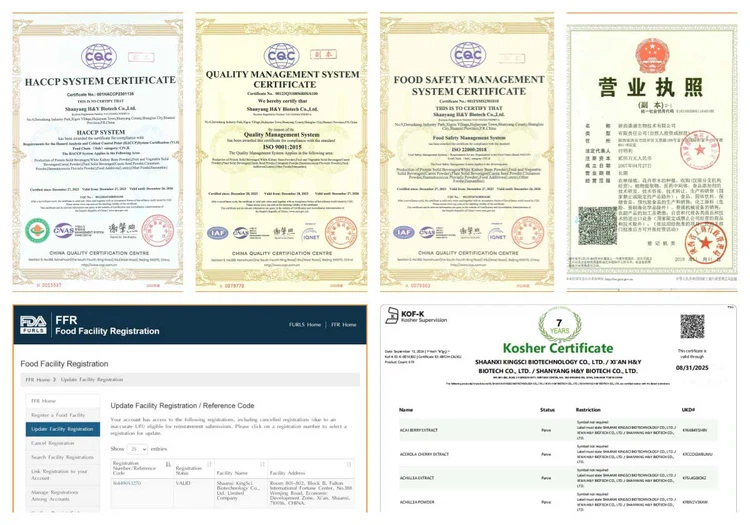
American warehouse

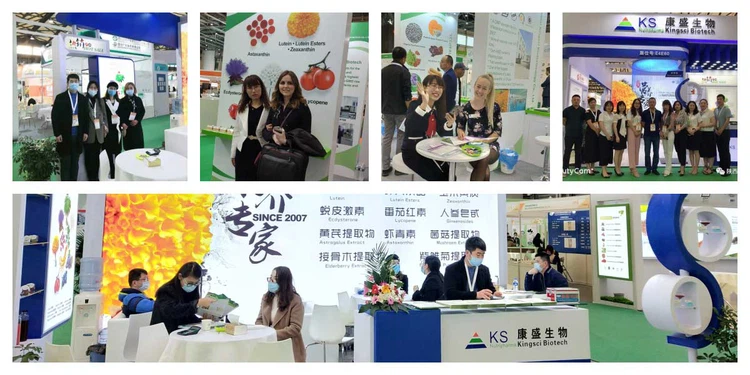
Exhibitions
Hot Tags: pomegranate seed extract, China, manufacturers, suppliers, factory, wholesale, price, pricelist, quotation, bulk, in stock, KOSHER, ISO, HACCP


