


What is Magnesium Glycinate In Powder Form?
The Magnesium Glycinate In Powder Form is a highly refined chelated magnesium raw material that is manufactured by the combination of magnesium ions with the amino acid glycine to produce a stable, free-flowing ingredient that is very popular among manufacturers in the nutrition, food, beverage, and functional formulation sectors. This ingredient is also treasured due to its uniform distribution of particle size, reliability of assay levels, and its great solubility, which favors the predictability in blending, tablet, encapsulation, and drink-mix production. The powder structure is normally designed based on maximized flow and low hygroscopicity features to ensure ease of handling during large-scale processing of the material, as well as to reduce interruptions in production. It has a low organoleptic profile and has a stable behavior in multi-component matrices, which is favorable to formulators who have to meet strict sensory or compatibility criteria during product design because it is a chelated material. Its solubility in a wide variety of formulation technologies enables downstream manufacturers to add it to powders, capsules, tablets, premixes, and even greater custom blends without the need to make complicated changes in their processing. With its stability, high dosability, and consistent performance, it is now a popular choice of chelated magnesium in brands and contract manufacturing companies that need a stable and reliable raw material that meets the needs of industrial production and the ability to produce consistent and repeatable manufacturing results.

COA
| Test Item | Specification | Test Method | Results |
| Appearance | White to off-white fine powder | Visual | White powder |
| Identification (Magnesium) | Positive | ICP-OES / AAS | Complies |
| Assay (Magnesium content, % as Mg) | 10.0 – 12.0% | ICP-OES / AAS | 12.60% |
| Assay (Magnesium Glycinate) | ≥ 98% | HPLC / Titration | 98.60% |
| Loss on Drying (%) | ≤ 5.0% | AOAC 925.10 / Thermogravimetric | 3.00% |
| Residue on Ignition (%) | ≤ 3.0% | USP 281 / Gravimetric | 2.00% |
| pH (10% solution) | 5.5 – 7.5 | pH meter | 6.80 |
| Heavy Metals (Pb, As, Cd, Hg) | Pb ≤ 2 ppm, As ≤ 1 ppm, Cd ≤ 1 ppm, Hg ≤ 0.1 ppm | ICP-MS | Pb: 1.2 ppm; As: 0.5 ppm; Cd: 0.3 ppm; Hg: 0.05 ppm |
| Microbial Limits | Total Plate Count ≤ 1000 CFU/g, Yeast & Mold ≤ 100 CFU/g, E. coli: Negative, Salmonella: Negative | USP 61 / USP 62 | TPC: 350 CFU/g; Yeast & Mold: 50 CFU/g; E. coli: Negative; Salmonella: Negative |
Are you interested in our products? Just leave a message on this page or Contact Us Directly to get free samples and more professional support!
How It Works?
The actual action of Magnesium Glycinate Powder occurs by the interaction of magnesium ions with the biochemical processes in the cells, whereas the glycine ligand facilitates the transportation and stability in the body. On the molecular scale, magnesium ions are necessary cofactors that are involved in a variety of enzymatic reactions involving the metabolism of energy, redox, and maintenance of nucleic acid structures. Its existence affects responses associated with ATP use, phosphorylation, and structural organization of enzymes that require divalent cations to be active. These properties provide stability and regulated dissociation to promote the involvement of magnesium in oxidative stress-related and cellular signaling pathways. The chelate includes glycine, which also adds to physicochemical stability and has the ability to engage with the metabolic networks associated with amino acid processing. The importance in industrial and research applications is its predictable dissociation behavior, compatibility with metabolic reactions, and the ability to be incorporated into a study on enzymatic regulation, mitochondrial energy, and ion-sensitive biochemical systems with predictable dissociation behavior compared to more volatile mineral forms.
Process
1. Raw Material Preparation
The first stage of industrial production is usually the choice and filtering of magnesium oxide or magnesium hydroxide and pure glycine. Identity, purity, particle size, and contaminant checks on both materials are done before they enter the synthesis line.
2. Chelation Reaction
The glycine was reacted with the magnesium source in purified water and under controlled pH and temperature conditions. The procedure allows the chelation of magnesium ions using glycine to form Magnesium Bisglycinate Powder. pH modification is important to maximize complexation and to reduce the amount of starting material that did not react.
3. Filtration and Purification
Once the reaction is done, the mixture then goes through a filter to eliminate the insoluble residues. Further purification processes like decolorisation, fine filtration, or controlled washing are done, depending on the specification required, and to attain clarity, as well as minimise trace elements.
4. Concentration
A pure solution is concentrated using vacuum evaporation or any other method. This process enhances solid content and preserves thermal stability, and then readies the solution for subsequent drying.
5. Drying
The most popular industrial process is spray drying, which is scalable and capable of making a free-flowing powder that is consistent. Atomization of the solution is done in a hot air chamber, and the atomized solution is converted into dry granules with controlled moisture and particle properties.
6. Milling and Sieving
After drying, the powder is milled (where necessary) and subjected to industrial sieves in order to obtain a homogeneous distribution of particles. This makes sure of appropriate flow behavior and compatibility with tablet, capsule, and blending applications.
7. Final Blending and Homogenization
The last homogenization step is meant to make the powder uniform throughout the batch. Flow agents can be incorporated based on the specifications of the clients and regulatory provisions to enhance a better handling process in large-scale packaging.
8. Packaging and Quality Assurance
The final powder is filled in food or pharmaceutical-grade containers with controlled environmental conditions. Quality confirmation testing is done on each batch, and it includes assay, loss on drying, heavy metal screening, and microbial tests to ensure that it conforms to the customer and regulatory requirements.

Suitable For
On the part of a manufacturer, Bulk Magnesium Glycinate is usually designed into products that target consumer segments that desire ingredients that help maintain an overall nutritional balance, daily micronutrient supplementation, and products that serve the needs of people with particular dietary habits or sensitivities. Its soft sensory characteristics and chelate structure render it effective to end users who demand mild and easy-to-incorporate mineral sources in everyday nutrition formulations, including those people who prefer products that are easier to digest or have less gastrointestinal load than some other mineral salts. They also find frequent use in the formulations aimed at the population with active lifestyles, people who need to cope with busy schedules, or those consumers who prefer to keep the micronutrient balance intact regardless of their overall dieting habits. Since it is easy to use in clean-label positioning and can be used in most allergen-controlled and vegetarian formulations, downstream brands tend to use it in products that target consumers who value ingredient transparency, purity, and uniform quality.
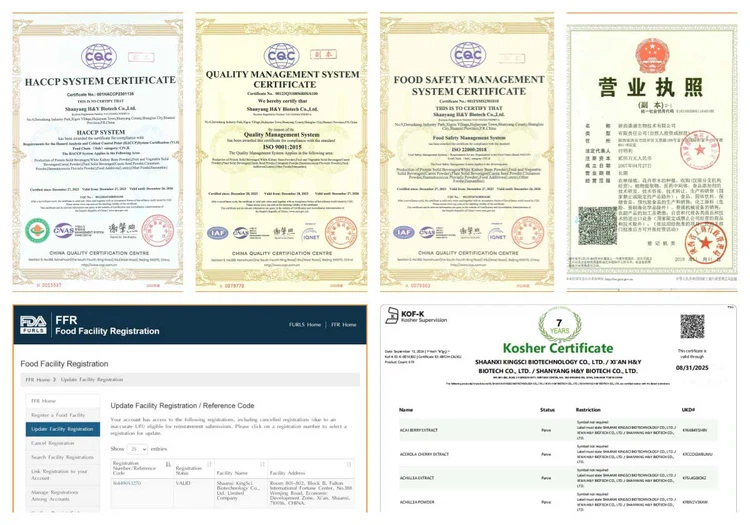
Certifications
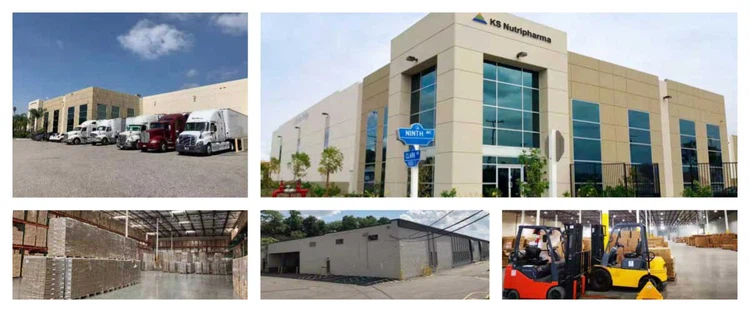
American warehouse
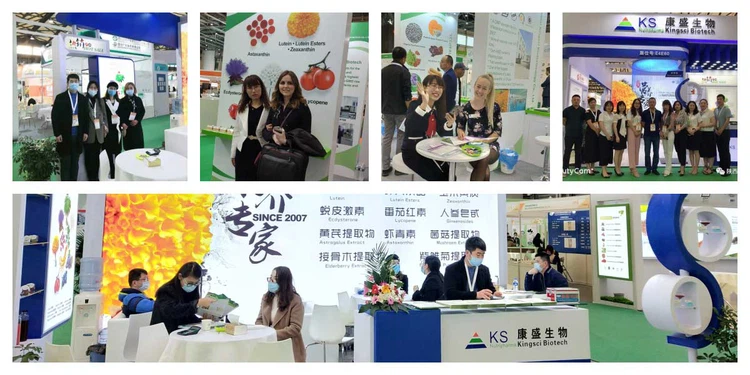
Exhibitions
Hot Tags: magnesium glycinate in powder form, China, manufacturers, suppliers, factory, wholesale, price, pricelist, quotation, bulk, in stock, KOSHER, ISO, HACCP


