


What is Birch Bark Extract?
Birch Bark Extract is a purified botanical extract derived using the outer bark of Betula species after controlled extraction procedures, which are aimed at providing consistency in quality when preparing large quantities of the extract. It has been appreciated in terms of its naturally occurring triterpenes, like betulin, and its polyphenol profile, in its useful application in supply chains, and in terms of its application in many types of products. The extract is generally manufactured as a fine powder or concentrated liquid with consistent physicochemical characteristics and is thus easily incorporated into the current formulations that emphasize the concept of natural sourcing, clean-label status, and traceability of the source of raw material. The tourism industry in the skincare, personal care, functional beauty, and other botanical-based product categories, manufacturers utilize it as a vegetal ingredient that facilitates the achievement of texture, formulation sophistication, and product narration centered around a nature-oriented product development. It can be used in both standard and innovative product formats by its compatibility with emulsions, gels, anhydrous systems, and waterless technologies, and the downstream brands can use it in all of these product formats. To the purchaser, the extract will have the advantages of being reliably standardized, globally regulatory, and in line with the market requirements of sustainable long-term need for minimally processed and transparently sourced botanical ingredients.

COA
| Item | Specification | Result |
| Appearance | Off-white to light beige powder | Conforms |
| Odor & Taste | Characteristic | Conforms |
| Identification | Positive | Conforms |
| Betulin Content (HPLC) | ≥ 70% | 70.60% |
| Loss on Drying | ≤ 5.0% | 2.13% |
| Ash | ≤ 5.0% | 3.02% |
| Particle Size | 95% through 80 mesh | Conforms |
| Residual Solvents | ≤ USP/EP limits | Conforms |
| Heavy Metals (Total) | ≤ 10 ppm | <10 ppm |
| Lead (Pb) | ≤ 2 ppm | <2 ppm |
| Arsenic (As) | ≤ 2 ppm | <2 ppm |
| Cadmium (Cd) | ≤ 1 ppm | <1 ppm |
| Mercury (Hg) | ≤ 0.1 ppm | <0.1 ppm |
| Pesticide Residues | ≤ USP/EP limits | Conforms |
| Total Plate Count | ≤ 10,000 cfu/g | <1,000 cfu/g |
| Yeast & Mold | ≤ 1,000 cfu/g | <100 cfu/g |
| E. coli | Negative | Negative |
| Salmonella | Negative | Negative |
Are you interested in our products? Just leave a message on this page or Contact Us Directly to get free samples and more professional support!
Features
Birch Extract can be characterized by many interesting physical and chemical properties, which precondition its great utility among formulators who want to use natural-origin inputs that are stable. It is specifically abundant in triterpenes, particularly betulin, which provides it with a crystalline arrangement, comparatively high melting, and a high tendency to become lipophilic. This lipophilicity enables the extract to be dispersed effectively in oils, butters, and anhydrous systems, which are used to make balms, solid formulations, as well as waterless formulations. Meanwhile, current extraction and micronization processes allow making finer particles with higher dispersibility in emulsions, which contributes to the minimization of graininess and aids in the homogeneous dispersion of particles in creams and gels. It also demonstrates good oxidative stability because the polyphenols found in the bark are natural, which gives the formulators the capability of preserving the integrity of their products in most storage conditions. Its low aroma, light color, and ability to work with surfactant-based systems as well as emulsion-based systems have enabled it to be flexible to a broad spectrum of clean-label product concepts. These characteristics give the range of technical flexibility to the formulators who can use it as a structurally stable, process-friendly, and naturally sourced ingredient.
How to Store Properly?
1. Store in a Cool, Dry Environment
Store the material under controlled temperatures in an environment that is not exposed to heat to ensure that there is no physical alteration of the material, as well as to ensure the integrity of its natural compounds.
2. Avoid Exposure to Humidity
Keep the relative humidity low; too much moisture can have an impact on flowability or lead to clumping and which is predominant in fine-powder forms.
3. Keep the Packaging Sealed When Not in Use
Even though the product is packed in safe and airtight containers, it is necessary to close bags or drums upon dispensing to avoid exposing the product to the air and environmental contaminants.
4. Protect From Direct Sunlight
Keep the extract in dark or covered areas, as direct ultraviolet light can lead to slow deterioration of some plant constituents.
5. Use Clean, Dedicated Tools for Handling
During the transfer or sampling of the extract, dry and sanitized handling equipment should be used to ensure that the batch remains pure and does not cross-contaminate with other raw materials.
6. Follow FIFO or Batch-Control Procedures
Use common warehousing strategies like first in first-in-first-out to achieve maximum freshness with the aim of helping to provide predictable performance during downstream formulation processes.

Recommended Usage
Whether it is in terms of manufacturing, Birch Bark Extract can be added in a range of dosages, with the emphasis being put on appropriate dispersion, the choice of carriers, and the control of the process, in order to ensure the homogeneity and stability. In capsule items, flow enhancers or neutral carriers are commonly added to the extract so that it can be encapsulated smoothly and not unduly segregated because of the item density when filling at high speed. In the case of producing tablets, it may be mixed with appropriate binders and granulated where it is required to enhance compressibility and obtain the uniform hardness of tablets without undesirable effects on their appearance. Making a homogeneous dispersion of the extract might necessitate pre-solubilization or controlled emulsification of especially water-based or hydro-alcoholic systems, since the extract includes naturally lipophilic substances that are advantageous to be incorporated gradually under mixing. In all formats, manufacturers tend to perform small-scale pre-tests to identify the best mixing times, and also to confirm that the extract mixes well with excipients, so that the extract can be incorporated into the final product cleanly and with ease, in respect of natural-origin and clean-label products positioning.
Certifications
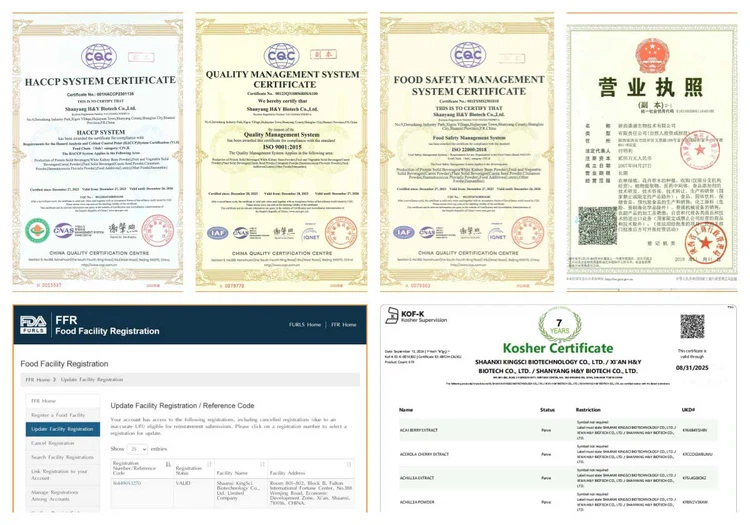
American warehouse

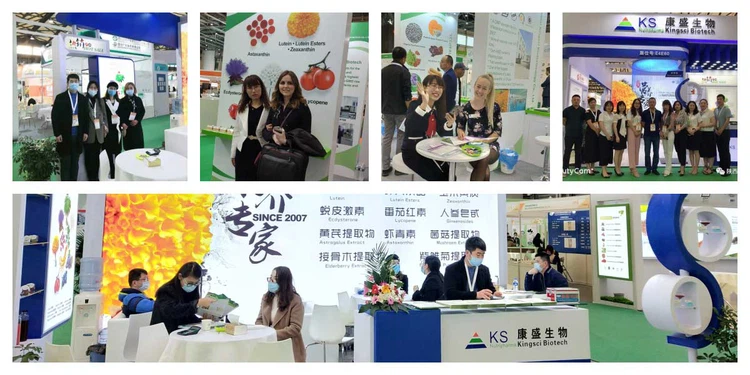
Exhibitions
Hot Tags: Birch Bark Extract, betula alba birch bark extract,China, manufacturers, suppliers, factory, wholesale, price, pricelist, quotation, bulk, in stock, KOSHER, ISO, HACCP


