


What is Bulk Blue Spirulina Powder?
Bulk Blue Spirulina Powder is a large volume, industrial-level supply of a blue colored algae-derived pigment manufactured as a natural color ingredient in commercial production and only standardized to be used as a natural product. It is marketed not as a retail product, but as a formulation ingredient that is aimed at promoting uniformity of color delivery, economy, and scalability of food, beverage, and approved non-food production. Phycocyanin is extracted and concentrated in controlled processes to obtain a specific color strength, solubility, and purity to be used in industry to obtain the blue color. This ingredient is available in bulk amounts to be incorporated into automated dosing, blending, and mixing systems to allow manufacturers to achieve batch-to-batch color control with the economics of management of inventory and logistics. As a natural blue solution in a blue color with a bulk form of Spirulina, it is in line with worldwide clean-label and plant-based ingredient directions, providing an alternative to synthetic blue dyes in the markets where the transparency of sourcing and the familiarity with the raw materials are becoming more significant. Quality-wise and compliance-wise, bulk supply is generally assisted with standardized specifications, Certificate of Analysis, and regulated production systems, which concern the parameters of moisture content, microbiological limits, and color value in large-scale manufacturing.

COA
| Item | Specification | Result | Test Method |
| Appearance | Blue to blue-green fine powder | Conforms | Visual |
| Color Shade | Bright blue | Conforms | Visual |
| Odor | Characteristic, mild | Conforms | Organoleptic |
| Phycocyanin Content | ≥ 10.0% | 10.60% | UV-Vis |
| Loss on Drying | ≤ 7.0% | 5.20% | USP <731> |
| Bulk Density | 0.35 – 0.60 g/mL | 0.48 g/mL | USP <616> |
| Particle Size | 100% pass 80 mesh | Conforms | Sieve |
| pH (1% solution) | 5.0 – 7.5 | 6.3 | USP |
| Solubility | Soluble in water | Conforms | Visual |
| Microbiological Tests | |||
| Total Plate Count | ≤ 10,000 CFU/g | 1,200 CFU/g | USP <2021> |
| Yeast & Mold | ≤ 100 CFU/g | < 50 CFU/g | USP <2021> |
| E. coli | Negative / 10 g | Negative | USP <2022> |
| Salmonella | Negative / 25 g | Negative | USP <2022> |
| Heavy Metals | |||
| Lead (Pb) | ≤ 2.0 ppm | 0.38 ppm | ICP-MS |
| Arsenic (As) | ≤ 1.0 ppm | 0.21 ppm | ICP-MS |
| Cadmium (Cd) | ≤ 1.0 ppm | 0.09 ppm | ICP-MS |
| Mercury (Hg) | ≤ 0.1 ppm | < 0.01 ppm | ICP-MS |
Are you interested in our products? Just leave a message on this page or Contact Us Directly to get free samples and more professional support!
Features
Blue Spirulina Powder is separated by a set of physical and chemical properties that have a direct impact on the performance as a natural blue colorant in industrial formulations. The ability to color is made by its phycocyanin, a water-soluble protein-pigment-complex whose color has its best absorbance in the visible blue region, which means when well dispersed, it can be colored at relatively low concentrations. The powder is designed with the characteristics of regulated particle size and insoluble residue that facilitate quick hydration and even distribution in aqueous systems without the appearance of visible sedimentation. Phycocyanin has been shown to be chemically sensitive to thermal exposure, ultraviolet light, and extreme pH, making it best suited to neutral and slightly acidic conditions, and it prefers processing conditions that reduce high heat and light exposure. The pigment predictably responds to buffered systems, thus allowing formulators to control the appearance of the shade by maintaining a pH balance and formulation protection plans. Formulation-wise, its protein structure can be added to typical food matrices and blending systems, and shear, oxygen exposure, and storing conditions must be considered to maintain the intensity of the color throughout the shelf life. These natural characteristics render it a technically unique natural color ingredient, which gives formulators a clear guideline on how best to control the processing parameters, to choose the right application forms, and to create consistent and reproducible blue hues in large-scale production.
How to Store Properly?
1. Store in a Cool, Controlled Environment
Store the product in a temperature-controlled warehouse that is not in contact with heat, since high temperatures can speed up color loss with time.
2. Protect from Direct Light Exposure
Store the material in a dark or dim storage area, as excessive exposure to bright light may decrease the intensity of the colors.
3. Maintain Dry Storage Conditions
Make sure the storage is well ventilated and has low humidity so that no moisture is taken up, which can interfere with the flowability of the powder and dispersion behavior.
4. Keep Original Packaging Intact Until Use
The material should not be opened or repackaged earlier than intended; the initial sealed package should offer the best protection during storage and handling.
5. Reseal Promptly After Partial Use
When opening part of a package, airtight methods must be used to reseal the rest of the material as soon as possible to reduce the exposure to air and moisture.
6. Avoid Proximity to Strong Odors or Volatile Materials
Keep out of reach of chemicals, solvents, or highly fragranced products, as the powder can take in the odor of the other substances over prolonged times.
7. Implement FIFO Inventory Management
Use first in first out system so that there is consistency in the colors' performance and optimum use is within the suggested shelf-life.
8. Limit Repeated Handling and Transfers
Cut down on this unwarranted movement or opening of Spirulina Blue Color packages more than once to minimize the chances of environmental exposure and physical contamination.

Recommended Usage
Willingly, on a manufacturing note, the suggested application as a functional ingredient is on the controlled incorporation methods that retain color properties and uniform distribution of the method in various dosage forms. Capsule formulations. The powder is normally pre-mixed with other compatible powders of the excipient using low shear mixing to obtain homogeneous color dispersion and consistent fill weight, but without subjecting the powder to too much heat or extended contact with air during encapsulation. In the case of tablet applications, it is normally added at the dry blending step and mixed evenly with other functional and structural ingredients before compression, with formulators considering compression force and dwell time to reduce the stress on the color component and have it appear consistently on the tablet surfaces. Spirulina Blue is hydrated or dispersed in water under controlled agitation in liquid systems, e.g., solutions, suspensions, or concentrates, followed by addition to the bulk and permits complete solubilization of the additive and development of a stable color, with the formulators being able to control shade by use of concentration and pH. In all types of dosages, manufacturers enjoy the benefits of gradual addition, controlled mixing conditions, and validation at pilot scale, to assure batch-to-batch reproducibility. These methods of application enable it to be operated as a largely application-compatible, visually differentiating algae-based ingredient in capsules, tablets, and liquid formulations, and to be easily integrated into the conventionalized industrial production processes.
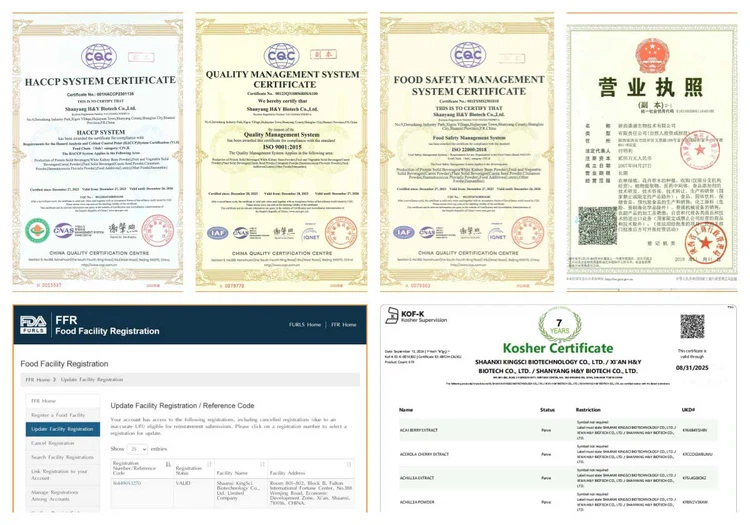
Certifications
American warehouse

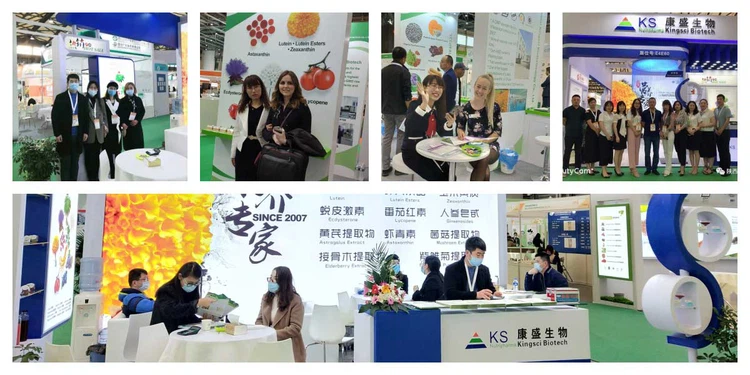
Exhibitions
Hot Tags: bulk blue spirulina powder, China, manufacturers, suppliers, factory, wholesale, price, pricelist, quotation, bulk, in stock, KOSHER, ISO, HACCP

