


What is Blue Pea Flower Extract?
Blue Pea Flower Extract is a natural botanical constituent that is made from the flowers of Clitoria ternatea through a controlled extraction and concentration procedure that is intended to be manufactured at a commercial scale. It is mainly used in markets as a source of plant-based blue color and functional botanical extract, which aids the strategy in natural formulation in food, beverage, dietary supplement, and cosmetic applications. The extract is normally provided as a standardized powder or granule with specified pigment description, with good water solubility, and with a characteristic blue-violet hue that is changeable with formulation pH, giving manufacturers formulation flexibility, other than positioning based on its health benefits. Industrially, it is appreciated due to its consistency and traceable botanical origin, and capacity to integrate with mainstream quality management systems, cGMP, and ISO, which will allow reliable incorporation into international supply chains. It is characterized in terms of commercial role by compositional clarity, color performance, and clean-label appeal, yet is still used in terms of aesthetic and formulation functions.

COA
| Item | Specification | Result |
| Appearance | Fine powder | Fine powder |
| Color | Blue to deep blue | Deep blue |
| Odor | Characteristic | Characteristic |
| Taste | Characteristic | Characteristic |
| Particle Size | 100% pass 80 mesh | 100% pass 80 mesh |
| Loss on Drying | ≤ 5.0% | 3.20% |
| Ash | ≤ 5.0% | 3.60% |
| Extract Ratio | 10:1 | 10:1 |
| Anthocyanins (as Ternatins) | ≥ 10.0% | 12.40% |
| Bulk Density | 0.30–0.60 g/ml | 0.45 g/ml |
| Heavy Metals (Total) | ≤ 10 ppm | 6.1 ppm |
| Lead (Pb) | ≤ 2 ppm | 0.62 ppm |
| Arsenic (As) | ≤ 2 ppm | 0.41 ppm |
| Cadmium (Cd) | ≤ 1 ppm | 0.18 ppm |
| Mercury (Hg) | ≤ 0.1 ppm | 0.02 ppm |
| Total Plate Count | ≤ 10,000 CFU/g | 2,100 CFU/g |
| Yeast & Mold | ≤ 1,000 CFU/g | 180 CFU/g |
| E. coli | Negative / 10 g | Negative |
Are you interested in our products? Just leave a message on this page or Contact Us Directly to get free samples and more professional support!
Recommended Dosage
In the commercial ingredient specification and formulation practice, the standardized pigment (anthocyanin) content of the Butterfly Pea Flower Extract and the desired visual effect in the finished product are generally used as the guideline for the recommended use level of the extract instead of any functional claims. In the case of case studies and industrial formulations, the extract is usually included in the finished product at concentrations that provide visible colour effects and stability; culinary preparations of aqueous extracts of Clitoria ternatea petals have investigated concentrations in the range of 0.2 to 0.8 per cent (w/v) of dried flower extract in water to provide a specific blue colour in food systems, and sensory assessment has reported the range of colour acceptability and product performance to be 0.6 per cent in water. In the beverage and concentrated drink sector, formulators commonly scale down to less need depending on the standardized anthocyanin assays, which could be tens to a few hundred milligrams of extract in kilograms of final product when put in pigment-equivalent units, with the actual values optimized in pilot-scale tests. It is this use-level guidance that should help product developers to produce consistent colour performance and also comply with formulation restrictions, processing environment, and label demands, and all end-of-inclusion rates are to be established following the current local rules, food additive regulations, or cosmetic ingredient instructions in each target market.
Application
1. Food Processing Industry
The extract is a popular source of blue or purple color in processed food items, including confectionery, bakery decorations, desserts, and dairy-like items, and manufacturers of these products appreciate both its natural source and clean-label status, as well as its ability to be used with water-based product formulations.
2. Beverage Manufacturing
Beverage applications are used in the ready-to-drink products, concentrates, syrups, and powder mixes to give the product a unique visual impression. Its color response to pH enables product developers to develop product appearance profiles differentiated in the non-alcoholic and specialty drinks categories.
3. Dietary Supplement Manufacturing
Its extract is utilized in supplements mainly due to its botanical identity and natural color to the capsules, tablet and, powder, and gummies to aid plant-based and visually appealing product concepts without the use of synthetic colorants.
4. Cosmetics and Personal Care
In the cosmetics industry, the extract is used as a natural colorant or botanical ingredient in cosmetic formulations such as soaps, cleansers, masks, and hair care products, where stability, traceability, and cosmetic ingredient requirements are used as selection criteria.
5. Functional Ingredients and Raw Material Supply
Clitoria Ternatea Flower Extract is a standardized intermediate extracted by ingredient suppliers and used in the further formulation, blending, or production of own-labeled products by contract manufacturers to support downstream brands that need to be supplied at the same quality, documented specifications, and in large quantities.

Safety
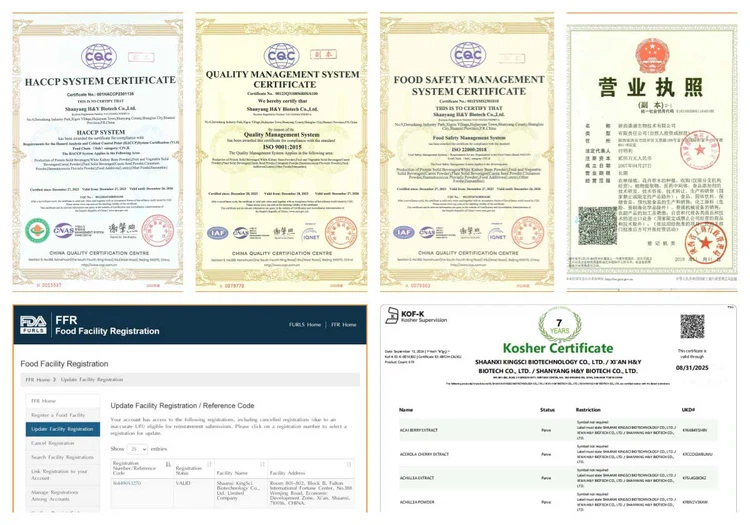
Manufacturing and regulatory Blue Butterfly Pea Flower Extract is considered a safe botanical ingredient in terms of manufacturing and usage in line with the industry standards and regulations. Commercial-grade materials are usually backed with toxicological assessment and safety data obtained through standardized testing protocols, such as heavy metal tests, microbial limits tests, and residual solvents tests, to determine the applicability in downstream products. The extract is manufactured by reputable processors and producers who have certified quality management systems like cGMP and ISO, and who offer systematic control over sourcing, processing, traceability, and batch control. Moreover, extracts are usually described as low allergenic because of the plant source and the lack of major allergens that are likely to result in cancers in humans, and scheduled allergens are often tested as a part of quality control programs.
Certifications
American warehouse

Exhibitions
Hot Tags: blue pea flower extract, China, manufacturers, suppliers, factory, wholesale, price, pricelist, quotation, bulk, in stock, KOSHER, ISO, HACCP

