


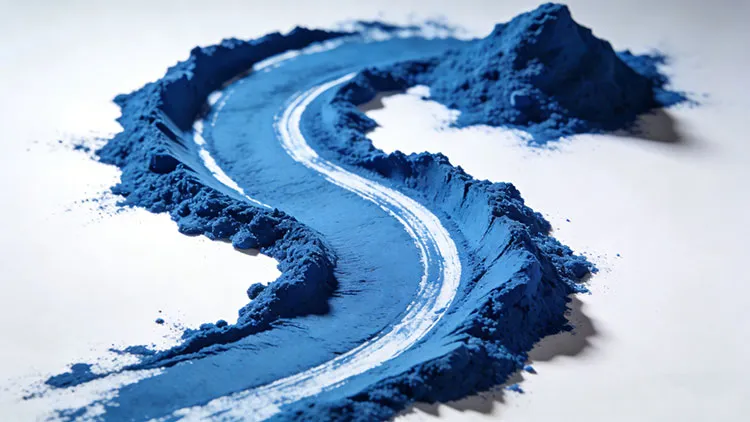
What is Blue Spirulina Extract?
Blue Spirulina Extract is a purified water-soluble ingredient derived by controlled extraction and concentration of the naturally occurring fraction of the blue color of Arthrospira platensis that selectively isolates the blue color fraction, as well as excluding most of the insoluble biomass. It is packaged as a natural color input to be used in formulation instead of a consumer product that provides manufacturers with a uniform, plant-based blue shade that fits the clean-label and naturally positioned product approach. The extract is normally standardized on pigment content to guarantee foreseeable color intensity, crispness, and batch-to-batch consistency, which are essential in large-scale production set-ups. It is used in industry due to its high levels of water solubility, low flavor perception, and ability to be used in a wide variety of formulation systems, such as beverages, confectionery, dairy-type, cosmetic, and specialty feeds. The manufacturing process is usually done under cGMP and ISO-oriented quality frameworks, and the regular analytical control measures regarding pigment concentration, microbiological limits, and contaminants are imposed to satisfy the international regulatory and customer demands. With an ever-changing demand with regard to alternative products to synthetic blue colorants from natural sources, it is a guaranteed scaled-up solution to manufacturers with the need to operate on a stable basis, transparent sourcing, and regulatory-compliant integration throughout the international supply chain.
COA
| Item | Specification | Result |
| Appearance | Blue to dark blue fine powder | Conforms |
| Odor | Characteristic, mild | Conforms |
| Solubility | Freely soluble in water | Conforms |
| Phycocyanin Content | ≥ 25.0% | 26.30% |
| Moisture | ≤ 7.0% | 5.20% |
| pH (1% solution) | 5.0 – 7.0 | 6.2 |
| Particle Size | 95% pass 80 mesh | Conforms |
| Bulk Density | 0.35 – 0.55 g/mL | 0.46 g/mL |
| Total Ash | ≤ 8.0% | 6.40% |
| Microbiological Analysis | ||
| Total Plate Count | ≤ 10,000 CFU/g | < 1,000 CFU/g |
| Yeast & Mold | ≤ 100 CFU/g | < 50 CFU/g |
| E. coli | Negative / 10 g | Negative |
| Salmonella | Negative / 25 g | Negative |
| Heavy Metals | ||
| Lead (Pb) | ≤ 2.0 ppm | < 0.5 ppm |
| Arsenic (As) | ≤ 2.0 ppm | < 0.3 ppm |
| Cadmium (Cd) | ≤ 1.0 ppm | < 0.1 ppm |
| Mercury (Hg) | ≤ 0.1 ppm | < 0.01 ppm |
Are you interested in our products? Just leave a message on this page or Contact Us Directly to get free samples and more professional support!
Source
Spirulina Extract comes as a by-product of Arthrospira platensis, which is a filamentous microalga that has been under controlled conditions in an open pond or closed photobioreactor farm to guarantee stable growth, traceability, and primary quality of raw material. To separate the water-soluble portion of the blue pigment fraction, the spirulina biomass is then subjected to aqueous extraction and physical separation processes intended to isolate the soluble fraction and eliminate the insoluble cell fractions, followed by filtration, concentration, and drying to yield a standardized extract powder. During the cultivation and processing, quality checks are used to control the purity, pigment content, and level of contaminants as per the relevant industrial and regulatory requirements. The ensuing extract is representative of a plant-based, renewable source of coolant, obtained through photosynthetic growth as opposed to being synthetically produced, and as such, it is well-placed to accompany the manufacturers that want naturally sourced color ingredients with a proven provenance and production routes.
History
The history is very much connected with the general scientific and industrial growth of spirulina as a micro-grown and cultivated algal resource. The rapid growth and the stable pigment composition of Arthrospira platensis have been investigated and commercially exploited for decades, andthe first commercial applications targeted whole spirulina biomass, which is cultivated in regulated water cultivation. With the development of food and ingredient production and the demand to find naturally derived alternatives to synthetic food additives, studies in the late twentieth century have started to focus on the production of particular functional fractions, and especially the water-soluble blue pigment fraction. Developments in aqueous extraction, filtration, and drying processes allowed manufacturers to isolate this fraction of pigment with increased accuracy and still be able to reproducibly isolate it at scale. With time, the standardized extraction methods and analysis methods enabled it to transition out of the laboratory and pilot use to commercial supply chains of food, cosmetic, and food industries. Its incorporation gained momentum alongside the acceptance of the world regulatory authorities of using plant-based sources of color and increased focus on ingredient transparency and traceability, and clean-label formulation strategies. Spirulina Extract Powder is the embodiment of decades of refinement of the cultivation, process optimization, and the development of the quality systems, as it may be seen as the embodiment of the shift in the utilization of traditional algal biomass to highly controlled, specification-driven natural ingredients that can be utilized in modern industries.

Precautions
1. Storage and Handling
The extract is to be kept in a cool and dry place, not exposed to direct sunlight and moisture, to preserve the pigment and avoid caking. Correct hand handling procedures, such as clean and dry equipment usage, are useful in maintaining quality in transfer and batching.
2. Dosage and Formulation Adjustment
The decision to include a good amount of pigment or to exclude it should be made by the manufacturers, depending on the concentration of the pigment in that particular batch, the desired color intensity, and the product matrix, and adjust formulation parameters accordingly, to get identical visualization outcomes.
3. Compatibility with Other Ingredients
We should ensure that the chemical and physical compatibility with other formulation constituents, such as pH sensitivity, temperature sensitivity, and solubility, is checked so that the extract disperses homogenously and the color is clear.
4. Processing Conditions
Pigment can be subjected to heat, light, and shear during processing and be affected. The processing steps, like pasteurization, mixing, or drying, that manufacturers ought to consider is that do not cause the extract to lose the color properties that it seeks.
5. Regulatory Compliance
The use of the Extract of Spirulina must meet the local requirements of natural colorants, including the maximum allowable content, labeling, and any other industry standards that may be applicable to food, beverages, cosmetics, or feed use.
6. Quality Verification
Regular testing of incoming batches, such as pigment content, moisture, and microbial limits, will aid in ensuring the consistency between the COA given and aid in reproducible production results.
7. Batch Documentation and Traceability
The quality management, audit, and regulatory reporting requirements are facilitated by the maintenance of proper batch records and traceability of the received material till production.
Certifications
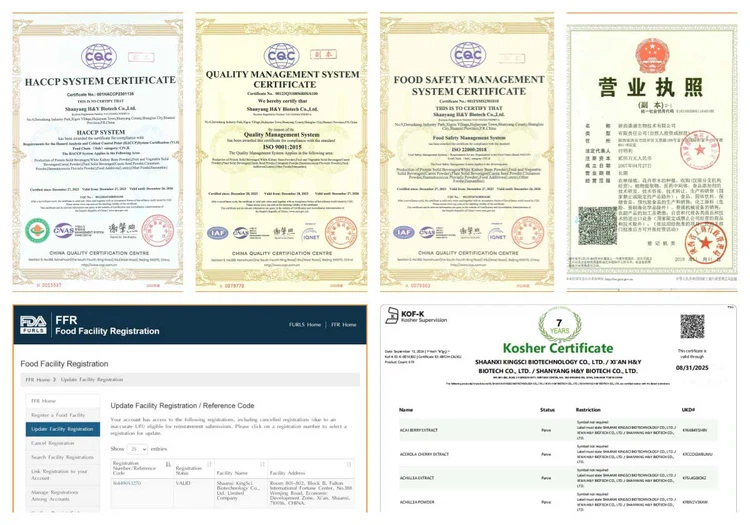
American warehouse

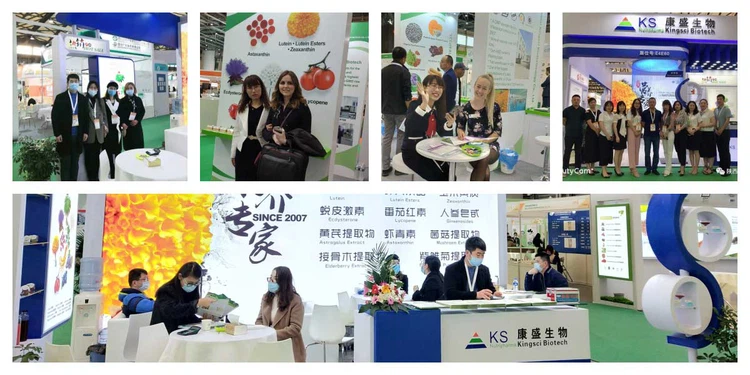
Exhibitions
Hot Tags: blue spirulina extract, China, manufacturers, suppliers, factory, wholesale, price, pricelist, quotation, bulk, in stock, KOSHER, ISO, HACCP


