


What is Schisandra Extract?
Schisandra Extract is a standardized botanical raw material extracted from the fruits of Schisandra chinensis by applying a controlled extraction process, including water, ethanol, or a multi-stage process that results in the creation of a stable plant extract for formulation applications in the industry. In manufacturing applications, it is used as a functional ingredient carrier, where the product properties are defined by a consistent phytochemical profile, usually in terms of standardized lignan profiles or ratios between extract and product, which are used to ensure the product behaves as desired in the formulation process and can be controlled for quality uniformity from batch to batch. In addition to the botanical source, it is noted that it is known to have a compositional structure that is well documented with a variety of naturally occurring lignans and secondary plant metabolites, which can be specified and attributed to the material and are readily quantifiable. It is frequently used in multi-ingredient formulations where botanical standardization, process compatibility, and stability of supply are important criteria for formulation selection. Designed for integration in the various stages of production in a scalable environment, such as dry blending systems, liquid dispersion bases, and encapsulation processes, taking into account the solubility behavior, uniformity of the particle size, and moisture content, according to the desired final application format.

COA
| Item | Specification | Result |
| Product Name | Schisandra Extract | Complies |
| Botanical Name | Schisandra chinensis (Turcz.) Baill. | Complies |
| Plant Part Used | Fruit | Complies |
| Country of Origin | China | Complies |
| Appearance | Brown Yellow Fine Powder | Complies |
| Odor & Taste | Characteristic | Complies |
| Assay (Schisandrins) | ≥ 2.0% | 2.15% |
| Particle Size | 95% Pass 80 Mesh | Complies |
| Loss on Drying | ≤ 5.0% | 3.26% |
| Ash Content | ≤ 5.0% | 2.14% |
| Bulk Density | 0.40–0.60 g/ml | 0.51 g/ml |
| Extract Ratio | 10:1 | Complies |
| Heavy Metals | ≤ 10 ppm | Complies |
| Lead (Pb) | ≤ 2.0 ppm | 0.36 ppm |
| Arsenic (As) | ≤ 1.0 ppm | 0.12 ppm |
| Cadmium (Cd) | ≤ 1.0 ppm | 0.08 ppm |
| Mercury (Hg) | ≤ 0.1 ppm | 0.02 ppm |
| Total Plate Count | ≤ 10,000 CFU/g | < 1,000 CFU/g |
| Yeast & Mold | ≤ 1,000 CFU/g | < 100 CFU/g |
| Escherichia coli | Negative | Negative |
Looking for bulk supply or product details?
Request A Free Sample or Bulk Quote to get COA, pricing, and fast delivery options.
Features
Schisandra Extract Powder starts off as a fine brown to dark brown powder with moderate hygroscopicity and good bulk density control characteristics, which can be easily handled in dry blending and encapsulation systems if stored under controlled humidity conditions. The extract has a well-defined profile of the lignans and other non-volatile phytoconstituents, which makes it chemically complex and is therefore characterized by the need for analytical control, which is usually achieved by HPLC fingerprinting, in order to guarantee the consistency of batches. It exhibits better solvency in hydroalcoholic media than in purely aqueous media, so that the choice of solvent systems is an important parameter of a liquid and semi-solid formulation from a solubility point of view. It is also sensitive to light, heat, and oxidation to various extents, depending on concentration and processing technique, and is often protected with packaging and processed in a controlled environment. Its particle size distribution, moisture, and residual solvents are important formulation engineering parameters that affect the flowability, uniformity of blend, and stability of the final formulations. Furthermore, its natural pigment properties result in a characteristic colour profile which needs to be taken into account in light or transparent cosmetics. The physical and chemical properties suggest that it is a well-characterized botanical raw material and needs to be formulated according to standard industrial practice and quality control systems to ensure consistent industrial performance.
How to Store Properly?
1. Controlled warehouse storage conditions
Once the manufacturers have received it in an appropriate package, they should keep it in a clean, dry warehouse, under stable temperature and humidity to ensure the physical stability of the product and avoid moisture absorption in long-term storage.
2. Protection from direct light exposure
However, even when packaged, it is advised to store it in a shaded space or secondary opaque containers as it may have adverse effects on color stability and some sensitive phytochemical components when exposed to direct light over a prolonged period of time.
3. Moisture management and sealing integrity
The product is already packaged, but should be tightly closed after each use, and any partially opened container should be immediately closed to prevent any interaction with the environment that may affect the flowability of the product.
4. Separation from volatile or strong-odor materials
In the warehouse, the extract should be kept away from other substances that have a strong odor or are chemically active, as this could result in an external smell or cross-contamination.
5. FIFO (First-In, First-Out) inventory practice
For industrial users, it is a good idea to use the FIFO stock rotation to guarantee a consistent usage order and to avoid variability of product freshness and inconsistency that can be caused by longer storage times.
6. Use of clean handling equipment
For internal transfer/repackaging operations, only dry, clean, and dedicated tools should be used, and no foreign material or moisture that might cause batch inconsistency should be introduced into the Schisandra Berry Extract product.

Recommended Usage
1. Capsule pre-blending optimization
Schisandra Chinensis Extract is normally pre-blended with carefully chosen carriers or flow agents prior to blending to achieve uniformity of the powder, minimize segregation during handling, and ensure good performance in high-speed encapsulation systems.
2. Granulation-stage integration for tablets
During the dry or wet granulation process in tablet manufacturing, the extract is incorporated into the process to regulate the level of binder, moisture control, particle cohesion, and to ensure uniform granules for consistent compression behavior.
3. Controlled incorporation in liquid bases
In the case of liquid systems, the extract is added to an appropriate base material in a controlled agitation process, preventing possible differences in concentrations in the initial distribution and during processing.
4. Homogenization in complex liquid systems
These methods can help maintain uniform dispersion of multi-ingredient liquids by enhancing uniformity of dispersion, which is beneficial for the dispersion system to withstand processing.
5. Process sequence adjustment in multi-ingredient formulas
The addition order is optimized based on the compatibility of the ingredients to ensure that the ingredients are added into the extract at a time that will cause the least interaction problem and exhibit stable mixing behavior.
6. Flowability and blending control in solid systems
Small changes in excipients like glidants and anti-caking agents are required for powder flow properties as per formulation requirements to ensure flow and smooth blending or compression performance.
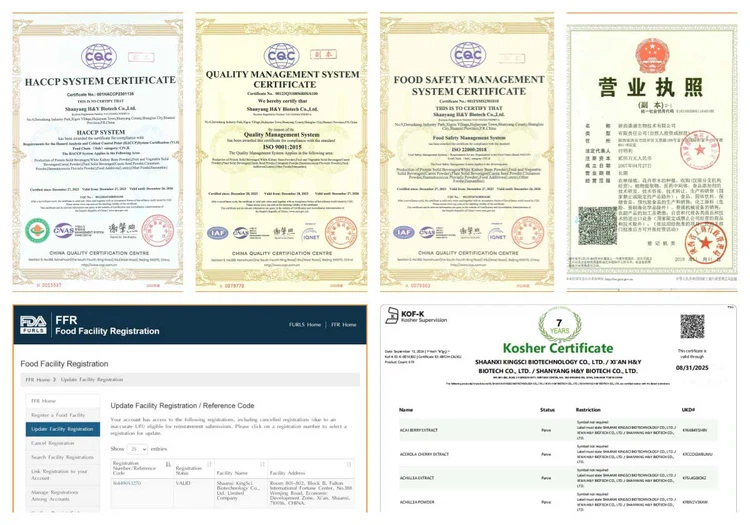
Certifications
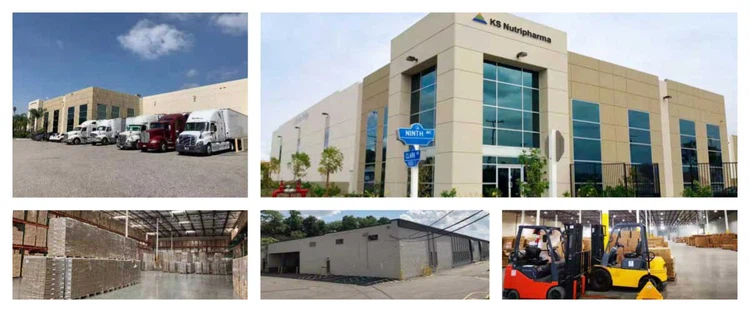
American warehouse
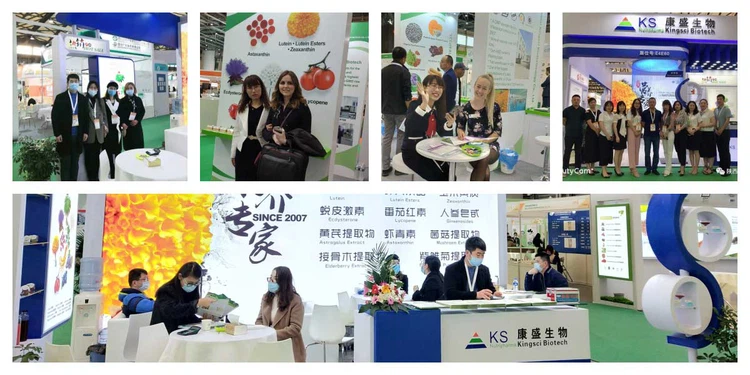
Exhibitions
Hot Tags: schisandra extract, schisandra chinensis fruit extract,China, manufacturers, suppliers, factory, wholesale, price, pricelist, quotation, bulk, in stock, KOSHER, ISO, HACCP


