


What is Rhodiola Crenulata Extract?
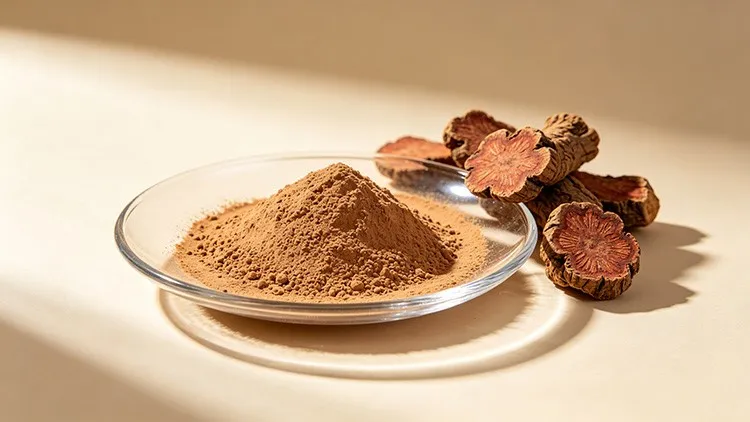
Rhodiola Crenulata Extract is a natural raw material, which is a solution obtained from the roots of Rhodiola crenulata, a plant found in high elevations, mostly in mountainous regions in Asia. It has a distinctive phytochemical profile including naturally occurring salidroside, polyphenols, and flavonoid compounds, which makes it a preferred choice for standardized botanical extraction when compared to other species of the Rhodiola genus. It is typically provided by us in the form of a fine brown-yellow powder or with a specific extract ratio and/or active-content content, as this is common in the global ingredients market to ensure formulation consistency and to meet industrial production needs. Due to its modern, clean label and naturally positioned product concepts, the ingredient is widely used in the manufacturing of botanical capsules, nutritional premixes, solid beverage systems, gummies, herbal compound formulations, and cosmetic products for plants. As professional suppliers, we usually strive to ensure a stable and secure supply of raw materials, control the extraction process, and ensure that the specification is always consistent from batch to batch, to fulfil international procurement requirements. It can be prepared as carrier-free, according to customer needs, and can be formulated to the required size of the mesh and application-based specification as per the OEM, ODM, and private label manufacturing projects.
COA
| Item | Specification | Result |
| Appearance | Brown-yellow fine powder | Brown-yellow fine powder |
| Odor | Characteristic botanical odor | Characteristic botanical odor |
| Taste | Slightly bitter | Slightly bitter |
| Mesh Size | 80–100 mesh | 90 mesh |
| Moisture | ≤ 5.0% | 3.20% |
| Ash Content | ≤ 5.0% | 3.80% |
| Salidroside | ≥ 1.0% / 3.0% / 5.0% (customizable) | 3.50% |
| Rosavins | ≥ 3.0% | 3.20% |
| Total Polyphenols | As per specification | 8.60% |
| Lead (Pb) | ≤ 2.0 mg/kg | 0.6 mg/kg |
| Arsenic (As) | ≤ 1.0 mg/kg | 0.2 mg/kg |
| Cadmium (Cd) | ≤ 1.0 mg/kg | 0.1 mg/kg |
| Mercury (Hg) | ≤ 0.1 mg/kg | 0.02 mg/kg |
| Total Plate Count | ≤ 10,000 cfu/g | 2,300 cfu/g |
| Yeast & Mold | ≤ 100 cfu/g | 45 cfu/g |
| E. coli | Negative | Negative |
| Salmonella | Negative / 25g | Negative |
| Ethanol Residue | ≤ 5000 ppm | 820 ppm |
| Methanol | Not detected / ≤ limit | Not detected |
Looking for bulk supply or product details?
Request A Free Sample or Bulk Quote to get COA, pricing, and fast delivery options.
Features
The appearance of Rhodiola Rosea Extract is usually in the form of a fine hygroscopic powder, which is well dispersed in aqueous systems after appropriate pre-mixing, but depends on the medium and carrier system from which it is extracted. The extract is moderately thermally stable in normal spray drying process conditions, but has to be processed carefully in order not to compromise the integrity of the active compounds at high temperature or high humidity during production. The degree of extraction as well as concentration may result in light brown to deep brown color intensity, which is an important factor in the appearance of the finished product in clear or lightly coloured formulations. It can be easily incorporated into other botanical powders, carbohydrates, and some protein-based powders, enabling the use of Rhodiola in multi-ingredient formulations like encapsulated powders, instant beverage blends, and/or premixes. It is a natural and plant matrix, but can present some variation in flowability and particle uniformity, which can be adjusted by formulation engineers to provide the uniformity and consistency required for blending and compression. It is also very light sensitive and moisture sensitive, and hence, controlled packaging and storage conditions are usually recommended to ensure physicochemical stability throughout transportation and shelf life.
How to Store Properly?
1. Controlled Temperature Storage
Sealed packaging to store in a cool production or warehouse with a stable room temperature to prevent any fluctuation, which may cause the powder consistency to change.
2. Moisture-Controlled Environment
Keep away from moisture, in a dry place with low humidity, to prevent moisture from getting absorbed, which can affect flowability and blending performance during downstream processing.
3. Light-Protected Placement
It is suitable for storage in packages, but it is still recommended to be stored in shaded areas of the storage zones to prevent direct light exposure of the material, which can cause changes in the material over time.
4. Airtight Secondary Containment
Manufacturers can seal bulk cartons and then place them into other sealed containers or drums for further use within the warehouse.
5. Segregated Raw Material Storage
Avoid cross-influence with strong odor or volatile raw materials in sensitive formulation environments to ensure that Rhodiola Extract Powder does not affect or be affected by other raw materials.
6. First-In First-Out (FIFO) System
Use the FIFO principle to guarantee the proper use of batches and consistency of material freshness in the production cycle.
7. Clean Handling Procedures
Ensure batch integrity for manufacturing use by using clean and dry scooping or dispensing tools during internal transfer processes, to prevent contamination.
Recommended Usage
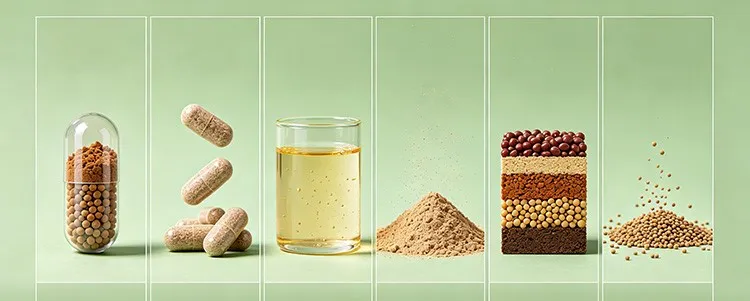
1. Capsule Formulation (Direct Blending or Premix Method)
Rhodiola Standardized Extract is generally added to excipients (e.g., microcrystalline cellulose or maltodextrin) and then dry-blended to achieve uniformity for capsule production. In high-speed filling lines, often a step to make a "premix" is taken to ensure a uniform distribution prior to final "encapsulation".
2. Tablet Formulation (Granulation Integration Approach)
In tablet systems, the extract is typically added in a wet or dry granulation process as an aid for the compressibility and uniformity of the contents. Pre-granulation blending increases powder cohesiveness, and post-granulation addition can be employed for processing conditions that need to be performed with a heat-sensitive product.
3. Liquid and Syrup Systems (Dispersion or Suspension Strategy)
When making liquid products, the extract is usually pre-dispersed in a small amount of water or a food-grade carrier solution prior to adding it to the bulk product. During processing, continuous agitation is often used to keep suspensions uniform and to prevent settling.
4. Powder Beverage Blends (Dry Mixing Optimization)
It is blended with other carriers (fibres, sweeteners, or botanical powders) by staged mixing processes to achieve an even distribution and colour throughout the final blend for instant drink powders.
5. Multi-Ingredient Botanical Systems (Compatibility Layering Method)
In complex botanical formulations, the extract is usually added in the mid-stage blending process to control the interaction between the particles, enhance overall mixing efficiency, and ensure the formulation is stable.
6. Low-Dose High-Uniformity Applications (Micro-Dispersion Technique)
If precise doses are required, a pre-dilution or micro-dispersion step is recommended for achieving uniformity of the product, particularly for high volume production (where batch uniformity is required).
Certificate

Factory

Exhibitions

Hot Tags: Rhodiola Crenulata Extract


