


What is Pure Process Calcium Lactate Powder?
Pure Calcium Lactate Powder is a calcium ingredient that is characterized by its chemical identity, assay value, and elemental calcium content. Calcium lactate, also known by CAS No. 814-80-2, can be purchased in various grades, and one common commercial grade is calcium lactate pentahydrate. The variations are significant when comparing raw materials, as the amount of water of crystallisation can have an influence on the quantity of calcium per unit weight in the end product (the ingredient). The word "pure" should be backed up by a specified assay method, and the criteria for 'pure' should be specified, not as a reference to a specific calcium concentration. Technical parameters relevant to the product are the assay, the content of the element calcium, loss on drying, the pH, and limits for given impurities. When formulation conditions are appropriate, it may interact with other ingredients to form a gel in a compatible formulation, or it may be incompatible in certain formulations. The suitability of the material for a specific application should be established based on the material's published specifications and its functional needs. Hygrometric data should be compared by grade and/or supplier, with all of the following in consideration to avoid discrepancies in formulation calculation: hydration form, test method, analytical basis, batch consistency.

COA
| Item | Specification | Result (Example) |
| Identification | Conforms | Conforms |
| Assay (Calcium Lactate, Dry Basis) | 98.0–102.0% | 99.20% |
| Calcium Content | 12.0–13.0% | 12.60% |
| Loss on Drying | ≤ 30.0% | 27.50% |
| pH (5% Solution) | 6.0–8.0 | 7 |
| Chloride | ≤ 0.05% | 0.03% |
| Sulfate | ≤ 0.075% | 0.05% |
| Lead (Pb) | ≤ 2.0 mg/kg | 0.5 mg/kg |
| Arsenic (As) | ≤ 2.0 mg/kg | 0.3 mg/kg |
| Cadmium (Cd) | ≤ 1.0 mg/kg | 0.2 mg/kg |
| Mercury (Hg) | ≤ 1.0 mg/kg | < 0.1 mg/kg |
| Total Plate Count | ≤ 1,000 CFU/g | < 100 CFU/g |
| Yeast and Mold | ≤ 100 CFU/g | < 10 CFU/g |
| Escherichia coli | Absent in 10 g | Absent |
| Salmonella | Absent in 25 g | Absent |
Are you interested in our products? Just contact us directly or email donna.zh@kingsci.com to obtain further information and free samples!
How does it work?
The mechanism of action of Calcium Lactate Powder is mostly chemical dissociation and the reactions involving calcium ions (Ca²+) and other ingredients in a formulation. CaL dissolves in an appropriate water-based solution to release the calcium and lactate ions, the amount of which is dependent on factors like temperature, concentration, pH, and the hydration form of the material. The calcium ions are the main active agents and may bind with negatively charged groups in some food components like alginate and some proteins, affecting the gelation, texture, and structure of the compatible food systems. In addition, at the molecular level, calcium is also an essential mineral required for normal biological processes, such as intracellular signaling, muscle contraction, and the regulation of various enzyme activities. Tightly controlled calcium concentrations and specific cellular mechanisms are required for these processes to occur; the presence in a formulation does not necessarily define a specific biological outcome. Lactate is the conjugate base of lactic acid, and each species has a different role in the acid–base chemistry, depending on the environment of the formulation. Thus, the basic working principle is the presence of calcium ions, which can participate in chemical reactions and, in a biological environment, the known function of calcium in regulated cellular processes. It is not always the most effective at what it does due to composition, solubility, concentration, and the environment in which it is applied.
Process
1. Raw Material Preparation
Lactic acid used for food applications, as well as a suitable calcium source, are chosen and tested based on the incoming material specifications, with a view to ensuring good production quality.
2. Neutralization
Reaction of lactic acid with calcium carbonate or calcium hydroxide, under controlled conditions, to produce calcium lactate. Consistent conversion is aided by monitoring reaction temperature, feed rate, and pH.
3. Clarification and Filtration
In the reaction with calcium carbonate, CO₂ is produced. The solution thus obtained is filtered off to get rid of any suspended impurities and insoluble residue.
4. Concentration
The clear solution of calcium lactate is concentrated (usually in a controlled evaporation process) to a level appropriate for crystallization.
5. Crystallization
Cooling or other controlled processing steps take place for the concentrated solution to encourage the formation of crystals of calcium lactate. The crystal size and the hydration form depend on temperature and concentration.
6. Solid–Liquid Separation
Industrial filtration or centrifugation is used to separate the crystals from the other liquid. Washing may be used if required to remove any trace amount of impurities.
7. Drying and Size Reduction
The separated crystals are dried under controlled conditions which are suitable for the desired grade and form of hydration. The particle size distribution can then be achieved by milling and sieving.
8. Quality Control and Packaging
The final Powdered Calcium Lactate product is submitted for testing according to the following specifications: Identity, Assay, Elemental Calcium, Moisture, and Relevant Contaminants. Appropriate packaging is used to store approved material in a suitable moisture-resistant material, and it is stored under appropriate conditions.

Suitable For
1. General Adult Consumers:
Depending on the food or beverage's formulation, labeling, and intended use, adults who buy additive calcium-containing foods.
2. Children and Adolescents:
Consumers who consume age-appropriate fortified food products. Formulations designed for younger age groups should comply with appropriate nutritional composition and nutrition labeling laws.
3. Older Adults:
Consumers who might prefer to consume foods labelled with calcium as a part of their diet. The suitability of a product is based on the formulation and relevant labelling.
4. Consumers Seeking Plant-Based Products:
Those wishing to opt for a vegan food and beverage product might find vegan alternatives containing calcium as calcium lactate that comply with the appropriate requirements.
5. Consumers with Dairy-Free Dietary Preferences:
Calcium Lactate can be added to some non-dairy foods. The suitability of the end product is determined by the full list of ingredients and manufacturing controls, not calcium lactate.
6. Consumers Choosing Fortified Foods and Beverages:
Depending on the positioning and composition of the products, those who choose products like fortified drinks, specialty foods, or other calcium-containing formulations could be part of the intended market.
7. Consumers Purchasing Specialty Food Products:
People with distinct food preferences may select products that are formulated with it for technical reasons like texture control or for the food's function, if applicable.
FAQ
1. What is the CAS number of pure calcium lactate?
The CAS number for calcium lactate is 814-80-2. Verify the identifier with the provided Grade and supplier's documentation.
2. What is the difference between anhydrous calcium lactate and calcium lactate pentahydrate?
The anhydrous form has a higher calcium content by weight than the pentahydrate, which has 5 water molecules incorporated into its crystal structure.
3. How is the purity of calcium lactate powder measured?
The results are determined by an analytical method that is specific to the product and then interpreted based on the product's assay requirements and hydration form.
4. Can pure calcium lactate powder be used in gel formulations?
Yes, it is possible to provide calcium ions that will interact with compatible gelling agents (such as alginate) at appropriate formulation conditions.
5. What technical documents are available for pure calcium lactate powder?
A Certificate of Analysis (COA) and product specification, along with food-grade compliance documents and a Safety Data Sheet (SDS), are typical documents to be included.
Certifications
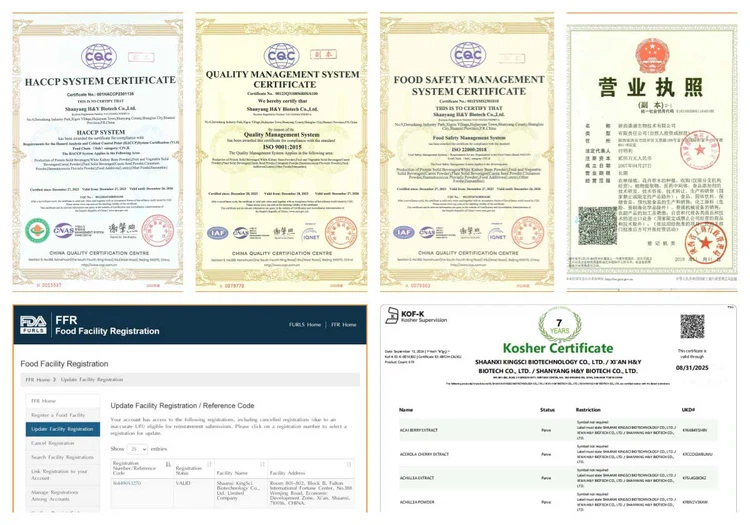
American warehouse

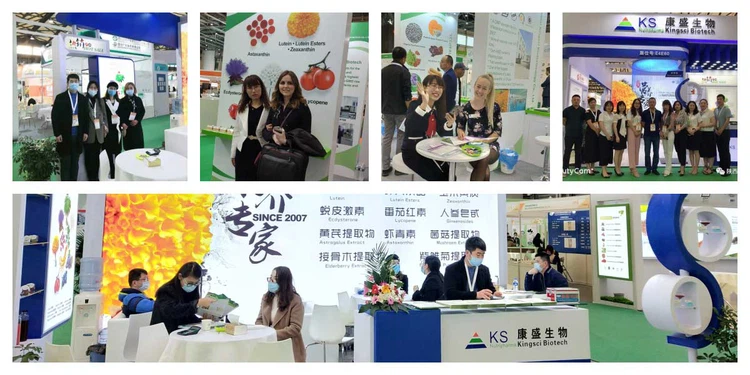
Exhibitions
Hot Tags: pure calcium lactate powder, China, manufacturers, suppliers, factory, wholesale, price, pricelist, quotation, bulk, in stock, KOSHER, ISO, HACCP


