


What is Green Tea Leaf Extract?
The extraction process produces Green Tea Leaf Extract as an essential herbal product, which comes from Camellia sinensis leaves through extraction, filtration, and drying procedures that produce a unified material that industries can directly apply. The raw material functions as a traceable source material because its main components- catechins and flavonoids, and total phenolic content- undergo measurement and adjustment to fulfill the needs of various industry formulation requirements. The manufacturing process requires specific parameters, which include the choice of solvent and the extraction ratio, and the steps of purification, to enable suppliers to produce uniform batch characteristics that deliver constant performance during subsequent product usage. The resulting material is available in two common forms, which include fine powder and concentrated liquid, both of which both maintain specific moisture content and particle size distribution and solubility attributes that enable their use in advanced manufacturing environments. The ingredient is widely incorporated into product development pipelines where botanical sourcing, clean-label positioning, and compatibility with multi-component formulations are important, and where stability under processing conditions-such as heat, pH variation, and storage-is a key technical consideration.

COA
| Item | Specification | Result | Method |
| Active Ingredient | Polyphenols ≥ 98% | 98.30% | UV |
| EGCG ≥ 45% | 45.25% | HPLC | |
| Caffeine ≤ 5% | 3.20% | HPLC | |
| Appearance | Brown Yellow Fine Powder | Conforms | Visual |
| Odor & Taste | Characteristic | Conforms | Organoleptic |
| Particle Size | 100% pass 80 mesh | Conforms | Sieve |
| Loss on Drying | ≤ 5.0% | 3.10% | USP |
| Ash Content | ≤ 5.0% | 2.45% | USP |
| Bulk Density | 0.40–0.60 g/ml | 0.48 g/ml | USP |
| Tap Density | 0.60–0.80 g/ml | 0.69 g/ml | USP |
| Heavy Metals | ≤ 10 ppm | <10 ppm | ICP-MS |
| Lead (Pb) | ≤ 2 ppm | <2 ppm | ICP-MS |
| Arsenic (As) | ≤ 2 ppm | <2 ppm | ICP-MS |
| Cadmium (Cd) | ≤ 1 ppm | <1 ppm | ICP-MS |
| Mercury (Hg) | ≤ 0.1 ppm | <0.1 ppm | ICP-MS |
| Total Plate Count | ≤ 10,000 CFU/g | <1,000 CFU/g | AOAC |
| Yeast & Mold | ≤ 1,000 CFU/g | <100 CFU/g | AOAC |
| E. coli | Negative | Negative | AOAC |
Are you interested in our products? Just Leave A Message on this page or Contact Us Directly to get free samples and more professional support!
Source
Green Tea Extract originates from Camellia sinensis leaves, which are grown in China, India, and Sri Lanka in their subtropical and temperate climate regions because farmers implement controlled agricultural methods to produce high-quality tea leaves throughout the year. The raw leaves are typically hand-picked or mechanically harvested during specific growth periods to optimize the concentration of naturally occurring polyphenols and flavonoids, which serve as key quality markers for industrial applications. The leaf drying process starts immediately after harvest when leaves go through a sequence of withering and drying, and optional light steaming to keep their chemical structure intact until extraction begins. Reputable suppliers maintain strict traceability from plantation to processing facility, often integrating Good Agricultural Practices (GAP) and documented quality management systems to ensure that the source material meets food-grade, cosmetic-grade, or nutraceutical-grade standards. The controlled sourcing system enables customers to trust a consistent botanical supply, which provides them with standardized product composition and authenticated documentation needed for their manufacturing processes across various product lines.
History
It has its origins in the long-standing cultivation and use of Camellia sinensis, a plant with a history spanning several millennia in East Asia, particularly in China and later Japan, where tea leaves were traditionally processed for consumption as beverages. The 20th century marked the beginning of concentrated extract usage because extraction technology progressed to enable producers to extract and purify essential leaf elements, which include polyphenols and catechins, for industrial usage. The research sector and small-scale supplement market initially adopted these extracts, but their use spread to commercial industries, which included functional foods and beverages and personal care items, because consistent botanical supply and scalable raw materials became essential to production. The modern extraction and drying methods, together with cGMP and ISO certification standards, enable the production of Green Tea Extract Powder according to established regulations, which determine traceability and stability, making it suitable as a dependable supply chain component in international markets.

Precautions
1. Specification Compliance:
Pure Green Tea Extract must fulfill the specified requirements for total polyphenols and catechin content, moisture level, particle size, and solubility to support consistent processing throughout the entire operation.
2. Storage and Handling:
The extract needs to be kept in a cool and dark space, which prevents moisture absorption, oxidation, and degradation of the product. The delivery of proper packaging needs to be inspected upon receipt because it serves as a method to check whether the products maintained their original state throughout transportation.
3. Mixing and Formulation Compatibility:
The extract needs to be checked for its ability to work with other formulation components, which may include interactions with carriers and excipients and flavoring agents, so that the mixing processes can be changed to achieve proper distribution.
4. Regulatory and Documentation Review:
Maintains all certificates of analysis (COA) and safety data sheets (MSDS) and relevant compliance documents, which they use to check against local laws that apply to the respective product category.
5. Process Optimization:
The testing of solubility, dispersibility, and stability must occur under processing conditions that include heat, pH, and shear in order to maintain consistent performance without altering the final product color, aroma, or texture.
6. Batch Traceability:
The organization must keep precise records about each production batch to determine which extract lots were involved, which supports quality control and enables recalls and audits for both internal and external requirements.
7. Quality Monitoring:
The implementation of routine quality checks at production stages enables tracking of product consistency while monitoring microbial load and assessment of physical characteristics, which ensures that each product batch meets both internal and regulatory requirements.
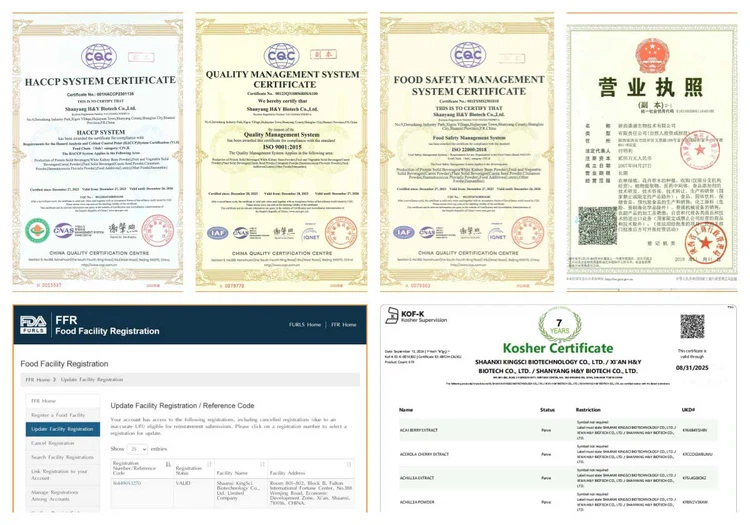
Certifications
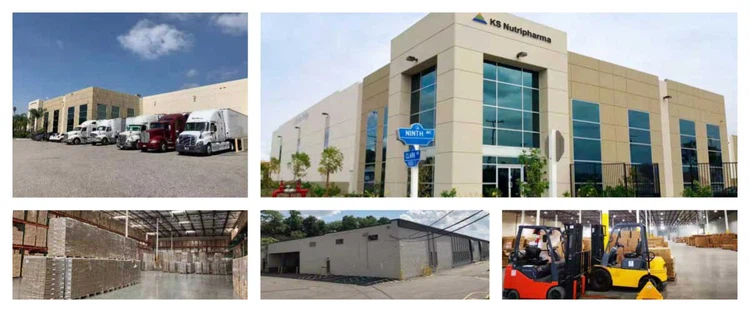
American warehouse
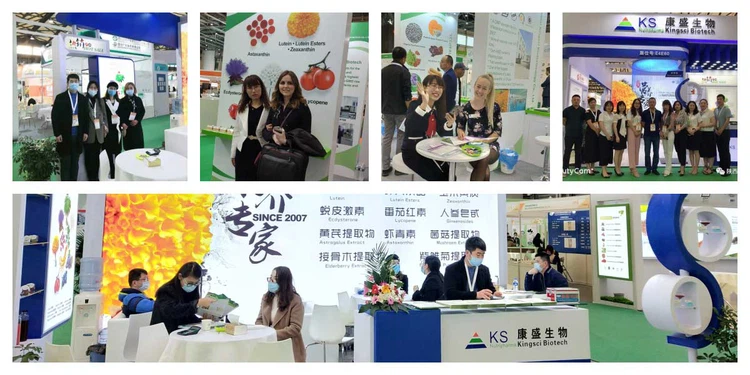
Exhibitions
Hot Tags: green tea leaf extract, China, manufacturers, suppliers, factory, wholesale, price, pricelist, quotation, bulk, in stock, KOSHER, ISO, HACCP


