


What is Rutin Powder?
Rutin Powder is a flavonoid compound that is commonly used in the supply chain of botanical extracts and functional ingredients in the global area. It is generally derived as a result of plants, especially the flower buds of Sophora japonica, where rutin can be found in relatively high amounts, and is obtained by controlled extraction, purification, and crystallization procedures to produce a fine powder, yellow-green in colour and with a specified assay specification. It has been favored due to its well characterized molecular structure, stable chemical profile, and being compatible with a wide range of formulation systems, which are utilized in nutraceutical, food ingredient, and cosmetic manufacturing industries. It is an ingredient that is mainly used as a high-purity plant flavonoid component that may be incorporated in both compound botanical preparations, functional ingredient premixes, and botanically derived products that need traceable botanical components. Its comparatively stable form and ability to mix with the common carriers and excipients enable it to be used in a variety of industrial dosage forms or ingredient systems and still retain its formulation consistency throughout the processing, blending, and storage stages.

COA
| Item | Specification | Result | Test Method |
| Assay (Rutin) | ≥95.0% | 95.62% | HPLC |
| Appearance | Yellow or Greenish-yellow Powder | Complies | Visual |
| Odor | Characteristic | Complies | Organoleptic |
| Particle Size | 95% pass 80 mesh | Complies | Sieve |
| Loss on Drying | ≤5.0% | 2.13% | USP |
| Residue on Ignition | ≤0.5% | 0.18% | USP |
| Heavy Metals | ≤10 ppm | <10 ppm | ICP-MS |
| Lead (Pb) | ≤2 ppm | <2 ppm | ICP-MS |
| Arsenic (As) | ≤1 ppm | <1 ppm | ICP-MS |
| Cadmium (Cd) | ≤1 ppm | <1 ppm | ICP-MS |
| Mercury (Hg) | ≤0.1 ppm | <0.1 ppm | ICP-MS |
| Total Plate Count | ≤1000 CFU/g | <100 CFU/g | AOAC |
| Yeast & Mold | ≤100 CFU/g | <10 CFU/g | AOAC |
| E. coli | Negative | Negative | AOAC |
Are you interested in our products? Just leave a message on this page or Contact Us Directly to get free samples and more professional support!
Features
Sophora Japonica Extract has a number of unique physical and chemical properties that make it a technically useful product available to formulation specialists who deal with plant-derived products. It is chemically a flavonoid glycoside of relatively definite molecular structure made up by the flavonol quercetin complexed with the disaccharide rutinose, resulting in its relatively stable crystallized state and recognizable analytical characterization. Commercially, it is available as a yellow to yellow-green crystalline powder, which has the typical fine particle dispersion and is able to be dispersed homogenously in dry blends and powdered premixes. Solubility-wise, it has poor solubility in cold water; however, better in ethanol and in some other hydroalcoholic systems, which is significant to formulators when creating liquid concentrates and extracts or ethanol-based ingredient systems. It is also shown to possess good thermal stability in the conventional industrial processing conditions and retain its structure over a relatively broad pH environment, allowing its application in varying formulation conditions. Moreover, the compound is also quantifiable through simple analytical techniques like HPLC, and therefore, the standardization and quality verification can be done easily when procuring the raw materials and developing the product. All these physicochemical characteristics, including stable crystalline structure, distinct chromatographic fingerprint, controlled particle properties, and predictable solvent behavior, enable formulation teams to have a technically handled flavonoid ingredient when developing botanical-based products and multi-component systems of plant extracts.
How to Store Properly?
1. Store in a Cool and Dry Warehouse Environment
Once the product arrives, the manufacturers are advised to store it in a clean warehouse under constant temperature and low humidity. A controlled environment allows preserving the physical stability of the powder and eliminates the superfluous moisture uptake in long-term storage.
2. Keep the Original Sealed Packaging Intact
Since the material is already packed under homogenized conditions, it is recommended that the original sealed containers not be opened until they are used in production. The packaging of the products inside the factory is to retain the integrity of the product and to avoid any external contamination.
3. Protect from Direct Light Exposure
Containers containing bulk should not be placed next to direct sunlight or intense artificial light. To ensure the stability of the flavonoid compounds, restriction of long-term light exposure assists in ensuring the same quality of the products across time.
4. Avoid High-Humidity Handling Areas
It is also advisable that when transferring or opening containers to be used in production, it be done in controlled humidity areas. This minimizes the chances of the powder picking up atmospheric moisture and contributes to the maintenance of the free-flowing physical characteristics of this powder.
5. Separate from Strong Odor or Reactive Materials
To maintain quality, Rutin Extract must not be stored together with things that have strong odors or volatile chemical elements. Specialized storage spaces are used to ensure that the original properties of the botanical ingredient are preserved.
6. Follow FIFO Inventory Management
The manufacturers have been urged to use a first-in, first-out (FIFO) inventory system. This will assist in maintaining consistency in the turnover of materials by ensuring that the previous batches of production are utilized before others, as well as managing the warehouse effectively.

Recommended Usage
Formulation and manufacture of Rutin Sophora Japonica can be employed as a standard flavonoid ingredient in multi-ingredient systems of capsule, tablet, or liquid product delivery systems. With capsule formulations, the manufacturers will usually combine them with other compatible excipients like microcrystalline cellulose or other flow-enhancing carriers to ensure the uniform distribution of the particles and stable encapsulation behavior; prior blending with other fine botanical powders can also be useful in ensuring content uniformity during the large-scale encapsulation processes. The ingredient is typically added in the dry blending phase in tablet manufacturing with binders, disintegrants, and compression aids, and formulation departments typically seek to achieve the best compatibilities between particle sizes with other actives to ensure excellent compressibility and eliminate segregation during the tablet-making process. In case of liquid or semi-liquid systems, it is more usually dispersed in hydroalcoholic or compatible solvent-based systems since it has low solubility in water, and manufacturers can use controlled agitation or premix methods to produce even dispersion before subsequent blending or filtration is carried out. In all dosage formats, industrial users normally incorporate it into a wider botanical or flavonoid ingredient blend, modifying the sequence of blending components, choice of carrier, and dispersion means, in order to provide good mixing, maintenance of processing stability, and manufacturing scalability.
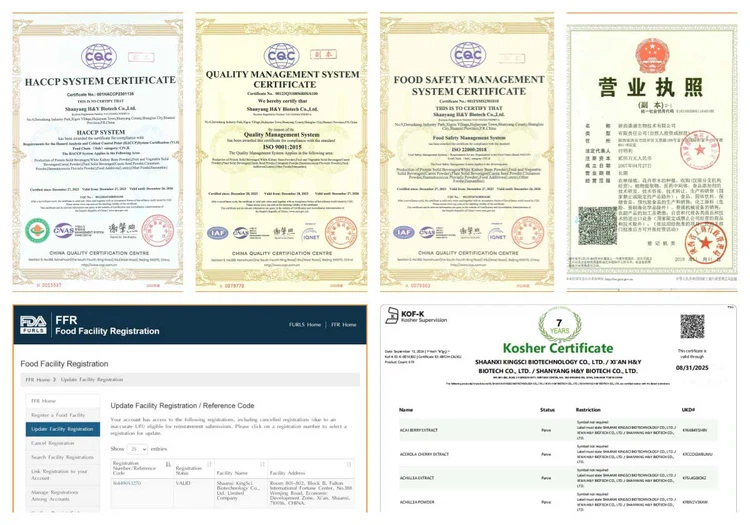
Certifications
American warehouse

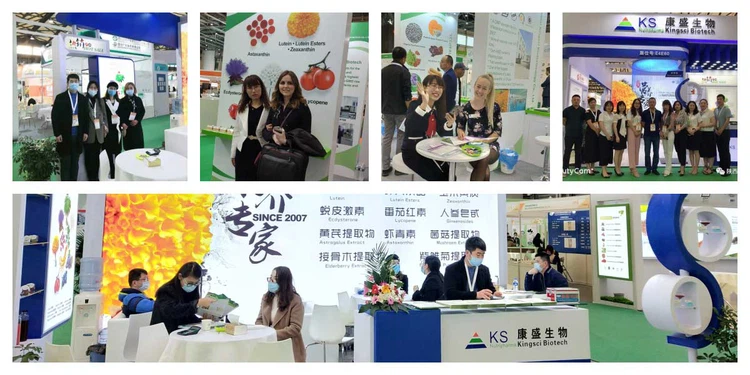
Exhibitions
Hot Tags: Rutin Powder


