

What is Alfalfa Leaf Extract?
Alfalfa Leaf Extract is a concentrated botanical product derived from the leaves of the Medicago sativa that is intended to extract a greater amount of natural phytonutrients in the powder form of alfalfa plant than what is available in the raw alfalfa powder. It is rich in saponins, flavonoids, chlorophyll, amino acids, vitamins, and essential minerals and is highly sought after in the nutraceutical, food, feed, and personal care industry due to its functionality and formulation versatility. To manufacturers, the extract offers a reliable and consistent raw material that can be used in the creation of high-quality dietary supplements like capsules, tablets, and formula liquids, and functional foods and beverages where nutritional value is needed. The animal feed market is increasingly being taken seriously as a dependable natural feed additive that helps to provide a balanced diet to livestock, poultry, and aquaculture, in line with the worldwide shift to plant-based and sustainable feed solutions. It is also used in cosmetic and personal care products, with its botanical profile and natural green appearance giving it an opportunity to integrate into skin care products and wellness-focused product lines. Sourcing in bulk, purchasers have an opportunity to receive a highly versatile, concentrated, and environmentally friendly ingredient, which responds to the rising demand for natural and high-performance raw materials in foreign markets.

COA
| Test Item | Specification | Test Method | Result |
| Appearance | Brown-green to brown powder | Visual inspection | Conforms |
| Odor | Characteristic | Organoleptic | Conforms |
| Extract Ratio | 10:1 | HPLC / UV | 10:1 |
| Ash Content | ≤5.0% | AOAC 923.03 | 4.20% |
| Moisture | ≤8.0% | Loss on Drying | 6.50% |
| Particle Size | 100% through 80 mesh | Sieving | Conforms |
| Total Flavonoids | ≥5.0% | UV Spectrophotometry | 5.30% |
| Saponins | ≥3.0% | HPLC | 3.20% |
| Heavy Metals – Lead (Pb) | ≤2.0 mg/kg | ICP-MS / AAS | 1.2 mg/kg |
| Heavy Metals – Arsenic (As) | ≤1.0 mg/kg | ICP-MS / AAS | 0.5 mg/kg |
| Heavy Metals – Mercury (Hg) | ≤0.1 mg/kg | ICP-MS / AAS | 0.05 mg/kg |
| Microbial – Total Plate Count | ≤1000 CFU/g | AOAC 990.12 | 450 CFU/g |
| Microbial – Yeast & Mold | ≤100 CFU/g | AOAC 997.02 | 50 CFU/g |
| Microbial – E. coli | Negative | AOAC 966.24 | Negative |
| Microbial – Salmonella | Negative | AOAC 960.36 | Negative |
Are you interested in our products? Just leave a message on this page or Contact Us Directly to get free samples and more professional support!
Features
The Alfalfa Extract is distinguished by a fine water-dispersible consistency and a concentrated form of active phytonutrients, and this fact makes it diverse and effective in industrial uses. It generally looks green to dark green as it is very rich in chlorophyll, and its characteristic smell of botanical aroma is a confirmation of the existence of natural flavonoids and other vital plant substances. It contains saponins in its chemical makeup, which help in the emulsification and surface-active properties of this chemical, flavonoids, amino acids, vitamins, and trace minerals that are maintained under careful extraction practices. The extract is soluble in water and some hydroalcoholic solvents, and can be incorporated into powders, capsules, liquid formulations, and cosmetic bases easily. The advantage of a stable profile during controlled processing conditions enables manufacturers to produce uniform product quality and standardized bioactive content, a factor of great significance when large quantities of products are required in the nutraceutical, food, feed, and cosmetic sectors.
How to Store Properly?
1. Temperature Control
It must also be stored in a cool condition, preferably at temperatures that are below 25 °C, in order to ensure that the extract will be stable and will not degrade sensitive phytonutrients.
2. Protection from Light
Keep in a darker place, not in the light, because too much light may cause loss of the natural color and effectiveness of active compounds in the extract.
3. Humidity Management
Make sure the storage area is not humid, as even when closed, large amounts of water can lead to clumping or microbiological proliferation.
4. Packaging Integrity
The Alfalfa Extract Powder must not be transferred to non-standard containers; it should be stored in its designated container until used, as it serves as an effective measure against air, light, and moisture vapor entering the extract.
5. Handling Practices
At the time of opening to production, reseal tightly after each use and do not leave it in open air too long; otherwise, the product will spoil and will not be used in the given batches.

Recommended Usage
To improve the nutritional and formulation value of a broad spectrum of final products in a variety of industries, manufacturers often use Medicago Sativa Leaf Extract as a functional botanical ingredient. In the nutraceutical industry, it has been used as a raw material in concentrates to be blended into compound formulations, whereby the actives of the plant products are needed to satisfy consumer interests in natural supplements. It is used in the food and beverage industry in fortified powders, beverage concentrates, and nutritional enhancing additives, with functional qualities and a natural green profile. The extract is also incorporated in a special feed formula where its bioactive constituents assist in the development of the high-quality animal feedstuff. Also, personal care and cosmetic companies use it in skincare and wellness formulations as a botanical enhancer with the clean-label and sustainable development trends. The ability to be used conveniently in large-scale manufacturing and tailored to individual OEM/ODM applications due to its concentrated form, ease of processing, and its ability to be used in many types of products makes it an ideal choice.
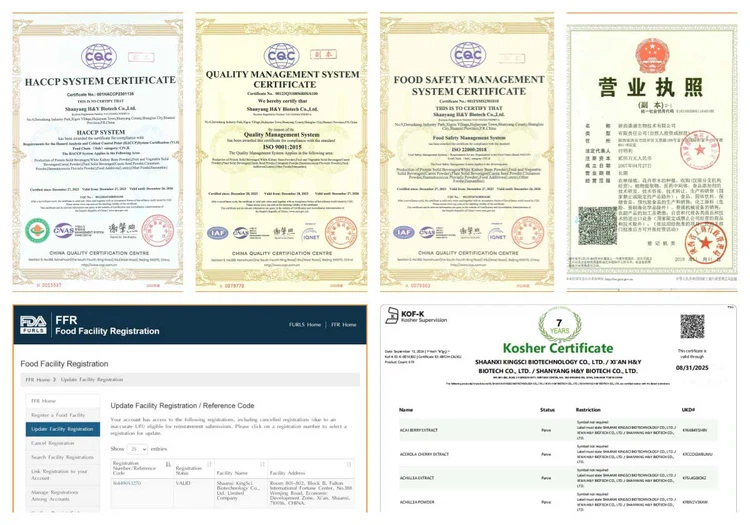
Certifications
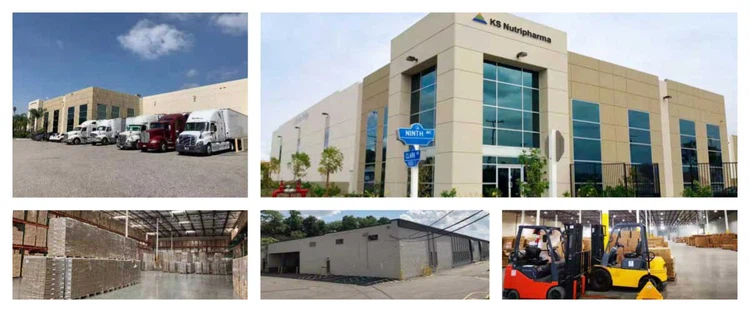
American warehouse
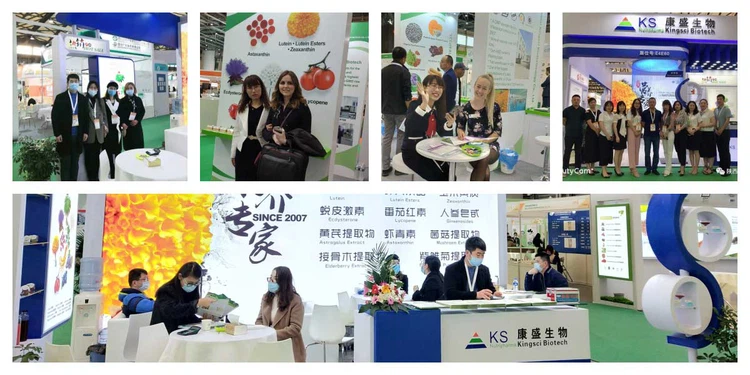
Exhibitions
Hot Tags: Alfalfa Extract, Alfalfa Leaf Extract


