


What is Celery Seed Extract?
Celery Seed Extract is a standardized botanical extract of Apium graveolens, which has been developed as a functional raw material in nutraceutical, food, and formulation industries, where it is appreciated due to its uniform phytochemical profile, ability to be processed, and ability to be formulated. This extract is usually obtained by solvent or water extraction and then concentrated and dried, with specific concentrations of bioactive substances (flavonoids, volatile oils, and naturally occurring phenolic compounds) being given, and apigenin or apiin is frequently chosen as a standard depending on the specification needs. It is being marketed as a scalable, specification-based ingredient, which assists in product differentiation within a variety of products, such as dietary supplement mixtures, functional beverages, botanical capsules, and compound formulations. It has a high value in terms of application in industry, not isolated end-user claims, but rather as a multifunctional botanical ingredient, which is useful to position products, clean-label strategies, and trends of using plants in formulations. It can be combined with other herbal extracts and active ingredients, allowing formulators to develop synergistic formulations without compromising the label transparency.

COA
| Item | Specification | Result |
| Plant Part Used | Seed / Whole Plant (as specified) | Seed |
| Appearance | Fine powder, brown to yellowish | Light brown fine powder |
| Odor | Characteristic herbal odor | Characteristic herbal odor |
| Taste | Slightly bitter, plant-like taste | Slightly bitter |
| Solubility | Partially soluble in water/ethanol | Partially soluble |
| Total Flavonoids | 5% | 5.20% |
| Apigenin | 1% | 1.80% |
| Apiin | 3% | 3.60% |
| Moisture Content | ≤ 5.0% | 3.20% |
| Ash Content | ≤ 8.0% | 4.70% |
| Particle Size | 80–120 mesh | 100 mesh |
| Bulk Density | 0.3–0.6 g/mL | 0.45 g/mL |
| Loss on Drying | ≤ 5.0% | 3.10% |
| pH (1% solution) | 4.5 – 6.5 | 5.6 |
| Lead (Pb) | ≤ 2.0 ppm | 0.6 ppm |
| Arsenic (As) | ≤ 1.0 ppm | 0.2 ppm |
| Cadmium (Cd) | ≤ 1.0 ppm | 0.1 ppm |
| Mercury (Hg) | ≤ 0.1 ppm | 0.03 ppm |
| Total Plate Count | ≤ 10,000 CFU/g | 1,800 CFU/g |
| Yeast & Mold | ≤ 1,000 CFU/g | 120 CFU/g |
| E. coli | Negative | Negative |
| Salmonella | Negative / 25g | Negative |
Looking for bulk supply or product details?
Request A Free Sample or Bulk Quote to get COA, pricing, and fast delivery options.
Main Ingredients
Celery Extract has a clearly defined profile of phytochemicals, with the major active constituents around flavonoids and volatile compounds, the most popular of which is apigenin and its glycoside form, apigenin, which is generally considered to be the most significant marker constituents because of their relatively high content and potential to be standardized in commercial extracts. In addition to these, the extract also contains significant concentrations of phthalides like 3-n-butylphthalide that give the extract its typical aroma profile in addition to other flavonoids (including luteolin derivatives), phenolic compounds, and low concentrations of essential oils. Although specific compounds made with apigenin are the most crucial in formulation and sourcing terms due to the possibility of determining their consistency (e.g., through HPLC standardization), the combined presence of flavonoids and volatile fractions helps to promote the overall compositional integrity and functionality of the extract in multi-ingredient systems.
Process
1. Raw Material Selection and Pre-treatment
The seeds of Apium graveolens are dried and then collected based on quality requirements, followed by the cleaning of the seeds. The seeds are milled using mechanical means to a specified-sized particle so that more surface area is exposed and more efficiently extracted.
2. Hydroalcoholic Extraction
The extracted product is a milled material with the help of a food-grade ethanol-water solution under the control of the temperature and time parameters. This process allows the successful solubilization of the target flavonoids and other phytochemicals while preserving the safety of the process and compliance with the regulations.
3. Solid–Liquid Separation
The mixture is extracted, after which it is filtered or centrifuged to obtain the liquid extract and the remaining plant solids. Industrial filtration systems are designed to guarantee a large throughput rate, and the loss of active constituents is reduced.
4. Concentration Under Reduced Pressure
Vacuum evaporation is used to concentrate the filtrate to extract surplus solvent at relatively low temperatures to preserve heat-sensitive compounds and enhance extract density to further process the extract.
5. Purification and Standardization
The concentrated extract can be further purified (e.g., resin adsorption or membrane filtration) to concentrate important marker compounds, such as apigenin, depending on the specification of the products. Analytical controls, such as HPLC, are then used on the extract to bring it to the desired levels.
6. Drying Process
The liquid concentrate is transformed into powder form, which is most often done through spray drying. Maltodextrin carriers can be incorporated to enhance the handling, flowability, and stability of powder in large-scale.
7. Sieving and Blending
The dried extract is sifted to get a similar particle size, and it can be mixed to guarantee consistency of batch-to-batch before packaging.
8. Quality Control and Packaging
The end Celery Extract Powder is thoroughly tested, and the tests would include identity tests, active content (test), microbiological limits, and contaminants screening. The extract obtained is subsequently packed in bulk, and it is packaged in a moisture-resistant package, which can be supplied in industrial supply chains.

Suitable For
Manufacturing and product development, Celery Seed Extract Powder is usually included in finished formulation to serve a wide, non-clinical consumer group that is interested in plant-based ingredients, clean-labeling, and clear sourcing. Its end-use markets are typically in tandem with adult consumers who would like botanical-origin products as a part of everyday life, especially in the context of dietary supplements and functional beverage categories, and powdered nutrition blends. These customers are usually those with active or balanced lifestyles, and those who demand convenient, standardized ingredients that can be taken easily in capsule, tablet, or drinkable forms without adverse interference with their senses. Moreover, it is often placed in formulations with many ingredients in which it serves as the concept of general lifestyle support, and complements other botanical extracts to further differentiate the product and appeal to the label. In terms of market segmentation, it is also applicable to the consumers who place more emphasis on natural ingredient systems as opposed to synthetic ones, such as adhering to plant-forward or ingredient-conscious purchasing patterns.
Certifications
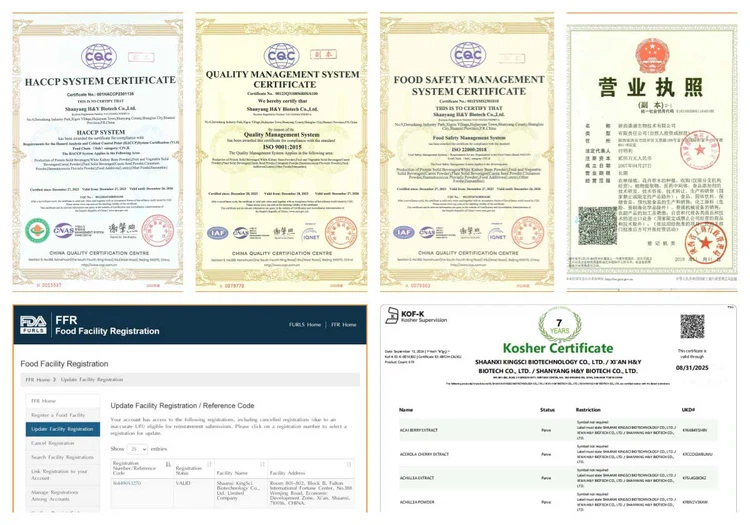
American warehouse

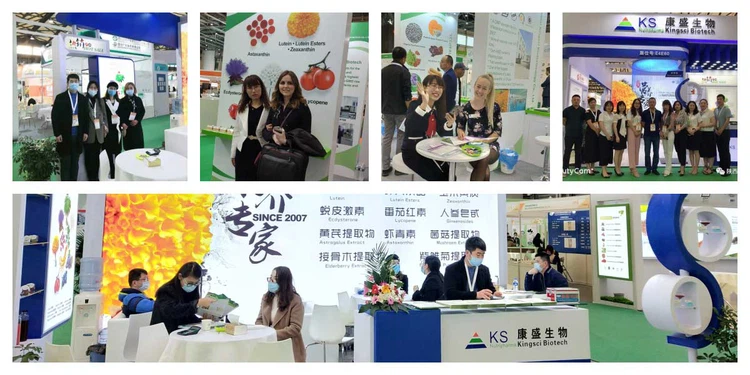
Exhibitions
Hot Tags: Celery Seed Extract, Celery Seed Extract Powder


