


What is Saccharomyces Cerevisiae Beta Glucan Powder?
Saccharomyces Cerevisiae Beta Glucan Powder is a purified beta-glucan powder, derived from a specialized process for extracting the beta-glucan components from the cell wall of the yeast Saccharomyces cerevisiae, and removing any yeast proteins, lipids, or other unwanted impurities, through conservative enzymatic, mechanical, or biotech extraction methods, and concentration processes. Furniture and upholstery manufacturing is just one of the industrial applications where this type of material is known for its structural reliability, process applicability, and suitability for integration into contemporary formulation systems that demand that it disperses evenly, has a controlled moisture content, and fits well into a high-volume production environment. The ingredient is often provided as a fine free-flowing powder, with a standardised β-1,3/1,6 glucan content, enabling B2B customers to choose the most appropriate technical grade, depending on their intended use, for dry blending, for encapsulation, for compression systems, in liquid suspension premixes, or in multifunctional compound formulations. With the improvement of fermentation technology and downstream purification technology, it has become increasingly appealing to manufacturers who are looking for a raw material of fermentation origin that is in line with the current clean label development trend, traceable sourcing, and internationally standardized quality system.

COA
| Test Item | Specification | Result | Method |
| Appearance | White to light beige fine powder | Conforms | Visual |
| Assay (β-Glucan Content) | ≥ 70.0% | 72.50% | HPLC |
| Loss on Drying | ≤ 5.0% | 3.20% | 105°C, 2h |
| Ash | ≤ 3.0% | 1.50% | 550°C |
| Bulk Density | 0.30 - 0.50 g/ml | 0.42 g/ml | USP <616> |
| Particle Size | 100% through 80 mesh | Conforms | Sieve Analysis |
| Lead (Pb) | ≤ 1.0 ppm | 0.08 ppm | ICP-MS |
| Arsenic (As) | ≤ 1.0 ppm | 0.05 ppm | ICP-MS |
| Cadmium (Cd) | ≤ 1.0 ppm | 0.02 ppm | ICP-MS |
| Mercury (Hg) | ≤ 0.1 ppm | 0.005 ppm | ICP-MS |
| Total Plate Count | ≤ 10,000 cfu/g | 500 cfu/g | USP <61> |
| Yeast & Mold | ≤ 1,000 cfu/g | 50 cfu/g | USP <61> |
| E. coli | Negative / 10g | Negative | USP <62> |
| Salmonella | Negative / 25g | Negative | USP <62> |
Looking for bulk supply or product details?
Request A Free Sample or Bulk Quote to get COA, pricing, and fast delivery options.
Features
The powder is generally very stable for normal dry processing, has moderate hygroscopic properties, is highly compatible with multi-ingredient formulations, and is well-suited for high-speed blending, encapsulation, tableting, and powdered premix production. The size, bulk density, dispersibility profile, and viscosity of the material can vary, depending on the extraction and purification process that has been used, and can be tailor-made to fit specific production needs for optimal flowability, suspension performance, and texture behaviour. Yeast Beta Glucan Powder typically has a more concentrated and structurally defined β-1,3/1,6 glucan network as compared to cereal-based β-glucans, making it more suitable for formulations and to achieve consistent control of the amount of active in the commercial manufacturing environment. Typically supplied as a fine powder with a relatively low impact of aroma and stable processing properties throughout a wide pH range, the ingredient can be incorporated into various types of dry powders, liquid premixes, emulsified systems, and complex nutritional matrices. Water dispersibility, impurity control, water specifications, and microbiological specifications can be further enhanced with advanced purification technologies, allowing for even higher-grade applications to be formulated.
How to Store Properly?
1. Store in a Cool and Dry Warehouse
While the product has been professionally packed, following standard export conditions, it is still advisable for the manufacturers to store the product in a cool, dry, and well-ventilated warehouse to ensure optimal powder stability and flow.
2. Keep Packaging Properly Sealed After Opening
Remaining material from the original container should be immediately resealed after opening to limit exposure to ambient moisture and airborne contaminants if it is used to produce additional containers.
3. Avoid Direct Sunlight and Heat Sources
The product should be stored away from direct sunlight, steam pipelines, boilers, or other high-temperature industrial equipment that can have an impact on the long-term material consistency.
4. Prevent Contact with Strong Odors
To maintain the original sensory characteristics of Beta Glucan Powder, it is not recommended to store it close to volatile chemicals, solvents, or raw materials with strong aroma.
5. Maintain Stable Humidity Conditions
Production facilities are recommended not to have too large fluctuations in humidity in storage areas since stable environmental conditions will help maintain powder dispersibility and handling efficiency.
6. Use Clean Material Handling Systems
Manufacturers should use clean scooping devices, sealed conveying systems, and special containers during internal transfer and/or dispensing operations to ensure the integrity of their batches and minimise risk from cross-contamination.
7. Follow FIFO Inventory Management
Using First-In-First-Out (FIFO) inventory control can help manufacturers use the material best and keep the production schedule on track.
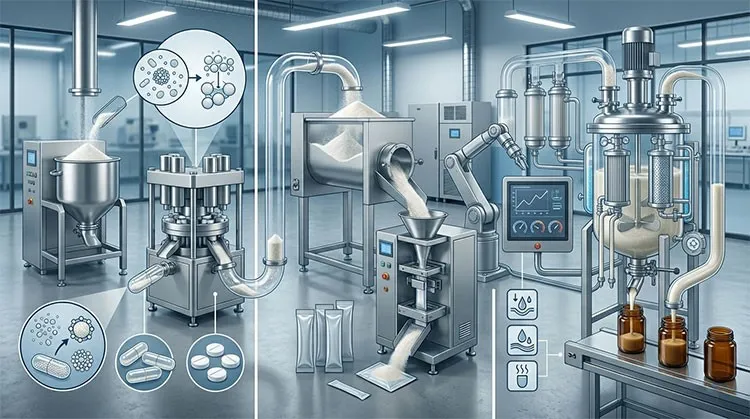
Recommended Usage
Manufacturers usually mix excipients like maltodextrin, microcrystalline cellulose, or flow support materials with the powder in the pre-blending process, for capsule application, to ensure uniform powder filling, uniform bulk density, and high-speed filling efficiency. During tablet formulation, particle size distribution is also optimized, and the ingredient is loaded with appropriate binders, disintegrants, and anti-caking agents to achieve compression stability, minimize sticking during the tablet compression process, and guarantee uniform hardness profiles. Yeast Beta Glucan is mainly used at the dry blending stage in powdered drink mixes and stick-pack systems, under controlled humidity conditions, to ensure homogeneous dispersion and agglomeration is avoided during storage and transport. To ensure uniform dispersion of the particles and minimize sedimentation, a premixing or high-shear dispersion method is often used in the production of liquid or semi-liquid formulations, particularly if a protein, fibre, botanical extract, or emulsified ingredient is being used. The concentration of glucans in the product, their solubility, and processing requirements can vary, so formulation engineers often run pilot-scale compatibility testing to get the best viscosity, flowability, and sensory performance before sending the product to commercial production.
Certifications
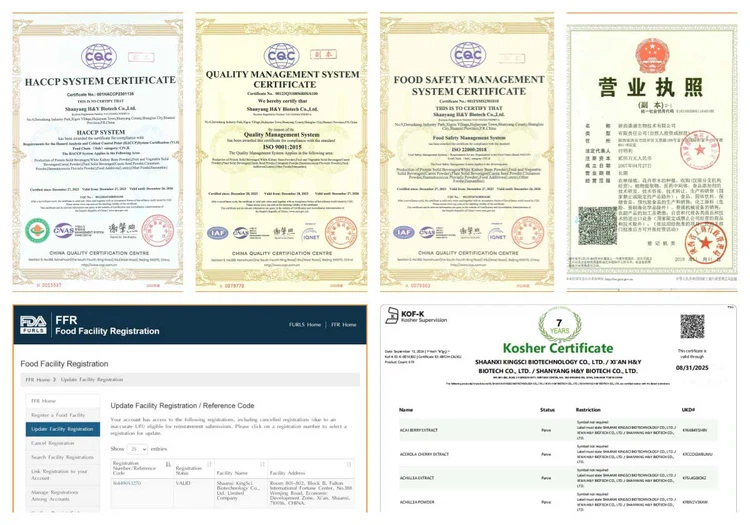
American warehouse

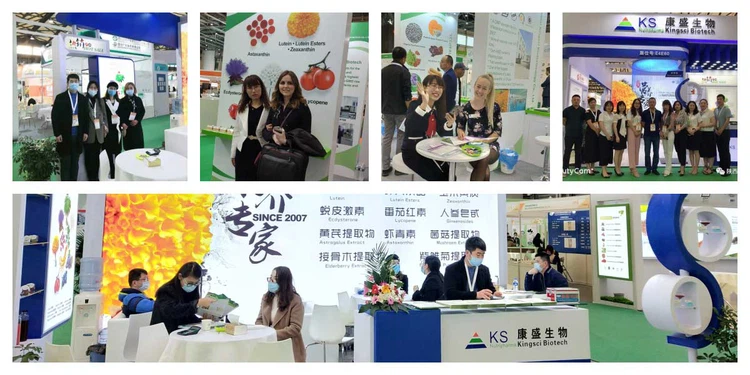
Exhibitions
Hot Tags: saccharomyces cerevisiae beta glucan powder, China, manufacturers, suppliers, factory, wholesale, price, pricelist, quotation, bulk, in stock, KOSHER, ISO, HACCP


