


What is Pyrroloquinoline Quinone Disodium Powder?
Pyrroloquinoline Quinone Disodium Powder is a superior purity and water-soluble dietary component highly applicable in the formulation of higher-order nutritional formulas intended to improve mitochondrial functionality and neurological performance, and supporting cellular energetics. This ingredient, made by strict microbial fermentation and stabilized as a disodium salt, has improved solubility and formulation characteristics and is superbly suited to capsules, tablets, drink mixes, and other functional delivery systems throughout the nutraceutical and health product markets. It can be considered a strategic raw material used by manufacturers aiming to create a supplement of premium grade with the use of a material related to and matching consumer demand on cognitive health, metabolic balance, and active lifestyles. It is normally standardised to 99 percent purity and is produced under stringent quality standards, which may include ISO9001, HACCP, and GMP. The additive is preferably chosen due to its high bioavailability and low effective dosage, high rate of oxidative tolerance, as well as compatibility with other synergistic agents such as CoQ10 and B vitamins.

COA
| Item | Specification | Result |
| Appearance | Orange-red to reddish powder | Conforms |
| Purity (HPLC) | ≥ 99.0% | 99.10% |
| Identification | UV absorbance conforms to the standard | Conforms |
| A233/A259 | 0.90 ± 0.09 | 0.89 |
| A322/A259 | 0.56 ± 0.03 | 0.57 |
| Loss on Drying | ≤ 10% | 8.40% |
| Heavy Metals | ≤ 10 ppm | 3.6 ppm |
| Lead | ≤ 1.0 ppm | 0.4 ppm |
| Cadmium | ≤ 1.0 ppm | 0.3 ppm |
| Mercury | ≤ 0.1 ppm | Not Detected |
| Arsenic | ≤ 2.0 ppm | < 1.0 ppm |
| Total Bacterial Count | ≤ 1,000 CFU/g | < 100 CFU/g |
| Yeast & Mold | ≤ 100 CFU/g | < 10 CFU/g |
| Pathogens (E. coli, Salmonella) | Negative | Negative |
Are you interested in our products? Just leave a message on this website or contact donna@kingsci.com directly to get free samples and more professional support!
Source
It is commonly developed by a regulated fermentation bioprocess of certain strains of specifically bred bacteria with a natural ability to produce Pyrroloquinoline Quinone Powder via the process of their metabolism. Due to the consistency and the result of high purity achieved by this biotechnological process, the products obtained fulfil both the high requirements imposed by the quality and safety needs of commercial application in the health and nutrition sectors. Upon fermentation, the compound is separated, purified, and stabilised as a disodium salt to boost its solubility and shelf life. It occurs in trace levels in some foods, including natto, green tea, and parsley; however, at scales needed to formulate it applies industrial fermentation processes are applied. The process has the advantages of providing not only batch-to-batch consistency but also the clean-label position due to a non-synthetic chemical synthesis.
History
It was discovered in the late 1970s to be Pyrroloquinoline Quinone (PQQ) as a redox cofactor of bacterial enzymatic reactions. It was first reported in the Acetobacter species and later characterized as a new bioactive compound, which may have a physiological significance in higher organisms. Further on, scientific research led to the spread of microbial systems to other areas in the scope of the existence of microbiome and its capability to impact the functions of mitochondria and energy metabolism in mammals. It captured the attention of the nutrition and life sciences community shortly after the turn of the millennium, and as of the early nineties, there was increasing interest in research concerning the biochemical properties and suggested health benefits. This resulted in the commercial production of disodium salt by microbial fermentation so that uniform, renewable production could be facilitated and used in nutraceutical products and functional foods. Its status as a novel food or ingredient in markets like Japan, the EU, and the U.S has since consolidated itself as a scientifically confirmed compound in contemporary health and wellness product formulations.

Precautions
1. Storage Conditions
It is sensitive to moisture, light, and heat, and thus it should be stored in a tightly closed container. It should be stored at less than 25 °C in a good atmosphere that is airy and not too wet to ensure that it is stable and preserves a long shelf life.
2. Handling Precautions
Precautions should be taken when handling the powder by exposing it to minimal inhalation or contact with the skin through the use of excellent personal protective equipment (PPE). Clean environment handling to avoid cross-contamination.
3. Accurate Dosage Control
The precision, when formulating, should be ensured. It is very bioactive even in low amounts, and precise scaling (i.e., 10-20 mg per serving) is important to guarantee product safety and efficacy.
4. Compatibility with Other Ingredients
It is in combination with other activities. Interactively test the compatibility with CoQ10, NAD+ precursors, or vitamins. Some combinations can result in the issue of solubility or stability of the end product.
5. Regulatory Compliance
Check the locally applicable food or supplement regulations in your market to ensure PQQ Bulk Powder is acceptable. Regulatory review is supported by documentation, e.g, COA, MSDS, and third-party test reports.
6. Formulation Environment
Confirm that blending and encapsulation or tableting are performed in a GMP-concerted facility so that the integrity of the product is preserved and labeling claims are immune.
7. Moisture Sensitivity
Being a hygroscopic substance, it ought to be dispensed rapidly after opening and closed instantly before it absorbs Domination, which may disrupt texture and functionality.
Certifications
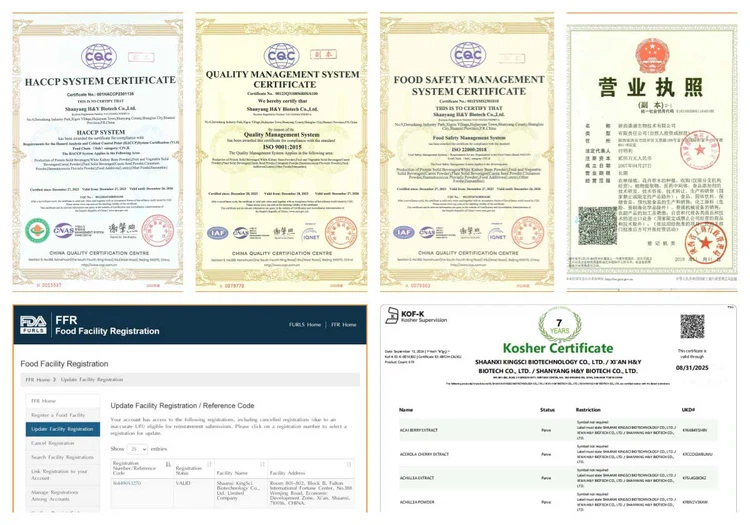
American warehouse

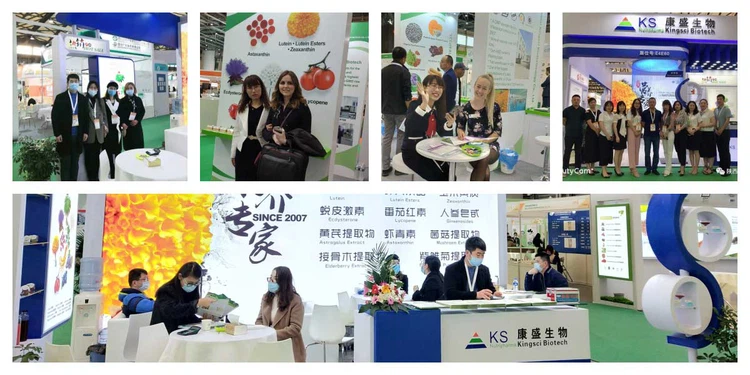
Exhibitions
Hot Tags: pyrroloquinoline quinone disodium powder, China, manufacturers, suppliers, factory, wholesale, price, pricelist, quotation, bulk, in stock, KOSHER, ISO, HACCP


