


What is Rosmarinus Officinalis Extract?
Rosmarinus Officinalis Extract, which is a derivative of the leaf of the rosemary plant, is a natural product that is highly appreciated in the industry because of the wide range of uses in food, nutraceutical, cosmetic, and pharmaceutical industries. The extract is rich in bioactive compounds, including phenolic acid, diterpenes, and flavonoids, among others, and is mainly attributed with strong antioxidant and stabilizing effects that prevent the oxidation of oils, fats, and other sensitive ingredients of formulations, thus extending the shelf life of these formulations. It presents a clean-label substitute to synthetic preservatives to manufacturers in the food and beverage industry, satisfying the growing demand for natural solutions without adding to the stability of products and their sensory quality. It has been used in nutraceuticals and dietary supplements as an adjuvant in the promotion of general wellness, and its quality is consistent, such that it can be used when the need is to formulate on a large scale. The cosmetic sector appreciates the ability to preserve natural products and as an ingredient to help improve the performance of cosmetic products in skin and hair care lines, especially in formulations where stability and natural origin are factors that distinguish the product.

COA
| Item | Specification | Method | Result |
| Appearance | Brown fine powder, free-flowing | Visual | Brown fine powder |
| Odour | Characteristic of rosemary | Olfactory / Sensory | Characteristic |
| Identification (A) | UV / TLC: consistent with reference | TLC / UV | Pass |
| Identification (B) | HPLC fingerprint matches reference profile | HPLC | Pass |
| Assay - Rosmarinic acid (dry basis) | ≥ 5.0% | HPLC | 6.20% |
| Assay - Carnosic acid (dry basis) | ≥ 3.0% | HPLC | 3.80% |
| Total Phenolic (as gallic acid) | ≥ 8.0% | UV-VIS (Folin) | 9.50% |
| Loss on drying (105°C) | ≤ 5.0% | AOAC 925.10 | 3.20% |
| Residue on ignition (ash) | ≤ 5.0% | AOAC 942.05 | 2.10% |
| Extractable solvent residues | Meet USP/ICH limits (Class II/III) / Not detected | GC (USP <467>) | Not detected |
| Pesticide residues | Multi-residue screen: Not detected / Meets EU MRLs | GC-MS/LC-MS/MS | Not detected |
| Heavy metals - Total | ≤ 10 ppm | ICP-MS / AAS | 4.2 ppm |
| Lead (Pb) | ≤ 2.0 ppm | ICP-MS / AAS | 0.6 ppm |
| Arsenic (As) | ≤ 1.0 ppm | ICP-MS / AAS | 0.3 ppm |
| Cadmium (Cd) | ≤ 1.0 ppm | ICP-MS / AAS | 0.2 ppm |
| Mercury (Hg) | ≤ 0.1 ppm | CV-AAS / ICP-MS | < 0.01 ppm |
| Microbial - Total Plate Count (TPC) | ≤ 1.0 × 10^4 cfu/g | USP <61> / Plate count | 3.2 × 10^3 cfu/g |
| Yeasts & Moulds | ≤ 1.0 × 10^2 cfu/g | USP <61> | 35 cfu/g |
| E. coli | Absent / 10 g | USP <62> | Not detected |
| Salmonella spp. | Absent / 25 g | USP <62> | Not detected |
Are you interested in our products? Just leave a message on this page or Contact Us Directly to get free samples and more professional support!
Side Effects
Speaking of the potential side effects of Rosemary Extract, it should be stressed that its safety profile can be considered as rather positive, provided that the corresponding dosage is used, and production is applied in accordance with the industry standards, but some factors should be kept in mind when product formulation on a large scale, and end-user safety is the utmost priority. At high levels, strong bioactive compounds in the extract, including phenolic diterpenes and essential oil constituents, might cause gastrointestinal unease, including stomach irritation or nausea in individuals who are sensitive to them, and this highlights the importance of regulated inclusion levels in dietary supplements and functional foods. A few of the reports suggest that too much exposure might cause mild allergic reactions in people who are already susceptible to sensitivities of aromatic plants, which is specifically applicable to cosmetic or personal care purposes where topical application is implicated. In the case of manufacturers, it is also important to mention that extremely high levels of intake can sometimes also affect blood pressure or have stimulating effects on the nervous system, though such effects are very uncommon and are only seen due to overuse rather than the normal formulation levels.
Synergistic Uses
In industrial use, the extract of Rosmarinus officinalis is commonly used together with other natural ingredients to exhibit synergies that help improve stability and functionality of the end product; hence, it is a preferred ingredient in multi-ingredient formulations. It is common in the food and nutraceutical industry to use it with vitamin E (tocopherols) or ascorbic acid to increase antioxidant activity, making the product have a long shelf life and enhancing the preservation of delicate oils, proteins, or plant-based powders. In dietary supplements, it is typically used alongside botanical extracts with green tea, ginseng, or curcumin, in which its stabilizer effect is beneficial to keep their products potent and has been used to further their formulation objectives of providing energy, cognitive support, or general wellness combinations. It is commonly used in conjunction with both natural emulsifiers and botanical actives in the manufacture of cosmetics and personal care (i.e., to maintain a more natural preservation system without synthetic preservatives). It is also used in conjunction with both plant oils, such as jojoba oil or argan oil, and botanical extracts, to help stabilize and offer a more natural preservation system. The extract is also compatible with minerals and amino acids in functional supplements, with preservation of product integrity during storage and distribution being important to the global supply chain. By expanding its use as a multi-purpose and complementary ingredient, the manufacturers can use the Rosemary Leaf Extract as an essential component of more complex formulations that will meet the increased demand for natural, clean-label, and performance-based solutions.

Formulation Reference – Dietary Supplement Capsule
|
Ingredient |
Function |
Suggested Range (%) |
|
Rosmarinus officinalis Extract |
Natural antioxidant, stabilizer |
5 – 15 |
|
Green Tea Extract |
Botanical active, polyphenol source |
10 – 20 |
|
Vitamin E (d-Alpha Tocopherol) |
Synergistic antioxidant |
1 – 3 |
|
Microcrystalline Cellulose |
Filler/excipient |
40 – 55 |
|
Magnesium Stearate |
Flow agent/lubricant |
0.5 – 1.5 |
|
Hydroxypropyl Methylcellulose (HPMC) |
Capsule shell (vegetarian) |
As required |
Disclaimer: The formulation given above is only a general reference that needs to be used in industries. The actual composition, dosage, and processing conditions shall be established based on certain regulatory requirements, positioning of the product, and quality standards in each respective target market. It is strongly recommended that manufacturers engage in stability tests, safety tests, and compliance tests before commercial production.
Certifications
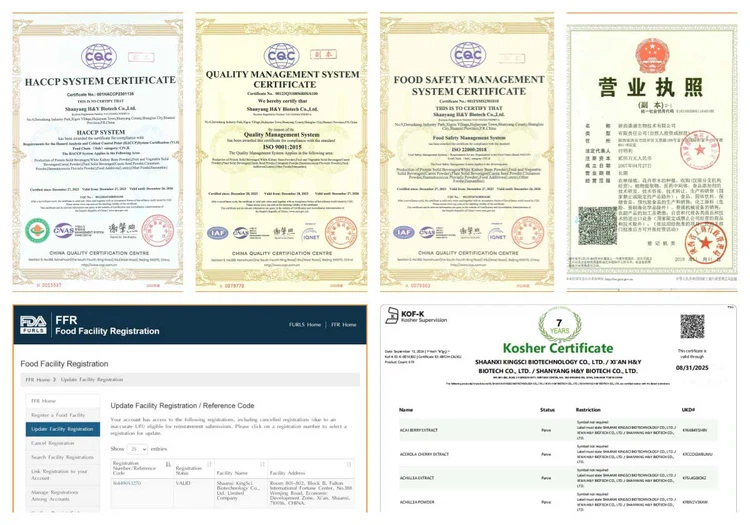
American warehouse

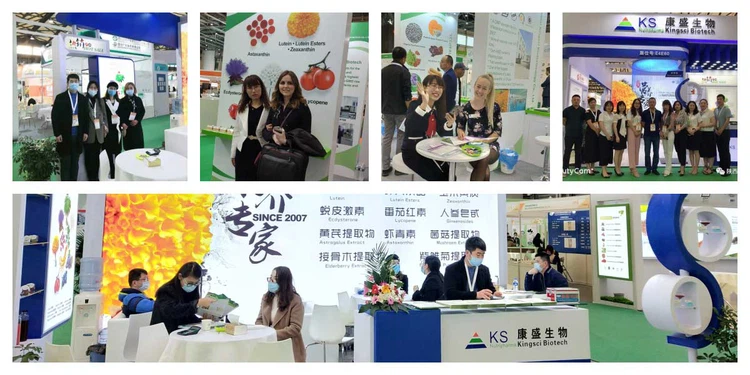
Exhibitions
Hot Tags: rosmarinus officinalis extract, China, manufacturers, suppliers, factory, wholesale, price, pricelist, quotation, bulk, in stock, KOSHER, ISO, HACCP


