


What is Gardenia Jasminoides Fruit Extract?
The Gardenia Jasminoides Fruit Extract is an extrinsic mass substance of vegetable origin derived from the mature fruit of Gardenia jasminoides and produced by regulated extraction and refining steps that are applicable in large-scale manufacturing. It is marketed as a standardized botanical raw material in the enterprise markets, whereby consistency, traceability, and alignment with regulations are of paramount importance to formulators of food, beverage, nutraceutical, cosmetic, and other related industries. The extract is characterized by a quantifiable phytochemical profile and is provided by well-defined specifications like marker compound range, solubility, moisture content, and physical condition, so that it can be predicted to perform in downstream formulations. Commercial production is generally performed under the quality systems that are cGMP and ISO consistent, and the extensive documentation is in support of batch consistency, contaminant control, and international market compliance. To enterprise customers, it is valuable due to its botanical source, scalability, ability to add to a wide variety of formulation bases, and the ability to be used as a substitute for synthetic sources by manufacturers seeking plant-based options or to use it as a functional botanical ingredient. Its place in the finished products is consequently influenced by technical and formulation factors as opposed to consumer-facing assertions, and thus, it is a consistent and versatile material to use in the large-scale production and global marketing of products.

COA
| Item | Specification | Result | Test Method |
| Identification | Positive | Conforms | TLC |
| Assay (Geniposide) | ≥ 10.0% | 12.30% | HPLC |
| Appearance | Yellow to Brownish Yellow Powder | Conforms | Visual |
| Odor & Taste | Characteristic | Conforms | Organoleptic |
| Loss on Drying | ≤ 5.0% | 3.20% | USP <731> |
| Ash | ≤ 5.0% | 2.80% | USP <281> |
| Bulk Density | 0.40–0.60 g/mL | 0.48 g/mL | USP |
| Particle Size | 100% pass 80 mesh | Conforms | Sieve |
| Heavy Metals (Total) | ≤ 10 ppm | < 10 ppm | ICP-MS |
| Lead (Pb) | ≤ 3 ppm | < 0.5 ppm | ICP-MS |
| Arsenic (As) | ≤ 2 ppm | < 0.5 ppm | ICP-MS |
| Cadmium (Cd) | ≤ 1 ppm | < 0.1 ppm | ICP-MS |
| Mercury (Hg) | ≤ 0.1 ppm | < 0.01 ppm | ICP-MS |
| Total Plate Count | ≤ 10,000 cfu/g | < 1,000 cfu/g | USP <61> |
| Yeast & Mold | ≤ 1,000 cfu/g | < 100 cfu/g | USP <61> |
| E. coli | Negative / 10 g | Negative | USP <62> |
| Salmonella | Negative / 25 g | Negative | USP <62> |
| Staphylococcus aureus | Negative / 10 g | Negative | USP <62> |
Are you interested in our products? Just leave a message on this page or Contact Us Directly to get free samples and more professional support!
Recommended Dosage
In the actual commercial practice, Gardenia Fruit Extract is usually designed depending on geniposide content, and the standard reference inclusion levels are related to 5-30 mg of geniposide per day of final products, depending on the usage and extract specification. An example illustration would involve an extract that was standardized at 10 percent geniposide, which would often be used in a dosage ranging between 50 and 300mg of extract per serving, whereas extracts of high standardization could be used at relatively lower dosage ranges. The manufacturers utilize these ranges as a formulation guideline and not a consumer-guided directive, and they aid in maintaining uniformity, cost management, and product positioning among various product formats. The ultimate levels of use should never be set without considering the design of a formulation, the type of products, and most importantly, the local regulations and market-specific compliance needs because the permissible limits and labeling standards differ across countries.
Application
1. Food and Beverage Industry
It is a plant-derived extract that is utilized in formulated foods and beverages where the botanical sourcing approach, standard composition, and compatibility with a clean-label approach are critical. Its usage is normally appraised on stability, solubility, and regulatory status of particular food groups.
2. Dietary Supplement and Nutraceutical Manufacturing
The extract is used as pure botanical raw material in capsules, tablets, powders, or as functional blends in this sector. To promote consistency of formulation and labeling that is compliant with various markets, manufacturers prioritize the control of the marker compounds, batch uniformity, and documentation.
3. Cosmetic and Personal Care Industry
Gardenia Florida Fruit Extract is a botanical ingredient that can be utilized in cosmetic and personal care formulations as a concept related to the natural or plant-based product. The criteria used in the selection are the purity of extracts, color effect, and mixability with topical formulation systems.
4. Functional Ingredient and Natural Color Solutions
In some uses, the extract is used as a source of naturally derived functional or color-related ingredients, especially as the use of synthetic analogs is being diminished. Performance is measured as per the processing stability and compatibility within complex formulations by industrial users.
5. Contract Manufacturing and Private Label Production
The extract is also often sold to contract manufacturers and private label manufacturers who need easy-to-use, well-documented botanical ingredients that can be used in a variety of different product ideas, but with a consistent quality and regulatory preparedness.

Safety
Gardenia Florida Extract is determined using the principles of controlled production, standardized quality systems, and documented safety tests as opposed to claims that are made to consumers. Grades of commercial supply are typically manufactured using either a cGMP-compliant or ISO based manufacturing structure, which ensures traceability of raw material, control of processes, and consistency at the batch level. Safety substantiation is generally backed by the toxicological testing and internal or external testing, which are done to determine general exposure parameters and suitability of use in specified limits of formulation. Moreover, the extract is periodically checked for the presence of contaminants like heavy metals, remnants of solvents, and microbial load as required by international quality standards. Formulation-wise, it is usually considered to be non-allergenic because of its origin (plant), purified and lacking frequent allergenic components that can render the product suitable to be incorporated in a broad spectrum of industrial uses when appropriately defined. To the enterprise customers, the safety as a whole is thus addressed by respecting a documented quality assurance system, analytical verification, and strict compliance with the local regulatory requirements.
Certifications
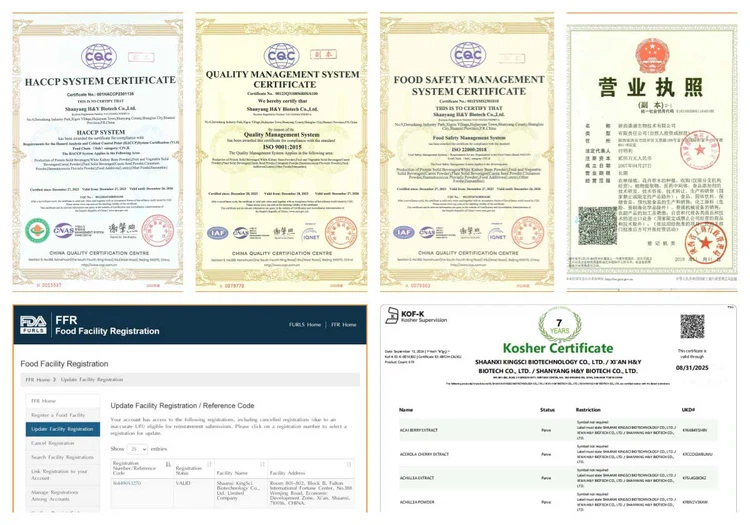
American warehouse

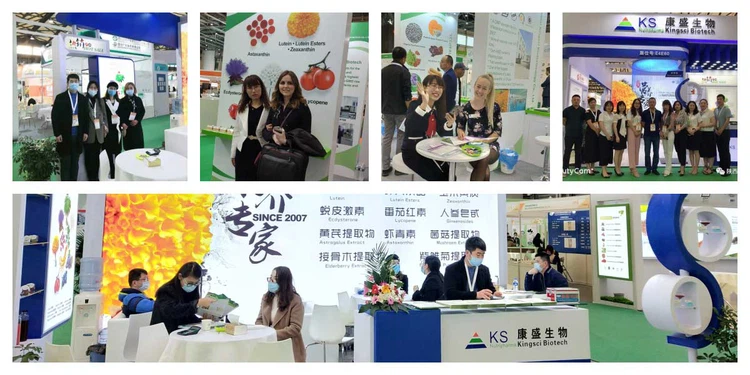
Exhibitions
Hot Tags: gardenia jasminoides fruit extract, China, manufacturers, suppliers, factory, wholesale, price, pricelist, quotation, bulk, in stock, KOSHER, ISO, HACCP


