


What is Fermentation Beta Carotene For Sale?
Fermentation Beta Carotene For Sale, in turn, designates a quality form of beta carotene that is received by means of the controlled microbial fermentation process (usually with the non-GMO strains of Blakeslea trispora or similar microorganisms). Using this production process provides an alternative to plant-extracted and chemically synthesized forms that are sustainable and consistent, hence suitable for food, beverage, nutraceutical as well and personal care industries. In comparison to plant-based sources, which may differ in virtue of the seasonal and environmental influences, fermentation-derived products provide consistent purity, constant color intensity, and continuous supply. It is a naturally occurring molecule that is comprised of all-trans and cis isomers, which contributes to increased functional benefits, better bioavailability in the final product. It is excellent for those brands that require a clean, efficient, scalable ingredient that complies with the global quality requirements. It is highly popular as a natural colorant and a functional food additive that allows formulators to incorporate vibrant appearance and antioxidant properties into their products without compromising on their stability or the transparency of their label.

COA
| Item | Specification | Result | Method |
| Appearance | Orange Yellow Powder | Conforms | Visual inspection |
| Odor & Taste | Characteristic, mild | Conforms | Organoleptic |
| Beta-Carotene Content | ≥ 30.0% (w/w, on dry basis) | 30.80% | UV-Vis Spectrophotometry |
| Source | Fermentation (Blakeslea trispora) | Confirmed | Supplier declaration |
| Moisture Content | ≤ 5.0% | 2.60% | USP<731> |
| Particle Size (90% <) | ≤ 500 μm | 310 μm | Laser Diffraction |
| Bulk Density | 0.35 – 0.55 g/mL | 0.47 g/mL | Tapped Method |
| Solubility (in cold water) | Dispersible, forms a uniform orange emulsion | Conforms | In-house SOP |
| Heavy Metals | ≤ 10 ppm | <5 ppm | ICP-MS |
| Arsenic (As) | ≤ 1 ppm | <0.5 ppm | ICP-MS |
| Lead (Pb) | ≤ 2 ppm | <0.2 ppm | ICP-MS |
| Mercury (Hg) | ≤ 0.1 ppm | <0.01 ppm | ICP-MS |
| Total Plate Count | ≤ 1,000 CFU/g | <100 CFU/g | ISO 4833 |
| Yeast & Mold | ≤ 100 CFU/g | <10 CFU/g | ISO 21527 |
| E. coli | Absent/10g | Negative | ISO 16649 |
| Salmonella | Absent/25g | Negative | ISO 6579 |
Are you interested in our products? Just leave a message on this website or contact donna@kingsci.com directly to get free samples and more professional support!
Features
The Fermentation Beta Carotene is known for its high purity, strict isomer composition, and constant molecular structure due to a highly defined biosynthetic process. It usually consists of an equivalent proportion of all-trans and 9-cis/13-cis isomers closely resembling the isomer ratio that is present in the natural sources, albeit with enhanced evenness. Chemically, it is fat-soluble with strong colour strength, providing bright orange to reddish tones based on concentration and formulation. It is very stable for standard storage conditions, and can be converted to various physical forms such as oil suspensions, cold-water dispersible powders (CWS), and beadlets. This is well controlled throughout production and encapsulation, with its particle size, melting point (about 183–184°C), and oxidation sensitivity to give outstanding performance in water-based and lipid-based applications. These repeatable physical and chemical features make the fermentation of beta carotene particularly ideal for specific formulation and regulation of quality in industries.
Process
1. Microorganism Selection and Preparation
Non-GMO microbial strains are singled out for their capacity to naturally biosynthesize beta-carotene by virtue of being naturally beneficial for the process. The most common of them is Blakeslea trispora. These strains are grown and optimized in contained lab environments.
2. Fermentation
Ready microorganisms are scaled up into large bioreactors and grown in the best conditions of growth (temperature, pH, aeration, nutrients). At this stage, the microorganisms break down carbon sources such as glucose or other types of carbohydrates into beta–carotene.
3. Biomass Harvesting
When the fermentation is at the maximum carotenoid yield, then the microbial biomass is recovered by centrifugation or filtration to remove it from the culture medium.
4. Cell Disruption
Once the harvested microbial cells are obtained, they are mechanically or enzymatically disrupted in a bid to liberate the intracellular beta-carotene.
5. Extraction
The extraction is carried out using food-grade solvents or supercritical CO₂, therefore delivering carotenoid-rich extract.
6. Purification
The crude extract is purified to eliminate the impurities and non-carotenoid components. This makes sure it attains purity and safety standards.
7. Drying or Formulation
The purified Beta-carotene Powder is then processed into required forms, which can be, among others, oil suspensions, beadlets, and cold-water dispersible powders, through spray drying, microencapsulation, or emulsification.
8. Quality Control and Packaging
Final products are put through quality controls for purity, potency, isomer profile, and stability before they are packaged for commercialization.

Fermentation VS Natural Beta Carotene
The fermentation-derived beta carotene is not "better" than the natural beta carotene, but it is different, and this difference adds advantages – consistency, scalability, and purity. Compared to plant-derived beta carotene, which can be variable in composition because of seasonal variations and environmental factors, fermented beta carotene is produced in a controlled environment, giving a uniform isomer profile and batch-to-batch consistency in quality. It perfectly resembles the natural isomer structure, yet it provides a more reliable chain of supply and less dependence on agricultural resources. In addition, fermentation provides options for clean-label, non-GMO, and vegetarian-friendly products that comply with the global regulatory standards. Although natural beta carotene is usually coveted for its plant source and attraction in whole-food-based products, the fermentation counterpart can offer a technologically advanced/eco-efficient choice while retaining similar functionality and safety, and is therefore quite suitable for large-scale food, supplement, and cosmetic uses.
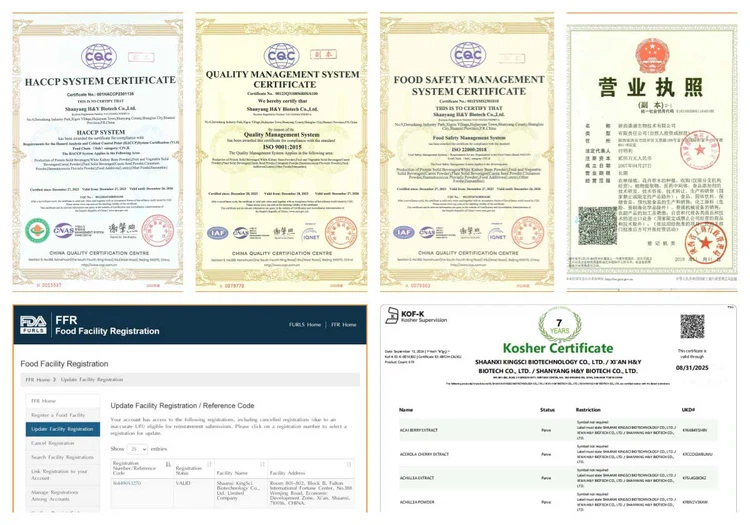
Certifications
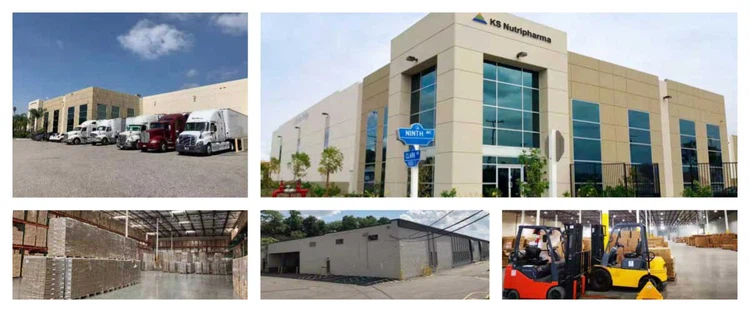
American warehouse
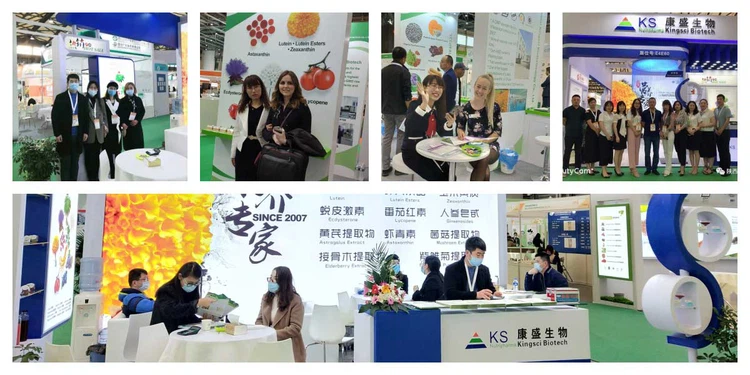
Exhibitions
Hot Tags: Fermentation Beta Carotene For Sale


