


What is Spatholobus Stem Extract?
Spatholobus Stem Extract is a botanical ingredient derived from the stems of the plant Spatholobus suberectus Dunn, and the phytochemical profile of the plant is extracted through controlled extraction methods (such as water or hydroalcoholic extraction) to concentrate the naturally occurring chemical profile of the plant into a standardized powder or liquid form. It usually has good physical characteristics and a suitable particle size distribution and batch-to-batch uniformity, which can be applied to formulation systems in industries. It could contain naturally occurring flavonoids, polyphenolic compounds, and other plant derivatives that are normally quantified and included in the specification for quality assurance. It is readily applied in the product development pathway of various nutritional and functional beverages, cosmetic and herbal formulations. It is preferred by formulators because of its versatility to be formulated into a wide range of delivery systems, including powders, granules, liquids, and encapsulated products, and blends with other botanical ingredients in compound products. Its use in today's supply chains is mainly as a standardised plant extract to aid product differentiation, clean label positioning, and flexible formulation design in the global markets for botanical ingredients.
COA
| Item | Specification | Result |
| Product Name | Spatholobus Chinensis Extract | Complies |
| Botanical Name | Spatholobus suberectus Dunn | Complies |
| Plant Part Used | Stem | Complies |
| Active Ingredient | Total Flavonoids | Complies |
| Assay | ≥30.0% UV | 30.42% UV |
| Appearance | Brown Fine Powder | Complies |
| Odor & Taste | Characteristic | Complies |
| Identification | TLC Positive | Complies |
| Particle Size | 100% Pass 80 Mesh | Complies |
| Loss on Drying | ≤5.0% | 2.81% |
| Ash Content | ≤5.0% | 2.16% |
| Extract Solvent | Water & Ethanol | Complies |
| Bulk Density | 0.40–0.65 g/ml | 0.53 g/ml |
| Heavy Metals | ≤10 ppm | <10 ppm |
| Lead (Pb) | ≤2.0 ppm | <0.50 ppm |
| Arsenic (As) | ≤1.0 ppm | <0.20 ppm |
| Cadmium (Cd) | ≤1.0 ppm | <0.10 ppm |
| Mercury (Hg) | ≤0.1 ppm | <0.02 ppm |
| Total Plate Count | ≤10,000 CFU/g | 680 CFU/g |
| Yeast & Mold | ≤100 CFU/g | 32 CFU/g |
| Escherichia coli | Negative | Negative |
Looking for bulk supply or product details?
Request A Free Sample or Bulk Quote to get COA, pricing, and fast delivery options.
Features
Spatholobus Chinensis Extract has a set of physicochemical properties that make it a technically adaptable botanical ingredient for formulation development. It generally comes in a fine brown to reddish-brown powder with an acceptable flowability when it is properly granulated, and its size may be changed by milling and sieving to suit various processing needs. The extract is generally hygroscopic to a moderate level, and thus the extract should be kept under controlled humidity conditions for stability and caking prevention during its storage, with special reference to large-scale manufacturing and long-term storage. Solubility-wise, it has better solubility in a hydroalcoholic system than in pure water and can be used for both dry blend and liquid formulation systems. Thermally, it is compatible with most low- to medium-temperature processing and can remain intact in capsules, tablets, instant powders, and beverage premixes during the normal production process. It is a complex mixture of naturally occurring polyphenolic and flavonoid-related compounds, which gives rise to its characteristic UV absorbance profile and can be used as a reference point in the HPLC or UV testing method for its use in quality standardization. It is easily blended with other botanical extracts, excipients, and carrier systems without any unpredictable wrinkles and has relatively stable colour and odour characteristics when stored under proper conditions, making it an attractive choice for formulators.
How to Store Properly?
1. Maintain a Controlled Storage Environment
Keep sealed in a warehouse in dry and well-ventilated conditions with stable ambient conditions that are stable. Keep away from locations that have high humidity variations, as over time the botanicals can absorb moisture even through the protective packaging layers.
2. Keep Away from Direct Light Exposure
Use cartons or containers to store the extracts in shaded areas so that direct sunlight or high-intensity artificial lighting does not affect the natural colour stability of plant-based extracts over time.
3. Temperature Stability Management
Avoid frequent temperature fluctuations, but store at a moderate and consistent temperature. Shock loads of temperature change can affect the flow properties of a powder and its long-term physical stability.
4. Avoid Proximity to Odorous Materials
Because botanicals are porous, don't keep them close to strong-smelling chemicals, spices, or volatile substances, since the botanicals can absorb the outside scent.
5. Use Palletized Storage System
Store products on pallets instead of directly on the floor to minimize risks caused by water contact, dust accumulation, and ground moisture throughout the warehouse in the vicinity of the product.
6. Minimize Package Opening Frequency
After bulk packaging has been opened for production use, tightly reseal and limit multiple exposures to air to ensure Chicken Blood Vine Extract properties will remain uniform throughout internal handling cycles.
7. Implement FIFO Inventory Management
Use a FIFO system to maintain product rotation and minimize long-term storage time, thereby providing stability in the quality of the products in each production batch.

Recommended Usage
In terms of manufacturing, Spatholobus Suberectus Dunn Extract is generally incorporated into various dosage forms using the appropriate manufacturing processes and methodologies that allow for uniformity, stability, and overall efficient manufacturing performance. It is often pre-mixed with excipients such as microcrystalline cellulose or maltodextrin, which are compatible with the material to increase the flowability and decrease electrostatic adhesion for more consistent capsule filling during high-speed capsule filling. In a tablet system, the process of dry blending and granulation (wet or dry) can be employed to improve compressibility and to achieve optimum dispersion of the extract in the tablet matrix as well as to control the hardness and disintegration characteristics to specification. In liquid formulations, the extract is typically pre-dispersed in an appropriate solvent matrix (which is usually a water-glycol or hydroalcoholic formulation) under controlled conditions of stirring and homogenization to obtain a stable suspension or solution (as appropriate depending on the solubility of the extract). There is a possibility of using pH adjustment, viscosity modulation, or natural stabiliser systems to prevent sedimentation and to stabilise the appearance for enhanced long-term stability. It is advisable to make additions during mixing and to control the shear in all cases to avoid agglomeration and to achieve homogeneity, particularly when scaling up to industrial production.
Certifications
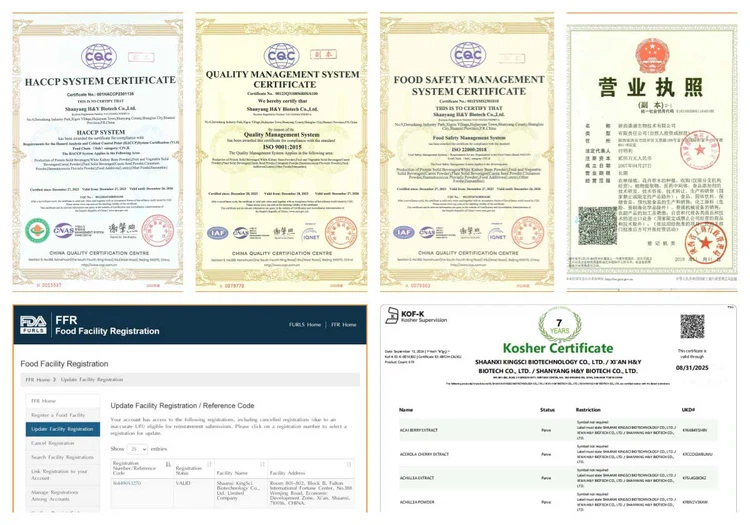
American warehouse

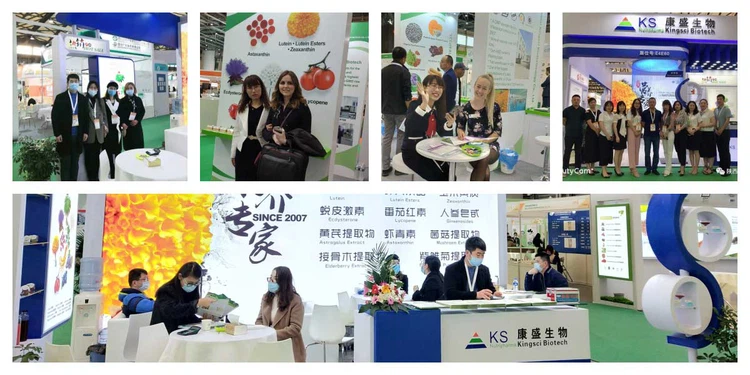
Exhibitions
Hot Tags: spatholobus stem extract, China, manufacturers, suppliers, factory, wholesale, price, pricelist, quotation, bulk, in stock, KOSHER, ISO, HACCP


