


What is Vine Tea Extract?
Vine tea extract is a high-quality botanical extract that's sourced from the leaves and tender stems of Ampelopsis grossedentata with careful extraction and concentration to maintain its naturally occurring flavonoid profile. It's produced in several standardized forms, such as high-dihydromyricetin (DHM) grades, and appreciated by formulator manufacturers for its homogeneous composition, process performance, and formulation versatility. The extract is usually delivered as a free-flowing, fine powder, ideal for capsule, tablet, powdered beverage, functional food, botanical ingredient, and some cosmetic applications. It is suitable for industrial applications because of its options for active ingredients, guaranteed quality of raw materials, production scalability, and suitability for modern manufacturing technologies. Global procurement is also supported by professional suppliers, providing detailed quality documentation, rigorous batch traceability, and testing for identity, purity, and key quality parameters. In the ongoing trend of the market in favour of unique plant materials that have been standardized in quality, it is rapidly gaining interest for companies looking to create innovative products with differentiating botanical positioning and comply with both international quality and sourcing standards.

COA
| Item | Specification | Result | Test Method |
| Appearance | Off-white to light yellow fine powder | Conforms | Visual |
| Identification | Positive | Positive | HPLC |
| Assay (Dihydromyricetin) | ≥98.0% | 98.47% | HPLC |
| Particle Size | 95% Pass 80 Mesh | Conforms | USP |
| Loss on Drying | ≤2.0% | 0.86% | USP <731> |
| Residue on Ignition | ≤0.5% | 0.17% | USP <281> |
| Bulk Density | 0.35–0.65 g/mL | 0.49 g/mL | USP |
| Tap Density | 0.45–0.80 g/mL | 0.63 g/mL | USP |
| Solubility | Slightly soluble in water; freely soluble in ethanol | Conforms | In-house Method |
| Heavy Metals | ≤10 ppm | <10 ppm | ICP-MS |
| Lead (Pb) | ≤1.0 ppm | 0.09 ppm | ICP-MS |
| Arsenic (As) | ≤1.0 ppm | 0.05 ppm | ICP-MS |
| Cadmium (Cd) | ≤0.5 ppm | 0.02 ppm | ICP-MS |
| Mercury (Hg) | ≤0.1 ppm | 0.01 ppm | ICP-MS |
| Total Plate Count | ≤1,000 CFU/g | 80 CFU/g | USP <61> |
| Yeast & Mold | ≤100 CFU/g | 12 CFU/g | USP <61> |
| Escherichia coli | Negative/10 g | Negative | USP <62> |
Looking for bulk supply or product details?
Request A Free Sample or Bulk Quote to get COA, pricing, and fast delivery options.
Market Trends
The market of Ampelopsis Grossedentata Extract is becoming a more popular worldwide attraction for ingredient manufacturers and product developers to look for botanical materials that have unique origins and have higher formulation value. Rather than merely playing the price game, many brands are turning to high-quality raw materials to develop more unique product lines and enhance brand values in today's competitive global product environment. Meanwhile, consumers are increasingly conscious of where ingredients are from, and they want to consume items that are produced using plant-based ingredients that focus on authenticity, simplicity, and transparency in production. This long-term change has stimulated manufacturers to look for other plant extracts than the more conventional ones and opened up new commercial opportunities. The cultivation management has also been improved continuously, and the cultivation technology and quality standardization have been improved, which has made it easier for industrial buyers to obtain materials with stable specifications and reliable supply. At the same time, worldwide demand for bespoke ingredient solutions is prompting suppliers to provide a variety of specification grades, flexible formulation assistance, and OEM or private-label manufacturing services to better align with the requirements of food, beverage, dietary supplement, and personal care manufacturers.
Why Is Vine Tea Extract Popular?
1. Distinctive Source and Market Differentiation
It is derived from a less-typical plant ingredient, Ampelopsis grossedentata. The unrivalled origin makes it a great tool for brands to develop more unique product concepts in the competitive botanical ingredients market.
2. Growing Interest in Specialty Botanical Extracts
There is growing interest among manufacturers in developing alternative plant extracts that have a known botanical origin. It is the answer to this trend, as it becomes a distinctive ingredient choice for companies aiming to create premium and innovative formulations.
3. Rich Flavonoid Composition
The extract has been used for several reasons, such as the naturally occurring flavonoids in the extract, particularly dihydromyricetin (DHM).
4. Strong Potential for Product Innovation
It offers the potential for customization of products, including botanical blends, specialty nutrition products, beverage concepts, and other plant-based products that demand an uncommon ingredient story.
5. Suitable for Premium Ingredient Positioning
The relatively unique botanical identity enables brands to emphasize origin, traditional plant resources, and the uniqueness of the ingredients in higher-value product lines.
6. Increasing Demand for Natural Botanical Solutions
As the world's appetite for natural ingredients and natural concepts for products grows, companies are constantly looking for new botanicals such as for new products.
7. Adaptable to Global Supply Needs
Dihydromyricetin Extract can be used by manufacturers who want to build commercial products that are reliable, and it comes in different specification ranges and has a system of professional quality control.

Product Development
1. Premium Botanical Formula Products
Vine Tea DHM can be incorporated into premium plant-based formulations, enabling brands to develop innovative products with a distinct plant provenance and market positioning.
2. Specialty DHM-Based Ingredient Products
Standardized specifications for dihydromyricetin (DHM) will help manufacturers to develop unique ingredient ideas, where exact botanical composition and consistency are relevant.
3. Private Label Botanical Series
It can be added to unique, private-label product lines developed by manufacturers, providing unique stories and a competitive advantage for the products.
4. Botanical Innovation Drinks
In addition to the conventional tea products, it can be utilized to develop modern tea-based products such as specialty blends and new classes of plant-based drinks.
5. Functional Confectionery Concepts
Can be used in groundbreaking formats like botanical gummies, lozenges, and other innovative delivery systems that enable brands to launch plant extracts in a new and consumer-friendly approach.
6. Customized Multi-Ingredient Formulas
It can be used with other natural products to build synergized complementary formulations for brands looking for innovation within their new generation Plant-Based product platform.
7. Cosmetic Ingredient Development
As a natural compound with a rich flavonoid content, it holds potential for application in cosmetic products, like botanical skincare formulations, as well as in plant-inspired skincare concepts.
8. Emerging Wellness Product Categories
For manufacturers, there are new product opportunities using it with a diverse range of botanicals, high-quality sourcing, and exciting ingredient combinations, all suitable for global markets.
Certifications
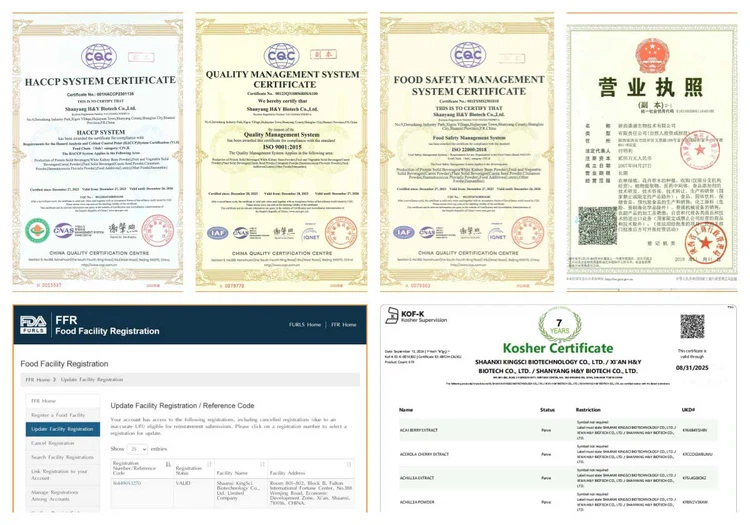
American warehouse

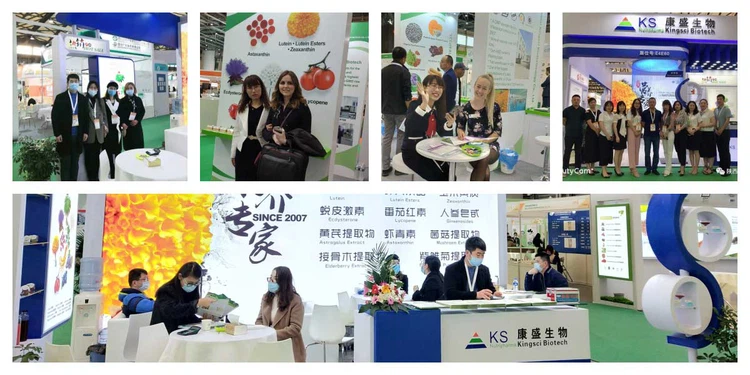
Exhibitions
Hot Tags: Vine Tea Extract, China, manufacturers, suppliers, factory, wholesale, price, pricelist, quotation, bulk, in stock, KOSHER, ISO, HACCP


