


What is Oat Extract Powder?
Oat Extract Powder is a botanical powder derived from processing the aerial parts or seeds of Avena sativa (oat), which are standardized and formulated into a fine, powdered form for incorporation into industrial formulations in the food, nutraceutical, cosmetic, and functional product industries. It is commonly used for its compositional stability, sustainable and scalable supply chain, and multi-functional formulation attributes. The powder, depending on the extraction method (e.g., water extract, ethanol extract, enzymatic extract), generally comprises a specific mixture of bioactive components including beta-glucans, avenanthramides, saponins, and polysaccharides, as well as intrinsic proteins and lipids, which allow for its use in diverse applications in final product development. It is commonly used as a functional ingredient due to its desirable physical properties, such as dispersibility, neutral taste, and formulating compatibility. In food and beverage manufacturing, it is a common ingredient in nutritional supplements, plant-based formulations, and fortified formulations where it can serve as a thickening agent, stabilizer, and fiber fortifier. In the cosmetic and personal care industry, it is often incorporated in skin-conditioning products like lotions, creams, and cleansers, where its composition can be leveraged to position products as mild and derived from plants.

COA
| Item | Specification | Result | Test Method |
| Appearance | Fine Powder | Fine Powder | Visual |
| Color | Light Yellow to Brown | Light Yellow | Visual |
| Odor | Characteristic | Characteristic | Organoleptic |
| Taste | Characteristic | Characteristic | Organoleptic |
| Particle Size | 95% pass 80 mesh | 97% pass 80 mesh | Sieve Analysis |
| Bulk Density | 0.40–0.65 g/ml | 0.55 g/ml | Density Meter |
| Beta-Glucan | ≥ 20% | 22.80% | Enzymatic / HPLC |
| Avenanthramides (optional) | ≥ 0.5% | 0.72% | HPLC |
| Extract Ratio | 10:1 | 10:1 | TLC |
| Loss on Drying | ≤ 5.0% | 3.45% | CP / USP |
| Ash | ≤ 5.0% | 2.90% | CP / USP |
| Lead (Pb) | ≤ 3.0 ppm | 0.76 ppm | ICP-MS |
| Arsenic (As) | ≤ 2.0 ppm | 0.48 ppm | ICP-MS |
| Cadmium (Cd) | ≤ 1.0 ppm | 0.19 ppm | ICP-MS |
| Mercury (Hg) | ≤ 0.1 ppm | 0.02 ppm | ICP-MS |
| Total Plate Count | ≤ 10,000 CFU/g | 1,850 CFU/g | AOAC |
| Yeast & Mold | ≤ 1,000 CFU/g | 150 CFU/g | AOAC |
| E. coli | Negative | Negative | AOAC |
| Salmonella | Negative | Negative | AOAC |
Looking for bulk supply or product details?
Request A Free Sample or Bulk Quote to get COA, pricing, and fast delivery options.
Market Trends
Demand for Oat Extract is growing in a sustainable and scalable manner, driven by global trends towards plant-based, natural, sustainable ingredients and supply chains. This is not necessarily single function-driven, but rather driven by new formulation techniques that prioritise a "clean label" approach, transparency, and sustainability. Increasingly, consumers globally prefer products containing familiar botanical ingredients, driving brands in the food and beverage, personal care, and nutraceutical industries to reduce or replace synthetic ingredients and additives with botanical ingredients like it. This is further driven by the growth of vegan and plant-focused product lines, where oats are seen as an efficient and acceptable raw material, with a secure and consistent supply chain. Meanwhile, innovations in extraction and standardization processes are helping manufacturers to better control quality, supply more standardized products to industrial buyers, and achieve better uniformity in batches and formulations.
Why is Oat Extract Powder Popular?
1. Scientifically Recognized Composition
It includes known and studied active components (beta-glucans and avenanthramides) that can be standardised and quantified to support product and quality consistency and supply chain transparency.
2. Multifunctional Formulation Value
It contributes to formulation in many ways, such as texture improvement, moisture control, and product stability, enabling manufacturers to streamline formulations and achieve cost-efficient benefits.
3. Clean Label Compatibility
Being sourced from a widely recognised and natural product, it can be used to meet clean-label demands, permitting straightforward, customer-friendly labelling and facilitating clean-label branding.
4. Cross-Industry Versatility
Being versatile for use in a wide range of products, such as food and beverage, personal care, and nutraceuticals, makes it an effective and efficient raw material for many different types of manufacturers.
5. Sustainable and Reliable Supply
Oats are extensively grown worldwide with consistent production, providing reliable sourcing and supporting the growing trend towards sustainable and scalable raw materials.
6. Mild Sensory and Processing Properties
Neutral flavor, light colour, and dispersion properties of Pure Oat Extract allow it to be easily incorporated into products, with minimal impact on taste, texture, and appearance.

Product Direction
1. Functional Powder Blends and Sachets
Oat Extract Powder can be used in instant powder products (drink mixes, solid beverages, or stick-pack) to support product positioning as a fiber source, contributing to the textural profile and enhancing dispersability in water-based formulations.
2. Plant-Based Dairy Alternatives
It can be incorporated into oat-only or blends of plant-based beverages, creamers, or yogurt-like products, contributing to product structure and stability while complying with plant-based product trends.
3. Nutrition Bars and Compressed Tablets
It can be incorporated into granola bars, protein bars, or nutrition tablets, where it serves as a binder-support ingredient to enhance product structure without overpowering the product's taste.
4. Instant Oat-Based Meal Replacements
It can also be incorporated into instant meal replacement powders or porridge products to enhance product texture, consistency, and blending with other plant ingredients.
5. Fermented or Cultured Product Bases
It can be used as a complementary ingredient in fermented food systems, such as oat-based fermented products or hybrid fermented food systems, to support product consistency and processability.
6. Skin-Care Formulation Bases
In cosmetics, it can be used in creams, lotions, masks, and cleansers as a plant-based ingredient, contributing to the product's body, smoothness, and mildness.
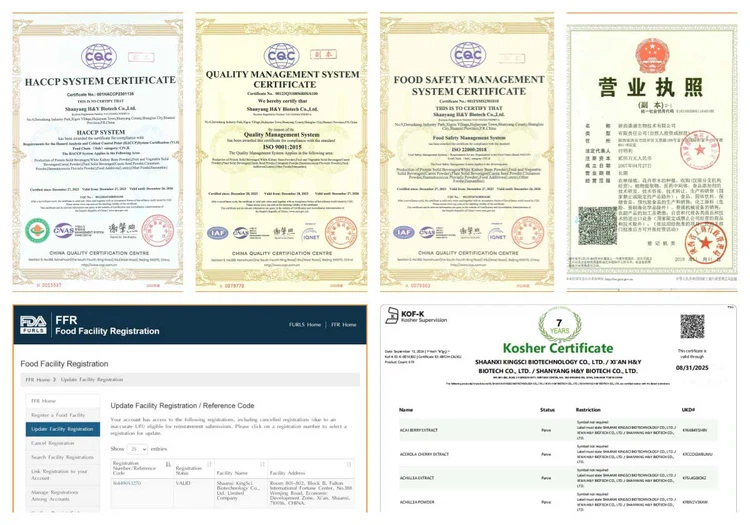
Certifications
American warehouse

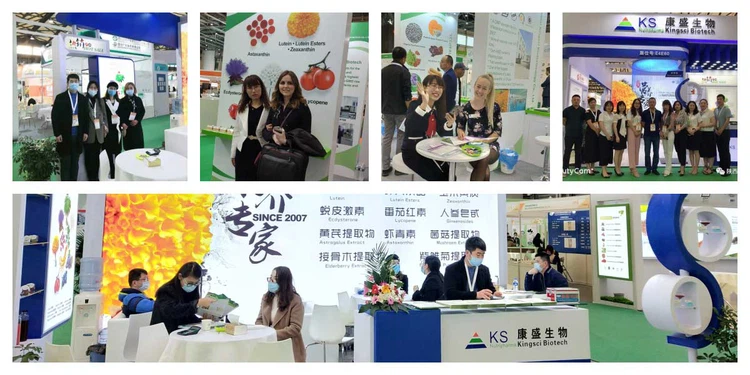
Exhibitions
Hot Tags: Oat Extract Powder, Oat Extract Powder Powder


