


What is Humulus Lupulus Extract?
Humulus Lupulus Extract is a plant extract made from the female flowers (cones) of Humulus lupulus L. obtained by specific extraction procedures, which maximise the extraction of the natural botanical components without altering the properties of the extract. It comes in a range of standardized sizes and can be used in a multitude of formulation ideas for the dietary supplement, functional food, beverage, cosmetic, and personal care sectors. It is valued for its botanical origin and can be used in a variety of formulations such as capsules, tablets, powdered blends, liquid products, gummies, topical, and finished product formats. The ingredient is valued for its stable processing properties, wide compatibility in formulations, and clean-label product creation and, therefore, offers a beneficial choice for brands that are looking for naturally sourced botanical ingredients. It has proven to be a widely accepted ingredient in product innovation because of its consistent botanical identity, application flexibility, and know-how in meeting current market product development requirements over several market segments as the demand for plant-based materials continues to grow.

COA
| Item | Specification | Result |
| Product Name | Humulus Lupulus Extract | Conforms |
| Botanical Source | Humulus lupulus L. | Conforms |
| Plant Part Used | Female hop cones | Conforms |
| Appearance | Brownish-yellow to greenish fine powder | Conforms |
| Odor | Characteristic botanical aroma | Conforms |
| Solubility | Partially water-dispersible / hydroalcoholic soluble | Conforms |
| Carrier | Maltodextrin / None / Customized | Conforms |
| Total Flavonoids | 5% | Conforms |
| Humulone | ≥ 2.0% | Conforms |
| Lupulone | ≥ 1.0% | Conforms |
| Polyphenols | ≥ 8.0% | Conforms |
| Particle Size | 80–120 Mesh | Conforms |
| Loss on Drying | ≤ 5.0% | Conforms |
| Ash Content | ≤ 6.0% | Conforms |
| Heavy Metals (Total) | ≤ 10 ppm | Conforms |
| Lead (Pb) | ≤ 2.0 ppm | Conforms |
| Arsenic (As) | ≤ 1.0 ppm | Conforms |
| Cadmium (Cd) | ≤ 1.0 ppm | Conforms |
| Mercury (Hg) | ≤ 0.1 ppm | Conforms |
| Total Plate Count | ≤ 1,000 CFU/g | Conforms |
| Yeast & Mold | ≤ 100 CFU/g | Conforms |
| E. coli | Negative | Conforms |
| Salmonella | Negative | Conforms |
Looking for bulk supply or product details?
Request A Free Sample or Bulk Quote to get COA, pricing, and fast delivery options.
Source
Humulus Lupulus Flower Extract is an extract from the female inflorescences (hop cones) of Humulus lupulus L., which is a perennial climbing plant that belongs to the Cannabaceae family. Hops are originally from Europe, Western Asia, and North America, and in temperate countries around the world, they are grown in carefully controlled agriculture. Harvesting the mature hop cones at the ideal ripeness, drying them without altering their natural composition, and extracting them with the proper solvents and using the proper extraction techniques yields the concentrated botanical extract. The composition of the resulting ingredient varies depending on the variety and growing environment of the plant and the extraction process and contains a variety of plant-derived ingredients, including flavonoids, polyphenols, and hop-specific ingredients. It is used in a wide range of dietary supplements, functional foods, and beverages, cosmetic and personal care products where botanical authenticity and ingredient consistency are desired, due to its natural plant source, standardized composition, and formulation compatibility.
History
This is the history of Humulus lupulus L., and the hop plant was grown all over Europe well before it was known throughout the world as a botanical ingredient. The plant was used for its unique botanical properties and its various uses, and it is believed that hops were cultivated in monasteries and agricultural communities during the medieval period. By the 9th-10th century, the art of growing hops was gathering momentum, and hops were now being used in beer-making, their presence gradually spreading throughout Europe until by the 14th century they had become a regular addition to the brewing process thanks to their distinctive taste, smell, and ability to help stabilize beer. With the development of botanical research and extraction technologies in the 20th century, the interest in hops spilled over into other applications, including standardized hops extracts, for dietary supplements, functional foods, cosmetics, and personal care products. Today, Hops Extract is known to be a well-established botanical ingredient of long cultivation history and has a wide variety of commercial applications, with modern processing methods providing a consistent quality and formulation versatility for development worldwide.

Precautions
1. Verify the Selected Specification
Ensure the Hops Extract Powder specification, extract concentration, and extract physical characteristics are confirmed before production to match the finished product and formulation.
2. Conduct Compatibility Trials
Test the suitability of the extract with other botanicals, vitamins, minerals, sweeteners, flavors, or cosmetic raw materials for uniformity of blending and stability of the product.
3. Optimize the Addition Stage
Find a suitable time to add the extract to the manufacturing process to ensure consistency and prevent unnecessary contact with excessive conditions.
4. Control Processing Conditions
Ensure that the processing time, moisture content and temperature are appropriate for the formulation design – this may affect the finished product appearance and quality.
5. Perform Small-Scale Pilot Batches
Evaluate the dispersion, processing efficiency, and consistency of the product in actual production conditions through pilot-scale production.
6. Adjust Formulation When Necessary
Optimize excipients, carriers, binders, or stabilizing ingredients as required, depending on the dosage form, to enhance the processing performance and product attributes.
7. Evaluate Sensory Characteristics
Botanical extracts can have their own natural color, aroma, or flavor, so evaluate sensory properties during the formulation process and make suitable changes to other ingredients.
8. Select Suitable Packaging Materials
Select the packaging to ensure the product has enough moisture, light, and oxygen barrier to maintain product quality during storage and distribution.
9. Store Under Appropriate Conditions
Store the product in a cool, dry place out of direct sunlight and excess humidity, as recommended, with raw material and finished product.
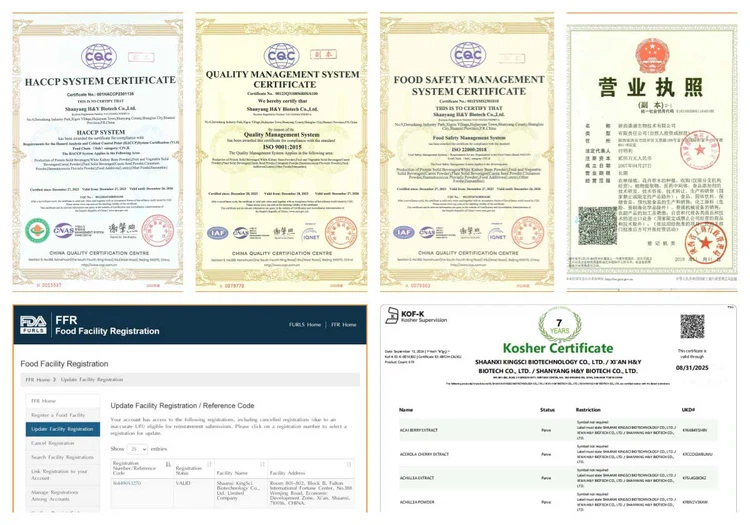
Certifications
American warehouse

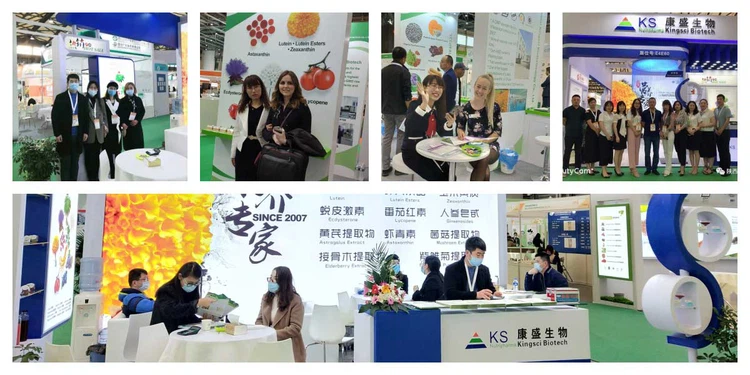
Exhibitions
Hot Tags: humulus lupulus extract, China, manufacturers, suppliers, factory, wholesale, price, pricelist, quotation, bulk, in stock, KOSHER, ISO, HACCP


