


What is Ginkgo Biloba Standardized Extract?
Ginkgo Biloba Standardized Extract is a processed botanical ingredient that is produced by the Ginkgo biloba tree by using a controlled extraction and standardization process that is used to obtain a standardized and reproducible phytochemical profile. In the industrial production process, the chosen ginkgo leaves are usually exposed to a solvent-based or hydroalcoholic extraction technique, after which the extraction is subjected to purification, concentration, and drying, during which the naturally occurring compounds present in the ginkgo plant material are stabilized. By the term standardized, it means that the final extract is produced to include pre-defined amounts of the important marker constituents - most often flavones glycosides and terpene lactones - within a specified range of specifications. This regulated form enables suppliers of ingredients to supply homogenous batches that are subjected to internationally established quality parameter criteria in the botanical extract trade. It is a reproducible plant-derived raw material that helps in achieving consistency of the formulation and scalable manufacturing. Relative to non-standardized extracts, crude botanical powders, or non-standardized extracts, standardized ones have more precise technical specifications, including assay values, characteristics of the particle, moisture content, and control of contaminants. The constituent usually comes as an easily free-flowing yellow-brown fine powder that is easily blended in dry form, granulated, encapsulated, and often used with other typical industrial processing methods.

COA
| Item | Specification | Result | Test Method |
| Assay (Flavone Glycosides) | ≥24% | 24.35% | HPLC |
| Assay (Terpene Lactones) | ≥6% | 6.12% | HPLC |
| Ginkgolic Acid | ≤5 ppm | 3.2 ppm | HPLC |
| Appearance | Brownish Yellow Fine Powder | Complies | Visual |
| Odor | Characteristic | Complies | Organoleptic |
| Taste | Characteristic | Complies | Organoleptic |
| Sieve Analysis | 100% pass 80 mesh | Complies | USP |
| Loss on Drying | ≤5.0% | 3.21% | USP |
| Ash | ≤5.0% | 2.48% | USP |
| Heavy Metals | ≤10 ppm | <10 ppm | ICP-MS |
| Lead (Pb) | ≤2 ppm | 0.65 ppm | ICP-MS |
| Arsenic (As) | ≤1 ppm | 0.21 ppm | ICP-MS |
| Cadmium (Cd) | ≤1 ppm | 0.08 ppm | ICP-MS |
| Mercury (Hg) | ≤0.1 ppm | 0.02 ppm | ICP-MS |
| Total Plate Count | ≤10,000 CFU/g | 1,200 CFU/g | AOAC |
| Yeast & Mold | ≤1,000 CFU/g | 120 CFU/g | AOAC |
| E. coli | Negative | Negative | AOAC |
Are you interested in our products? Just leave a message on this page or Contact Us Directly to get free samples and more professional support!
Features
Ginkgo Biloba Extract has a number of unique physical and chemical properties that render it an effective botanical ingredient to be used in formulating industries. It is normally provided in a fine yellow-brown powder with moderate bulk density, good flowability, and steady particle dispersion, assisting easy processing in the blending, granulation, encapsulation, and tablet compression systems. The extract is chemically characterized by regulated contents of flavone glycosides and terpene lactones as identified marker compounds to be used as standard quality measurements and batch identification. The extract is typically of moderate polarity following the presence of flavonoid glycoside that allows the extract to be compatible with hydroalcoholic systems and has partial dispersibility in aqueous formulations and is stable in dry powder matrices. Besides this, extracts of professional grade are made with stringent restrictions on moisture content, residual solvents, and ginkgolic acids, which not only enhance storage stability but also predictable formulation behaviour. To formulation scientists and product developers, these attributes allow a botanical raw material to have a phytochemical composition that is measurable, a physical characteristic that is reproducible, and an ability to integrate into numerous dry or semi-liquid manufacturing procedures.
How to Store Properly?
1. Keep in a Cool and Dry Storage Area
The extract must be stored in a low-humidity, stable, temperature-controlled warehouse after delivery. High temperature or humidity can influence the stability of powders and the overall quality of the material in long-term storage.
2. Avoid Direct Light Exposure
One should not place the material in direct sunlight or in places that have strong artificial light sources. The longevity of the naturally existing plant compounds of the product can be maintained by keeping the product in shaded or covered storage spaces.
3. Maintain the Original Sealed Packaging
As the product has already been packed as per the industry requirements, manufacturers are supposed to store it in the original sealed pack until the product is used. This contributes to the maintenance of the controlled inside environment and prevents unwarranted exposure to air.
4. Prevent Contact With Strong Odors or Reactive Materials
To prevent cross-contamination or unwanted absorption of Biloba Leaf Extract, the extract must not be stored with strongly smelling substances, volatile chemicals, or reactive agents.
5. Use Clean and Controlled Handling Procedures
During the opening of the package to use in production, the manufacturers are supposed to work in a clean handling space and reseal the unused material as quickly as possible in order to reduce contact with air and moisture.
6. Implement First-In-First-Out (FIFO) Inventory Management
In the case of warehouse management, it is advisable to implement the FIFO inventory principles in such a way that the batches of production produced earlier in the manufacturing cycle are consumed first, and that this will aid in ensuring the quality of materials used in the production cycle remains uniform.

Recommended Usage
In manufacturers who add Ginkgo Biloba Leaf Extract in final formulations, the ingredient is normally served as a functional botanical ingredient in capsules, tablets, or liquid blends, and its processing should be no different than the usual practice of industrial blending of ingredients to achieve a homogenous dispersion. The extract may also be used directly in capsule manufacturing by using excipients that are compatible, like microcrystalline cellulose or plant-based carriers, to enhance the powder flowability and to create fill weights that are consistent during the encapsulation process. In the case of tablet making, the extract can be frequently homogenized with dry binders, disintegrants, or other flow agents to form a homogeneous powder mass and then granulated or directly compressed as uniformly as possible to distribute the botanical constituent throughout each individual tablet. In liquid or semi-liquid formulations, e.g., botanical concentrate bases or more suspension-type products, the extract is typically pre-dispersed in an appropriate solvent system or is pre-treated with stabilizing agents to enhance the dispersion and prevent aggregation of particles. In all dosage forms, gradual addition in a mixing process, controlled blending periods, and compatibility studies with other plant-based ingredients or carriers can be used to enable the formulators to ensure uniformity and the consistency of the processing performance in large-scale manufacturing processes.
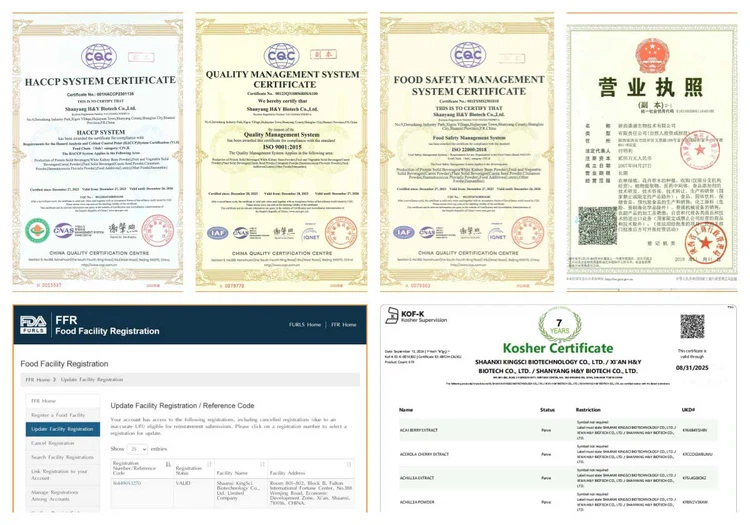
Certifications
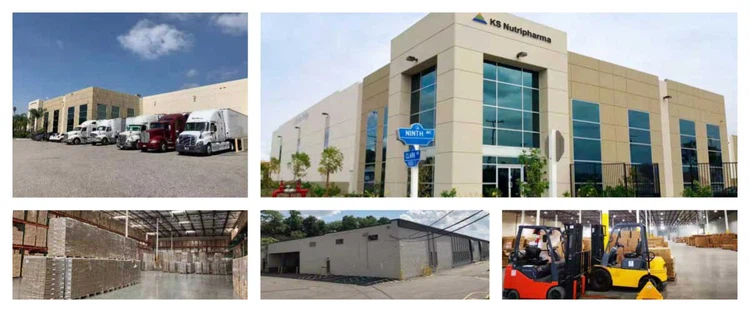
American warehouse
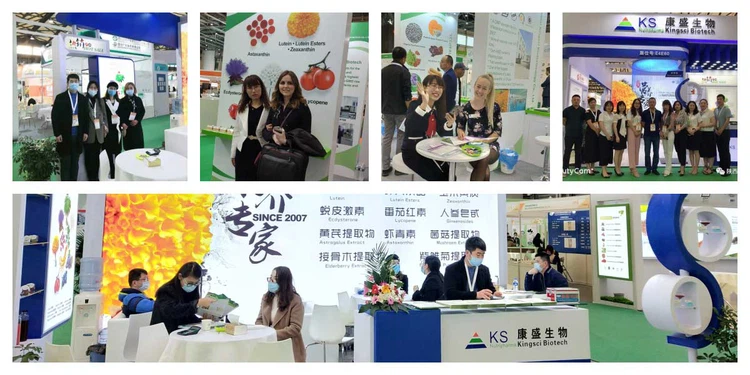
Exhibitions
Hot Tags: Ginkgo Biloba Standardized Extract, China, manufacturers, suppliers, factory, wholesale, price, pricelist, quotation, bulk, in stock, KOSHER, ISO, HACCP


