

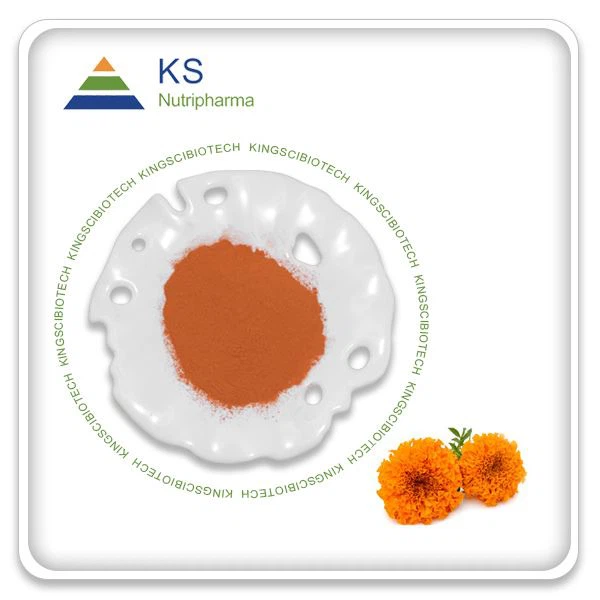
What is Microencapsulated Lutein Powder?
Microencapsulated Lutein Powder is a cutting-edge, high-stability natural source for producing enterprise-quality nutraceuticals and functional foods. Natural lutein is extracted from the flowers of marigolds (Tagetes erecta) and is regarded as having antioxidant properties and is also used as a key component in wellness formulations; however, lutein found in its unencapsulated form is light-, heat-, oxygen-, and moisture-sensitive and will readily degrade. To solve this, microencapsulation is the technology used to enclose the small particles in the protective matrix formed by the food-grade modified starches and gums to protect the active core from the environment for a longer shelf life and to ensure the potency of the ingredient. This free-flowing powder has been technically formulated for industrial efficiency, providing the best possible content uniformity, and is available in formulations to give optimal dispersion in cold water, which eliminates powder clumping, phase separation, and uneven color from high-speed blending, tableting, and capsule filling. This ingredient is commonly used in dietary supplements, in multivitamin dry blends, and as a raw material for functional beverage powders, ensuring the stability of such products during thermal processing and shelf life, offering manufacturers a reliable and high-quality raw material to guarantee superior product integrity and batch quality.
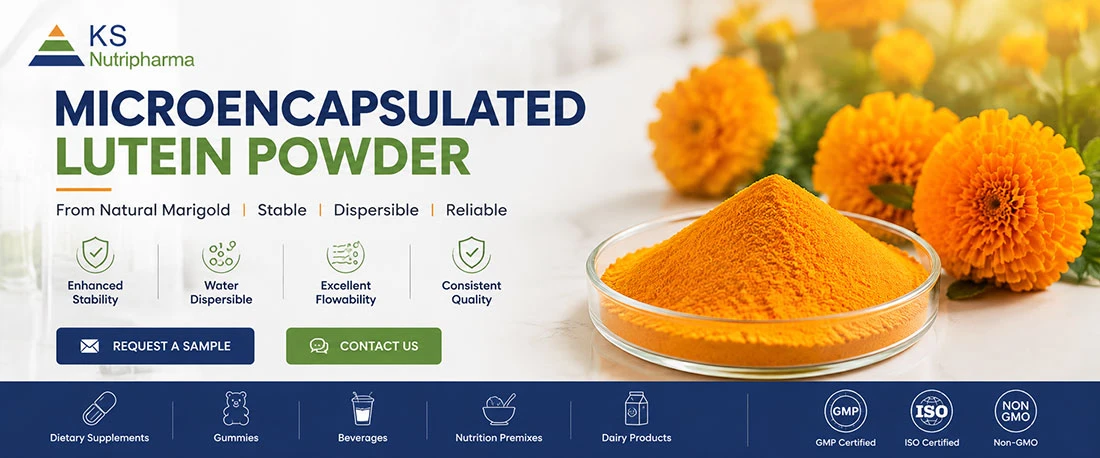
Product Specifications
| Active Lutein | 5% / 10% |
| Source | Marigold Flower |
| Appearance | Orange Fine Powder |
| Dispersion | Water Dispersible |
| Shelf Life | 24 Months |
| Storage | Cool & Dry Place |
Processing Advantages
| Feature | Benefit |
| Microencapsulation | Improved stability during processing |
| Better Flowability | Easier blending for powder formulations |
| Enhanced Oxidation Resistance | Longer product stability |
| Uniform Dispersion | Better compatibility with beverage systems |
| Easy Handling | Reduced dust during manufacturing |
Why Use microencapsulated lutein?
1. Superior Environmental Protection:
This is because Lutein Powder extracted from marigold flowers is extremely light-, heat-, oxygen-, and moisture-sensitive. Microencapsulation protects the active core with a cover made of polymers, which prevents and slows down rapid degradation, loss of activity, and exposure to these environmental factors.
2. Extended Shelf Life:
The product's chemical integrity and activity are preserved by encapsulating the active ingredient in protective micro-beadlets, which ensures that the product is kept intact during long storage and long supply chains.
3. Enhanced Powder Flowability:
Unprocessed extracts may be sticky and hard to work with. Microencapsulation turns the lutein into a free-flowing, uniform powder with optimized automated handling, large-scale blending, and capsule filling.
4. Optimized Dispersibility:
Common manufacturing problems such as clumping, phase separation, and color variations in liquid or dry formulations are avoided because of many variations developed for cold-water dispersion and uniform color.
5. Thermal and Processing Stability:
The protective shell protects the ingredient from the heat and mechanical effects of industrial processing, which can cause variations in the product between batches, and thus ensures the quality of the end product, such as tablets, dry-blend multivitamins, and functional drinks.
Is microencapsulated lutein powder better than lutein powder?
It is not always "better" to use microencapsulated lutein powder than it is to use regular, unencapsulated lutein powder; the difference is in their purpose in the manufacturing of the final product, depending on the matrix and processing. Typically, standard, Pure Lutein Powder or suspensions in oils will contain a much greater amount of active lutein per gram of product and will be a more cost-effective option for softgel capsules or lipid-based formulations where the active ingredient is naturally contained within a carrier oil. For microencapsulation, it is possible to introduce other food-grade wall materials and processing agents, which will result in an overall decrease in the potency percentage per unit weight and an increase in raw material costs. So, while standard lutein is the preferred, economical alternative for oil-based softgel capsules, microencapsulated forms are specifically selected to overcome technical issues in blends of dry powders, hard-shell capsules, and aqueous drinks where shielding from the environment and dispersibility in water are operational requirements.

Which Lutein Form is Right for Your Product?
Raw crystal extract from marigold flowers that has not been formulated is extremely concentrated and usually has the maximum concentration of active assays of the product per gram, without carrier materials.
Best Use: For manufacturers who wish to do specialized secondary processing, formulate in-house for their process, or have the total weight of the excipient a critical factor in their formulation.
Predissolved or dispersed crystals of lutein in carrier oils (food grade) at standardized potency.
Best Use: The typical softgel capsule manufacturing option. Liquid suspensions can be precisely volumetrically pumped and will not cause dry powder dusting or clumping when the powder is encapsulated.
Microencapsulated Lutein Beadlets / Powder
Fine lutein particles in a protective matrix of food-grade starches or gums that protects the active core from external elements.
Best Use: The hard-shell capsule protects the powder to prevent oxidation and enhance powder flowability during dry blending and is suitable for hard-shell capsules and direct compression tablets as well as dry-powder applications.
Specialized formulations that have hydrophilic carriers or emulsifiers to enable the active particles to blend in with water-based systems.
Best Use: Used in functional beverages, liquid drink mixes, and RTD (ready-to-drink) drinks, and powdered stick packs where a uniform dispersion in water without floating or settling to the bottom is desired.
Send Us Your Requirements today to discuss your lutein ingredient solution. Email us at donna.zh@kingsci.com for product specifications, samples, pricing, and customized solutions.
Frequently Asked Questions About Microencapsulated Lutein Powder
Why Is Microencapsulation Used for Lutein?
Lutein is heat-, light-, oxygen-, and moisture-sensitive. Microencapsulation helps to protect the product during processing, transportation, and storage conditions, which leads to a stable product and increases stability.
Which Industries Commonly Use Microencapsulated Lutein Powder?
Microencapsulated Lutein Powder is utilized in a variety of dietary supplement products, gummies, tablets, powdered beverages, nutrition premixes, dairy products, and beyond, wherever the stability of ingredients is crucial.
What Specifications Does Kingsci Offer?
Microencapsulated Lutein Powder is available from Kingsci in either a 5% or 10% specification. The formulation, particle size, and lutein content can be customized to address various manufacturing needs as well.
Is Microencapsulated Lutein Powder Suitable for Beverage Formulations?
Yes. Unlike conventional lutein powder, Microencapsulated Lutein Powder has excellent dispersibility and processing stability, which is ideal for powdered drinks and a few beverage applications.
What Quality Documents Can You Provide?
Every batch can be provided with a COA, TDS, MSDS (SDS), product specification, and other supporting documents. For further quality documentation, please request it for regulatory and/or project needs.
How Should Microencapsulated Lutein Powder Be Stored?
Keep in a cool, dry place out of direct sunlight, heat, and moisture. Optimal stability of the product is obtained during the shelf life when it is stored in its original sealed packaging under recommended conditions.
Can I Request a Sample Before Placing a Bulk Order?
Yes. Before commercial production, samples can be obtained for formulation evaluation and for compatibility testing. Our technical team can also make the most appropriate specification suggestion in accordance with the application.
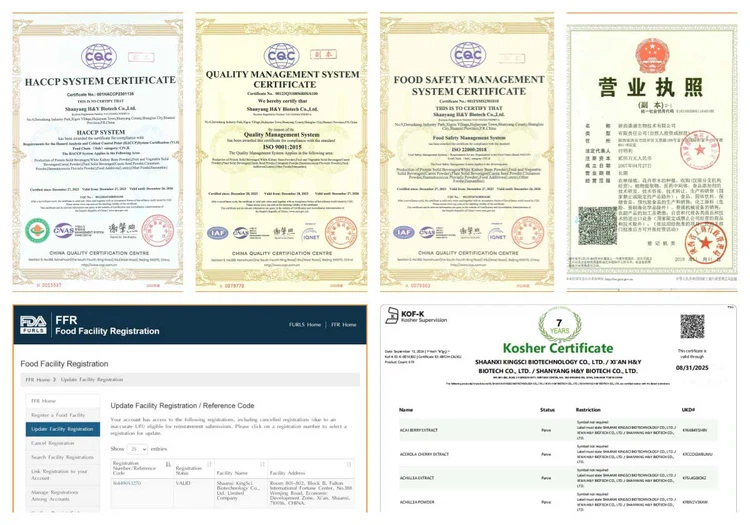
Certifications
American warehouse

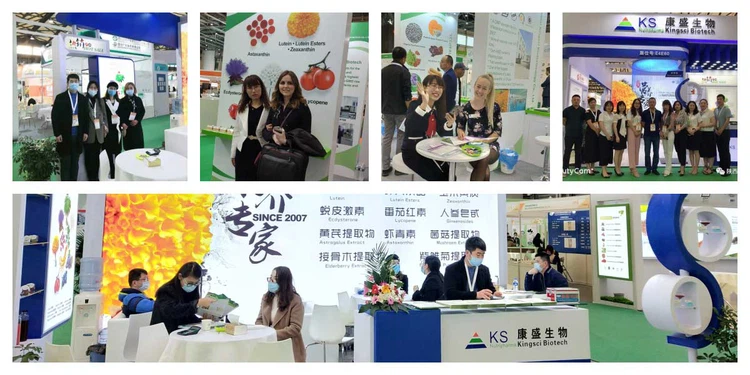
Exhibitions
Hot Tags: microencapsulated lutein powder, China, manufacturers, suppliers, factory, wholesale, price, pricelist, quotation, bulk, in stock, KOSHER, ISO, HACCP


