

However, the disadvantage of rhodiola is that it can exhibit some variability in response to the individual, the complexity of formulation for use in industries, and some stability and compatibility issues that need to be controlled during product formulation and manufacturing processes.
Although rhodiola rosea is a standardized extract increasingly utilized in systems for nutraceutical and beverage marketing and for cosmetic applications, the drawbacks are mainly related to the compositional variability, to the dose sensitivity, and to processing behavior. These are especially important in B2B manufacturing settings as they directly impact the predictability of the formulation, consistency of the batch, and product performance in large-scale production.
Rhodiola Rosea Extract Side Effect Variability in Product Applications
Rhodiola's use in finished products can result in variation among users in the dose-response profile, making it difficult to design a formulation.
Individual response variability: the perceived effect is very variable, and depending on the form of the product and the level of sensitivity
Consumers' product experience consistency can be affected by usage timing in the case of consumers' product experience formats.
Temporary reactions: Some people report minor discomforts like digestive sensitivity or sleep pattern changes as temporary reactions.
Dose-dependent behaviour: too much or too little can cause differences in the experiential results in finished products.
In terms of formulation, this is a challenge for manufacturers as they have to be precise when establishing ranges of use and in controlling the concentration of extracts.
Rhodiola Rosea Extract Dose Sensitivity and Formulation Window Limitations
The narrow optimization window of rhodiola in multi-ingredient products may have a negative impact on formulation flexibility, one of the biggest drawbacks of the product in the industry.
Non-linear response curve: when there are small differences in the level of inclusion, the difference in what is perceived in the product is also different
The dependency on standardization: the different marker rates used cause differences in the positioning of functional markers in formulations.
Blending constraints: needs controlled blending in multi-botanical systems, to ensure balanced formulation profiles
Limited overdosing tolerance in design: adding too much of the product into the design could interfere with the desired balance of the product or sensory neutrality.
This has implications for manufacturers as their formulation development may need to be an iterative process using rhodiola to secure consistency and stability of production.
Rhodiola Rosea Extract Stability and Processing Limitations
However, in the field of industrial processing, rhodiola poses material stability issues that need to be addressed in the production process and storage.
Moisture sensitivity: hygroscopic behaviour may influence powder flow and uniformity of blending
Exposure to light: sensitivity to light, causing changes in colour and phytochemicals with long exposure times
Thermal exposure considerations: if there are high-temperature processing steps, these may need to be processed under controlled conditions.
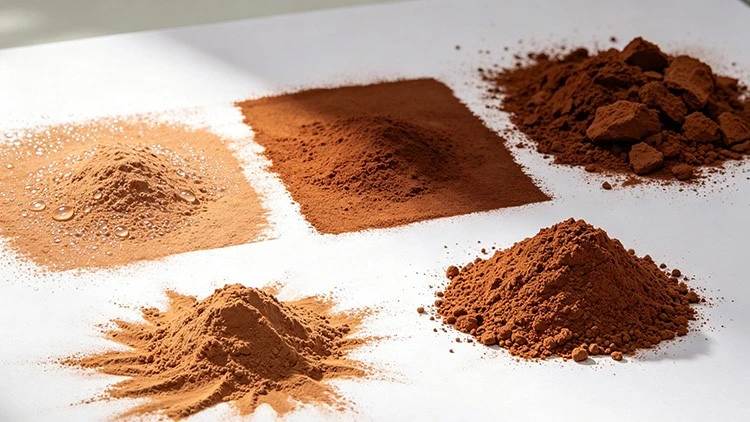
The variability in powder handling: from one batch to another, the flowability can vary due to the different particle size distributions and different drying procedures.
This is why it is crucial to ensure packaging is intact and warehouse conditions are well controlled in order to keep materials of the same quality.
Rhodiola Rosea Extract Compatibility Challenges in Complex Formulations
Rhodiola can add compatibility constraints in multi-ingredient product systems, which will need formulation engineering modifications.
In complex with other plant extracts: Botanical interaction complexity: may behave differently when combined with other plant extracts.
Sensory balancing needs – may need to be adjusted to ensure a neutral product profile
Depending on the type of system (liquid, powder, or solid dosage), the performance may vary.
Premix optimization needs: frequently requires staged mixing to ensure uniform mixing
Multiple botanicals are used in a single formulation in OEM & ODM product development, which is crucial.
Rhodiola Rosea Extract Supply Chain and Raw Material Variability
Another negative factor for B2B manufacturing is the fluctuation of raw materials' availability and production processes.
Phytochemical variation: depending on the chosen origin of the botanical, there might be variations in phytochemical composition due to altitude, harvest season, and cultivation conditions.
Differences in extraction methods: water, ethanol, or multiple extraction methods may result in different compound profiles
Inconsistency of the standardisation: not each commercial material is based on the same marker specification from supplier to supplier
Mention of the quality verification dependency for batch-to-batch confirmation, by strong analytical testing (HPLC/UV profiling).
It is important for manufacturers who use rhodiola on a large scale to ensure that the supplier is qualified and that the supplier's quality system is aligned.

Rhodiola Rosea Extract Industrial Handling and Formulation Constraints
Handling convenience in manufacturing is another factor that should be taken into account with regard to rhodiola.
Recovery: 90% or higher in a single step, depending on the product; may need additional processing steps to obtain the desired shape. Flowability variation: may need flow aids or granulation steps to process isotropically (to 90% or better recovery in a single step).
Fine particle behaviour in dispersion in high-speed mixing systems is a challenge to uniformity.
Mould growth: may be affected by natural variations in pigmentation, which could lead to variations in the final product appearance.
Carrier compatibility requirements: often optimized by excipients in order to enhance the processing
The materials used usually do not have to be changed; these factors are most often treated by formulation engineering.
Conclusion
Rhodiola's limitations are more prevalent than one might suspect, but mostly revolve around inconsistencies in response behavior to the extract, formulation sensitivity, stability issues, and inconsistency in raw materials. These aspects can be translated into the need to standardise, control processing conditions, and carefully design formulations in industrial B2B applications, to achieve consistent performance in various product formats. Accordingly, production of rhodiola is deemed to be a technically useful, but formulation-sensitive, botanical extract in which there is higher manufacturing control needed than with more chemically uniform raw materials.
Do you have a different opinion? Or need some samples and support? Just Leave A Message on this page or Contact Us Directly to get free samples and more professional support!
FAQ
1. What is the main downside of rhodiola in product development?
The major drawback is the formulation behavior and dose-dependent response characteristics of this compound, which vary from one to another.
2. Why is rhodiola considered difficult to formulate?
It has a limited range of optimisation, and is a difficult ingredient to balance in combined feed formulations.
3. Does rhodiola affect manufacturing stability?
Yes, it is moisture, light, and industrial processing sensitive.
4. Why is raw material consistency important for rhodiola?
Phytochemical composition may be different depending on origin and method of extraction, and this may cause a lack of batch uniformity.
References
1. Stojcheva EI, et al. Effectiveness of Rhodiola rosea preparations in stress-related outcomes. Frontiers in Pharmacology. 2022;13:922858.
2. NCCIH (NIH). Rhodiola: Safety and Side Effects Overview. 2024.
3. Merck Manual Professional Edition. Dietary Supplements: Rhodiola. 2023.
4. Frontiers in Nutrition. Rhodiola rosea supplementation and performance variability. 2025.
5. Examine.com. Rhodiola rosea Research Summary. 2024.


