

Lutein versus Zeaxanthin is a comparison of two main carotenoids found in food that fit together structurally to selectively accumulate in the eyes of humans and other mammals and improve their visual function and antioxidant protection.
Introduction to Lutein vs Zeaxanthin Synergism
Lutein and zeaxanthin are xanthophyll carotenoids found in the diet, which are unique in their ability to concentrate in the human retina: Lutein is found in the peripheral retina, and zeaxanthin is found in the central fovea. This spatial localization assures complete coverage over the whole macular region.
Both compounds are potent physiological filters from high-energy blue light and can eliminate ROS, protecting the photoreceptor cells in the eye from continuous oxidative stress and exposure to photons in the environment.
Nutritional Formulating Principle: The effective ratios of lutein and zeaxanthin in modern functional foods and supplements are usually 5:1 or 10:1 to simulate the dietary ratio of these two carotenoids that occurs in a healthy diet to ensure high systemic efficiency and health benefits for the consumer.
Raw Material Application Methods and Handling
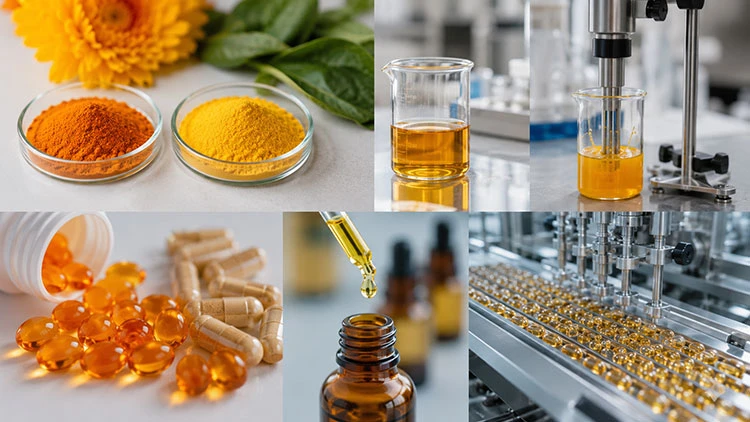
Pure lutein vs zeaxanthin ingredients have in their intrinsic composition lipophilic properties, which means that dispersion and/or solubilization of these ingredients are essential and require the use of specialized microencapsulation techniques, the integration of a surfactant, or the use of a blending of carrier oil in complex aqueous or solid manufacturing matrices.
Powder vs standardized Oil Phase Selection: Powdered grades of lutein vs zeaxanthin are best for dry powder blends, hard-shell capsules and compressed tablets, while standardized oil suspensions are better for softgel manufacturing, the production of lipid-based functional drops, and for liquid nutrient delivery.
Industrial Manufacturing/Thermal Processing Exposure Heat: When processing is done industrially or thermally, exposure temperatures need to be carefully monitored and maintained below certain thresholds to prevent degradation of the sensitive unsaturated polyene chain structures of dietary xanthophylls.
Advanced Formulation Techniques for Formulators
Synergistic Ingredient Pairing: Product formulators often pair lutein with zeaxanthin and other fat-soluble antioxidants like natural mixed tocopherols, vitamin E, or astaxanthin to create a strong multi-layered system of defense against lipid peroxidation.
During prolonged storage in the warehouse and during commercial shelf-life cycles, matrix Stabilization Strategies using botanical antioxidant synergists, chelating agents, and high barrier packaging materials prevent oxidative cleavage of the lutein vs zeaxanthin molecule.
In a finished dosage form, the micellar incorporation, lymphatic transport, and intestinal absorption rate of lutein vs zeaxanthin is greatly enhanced by the addition of medium-chain triglycerides (MCTs), lecithin, or self-emulsifying delivery systems, respectively.
Dosage Parameters and Regulatory Compliance
Standard Daily Serving Ranges: Commercial dietary supplements generally use ranging dosages of 10 milligrams to 20 milligrams of lutein and 2 milligrams to 4 milligrams of zeaxanthin, which is very similar to the safety limits determined in animal studies and human clinical trials.
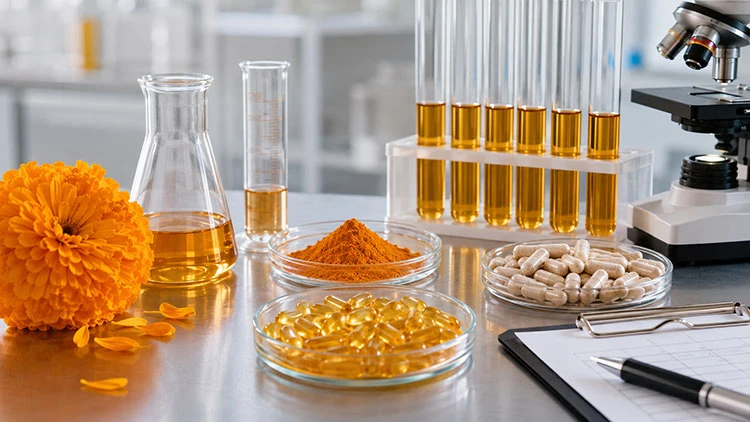
Safety and Tolerability Margins: Extensive toxicological testing shows that dietary lutein vs zeaxanthin from standardized botanical extracts such as marigold flowers, made under strict, certified manufacturing standards, have exceptionally high safety and tolerability margins.
Global Compliance Standards: Formulators have to ensure that the specifications for raw materials for lutein/zeaxanthin are all in compliance with the novel food regulations in each region where their product is going to be exported, as well as the purity assays, residual solvent limits and protocols for heavy metal testing.
Industrial Applications Across Global Markets
The nutraceutical and supplement industries: Lutein vs zeaxanthin raw materials are used as lead ingredients in eye care products, multi-vitamins, senior health supplements and digital screen fatigue supplements.
Functional Food Integration: Food scientists have successfully developed functional foods such as beverages, nutritional meal replacements, extruded snacks and fortified bakery foods in which microencapsulated grades of lutein vs zeaxanthin are incorporated without impacting organoleptic sensory properties.
Cosmetic & Nutricosmetic Uses: New cosmetic products and beauty products (nutricosmetics) use lutein vs zeaxanthin as a systemic antioxidant for water retention, elasticity and resistance to environmental factors and photo-oxidation of the skin.
Contact Us Directly or email donna.zh@kingsci.com to obtain samples of these two products for testing.
Lutein vs Zeaxanthin
To conclude, and as a summary, Lutein and zeaxanthin are two important carotenoids in the diet that both can be used as specialised functional ingredients, providing excellent technical benefits, optimal dosing flexibility and commercial value for advanced wellness applications.
FAQ
Q: What is the primary difference between lutein vs zeaxanthin in human tissue?
A: Both are essential carotenoids in the diet, but the main difference between lutein and zeaxanthin is the spatial distribution of the two in the human retina, with zeaxanthin being more centrally located in the human fovea and lutein more peripherally located in the human macula.
Q: How should formulators determine the optimal ratio of lutein vs zeaxanthin in dietary supplements?
A: The typical ratio for lutein and zeaxanthin is 5:1 or 10:1, following the ratios found in nature, including green leafy vegetables and extracts from marigolds, commonly used in the formulation.
Q: Are powdered or oil-based forms of lutein vs zeaxanthin better for beverage applications?
A: Cold-water-dispersible powder grades or special forms of lutein vs zeaxanthin microencapsulated in a special formulation (which are not oil-based) are recommended for clear or liquid beverage applications, as an oil-based suspension can cause phase separation.
Q: What stability factors affect the shelf life of raw lutein vs zeaxanthin ingredients?
A: The stability of lutein and zeaxanthin is strongly affected by heat, light and oxygen, so airtightness, light resistance of the package and cool storage conditions are critical to ensure that active potency is maintained.
References
1. Johnson, E. J. (2014). Role of lutein and zeaxanthin in visual and cognitive function throughout the lifespan. Nutrition Reviews, 72(9), 605–612.
2. Roberts, R. L., Green, J., & Lewis, B. (2009). Lutein and zeaxanthin in eye and skin health. Clinics in Dermatology, 27(2), 195–201.
3. Eggersdorfer, M., & Wyss, A. (2018). Carotenoids in human nutrition and health. Archives of Biochemistry and Biophysics, 652, 18–26.
4. Bernstein, P. S., Li, B., Vachali, P. P., Gorusupudi, A., Shyam, R., & Nolan, J. M. (2016). Lutein, zeaxanthin, and meso-zeaxanthin: The basic and clinical science underlying carotenoid-based nutritional interventions against ocular disease. Progress in Retinal and Eye Research, 50, 34–66.


