

Magnesium Malate Powder is a highly pure, reactive organic mineral raw material made for the primary purpose of providing a bioavailable source of elemental magnesium as well as a diverse functional matrix builder in the industrial dietary supplement, food, and beverage sectors. This compound is widely used as a basic component for enterprise-class product developers, offering key structural stability, outstanding solubility kinetics, and integrated technical feasibility in various commercially available processing platforms without the need to use synthetic additives or artificial carriers.
Industrial Application Mechanisms of Magnesium Malate Powder in Commercial Formulations
1. Active Mineral Fortification Matrix:
Delivers nutrient delivery as pure organic elemental magnesium, so that the multi-nutrient dry blend manufacturer can ensure exact nutrient label claims.
2. Organoleptic pH Buffering Agent:
Provides a soft and clear dicarboxylic acid flavour to help to control the pH of aqueous drinks and functional liquid shots without astringency.
3. Synergistic Co-Crystal Complexing:
Stable with surrounding amino acids and botanicals, maintaining stability in multi-active formulas in high-speed industrial blending.
Technical Formulation Tips and Processing Guidelines for R&D Engineers
1. High-Shear Geometric Dilution:
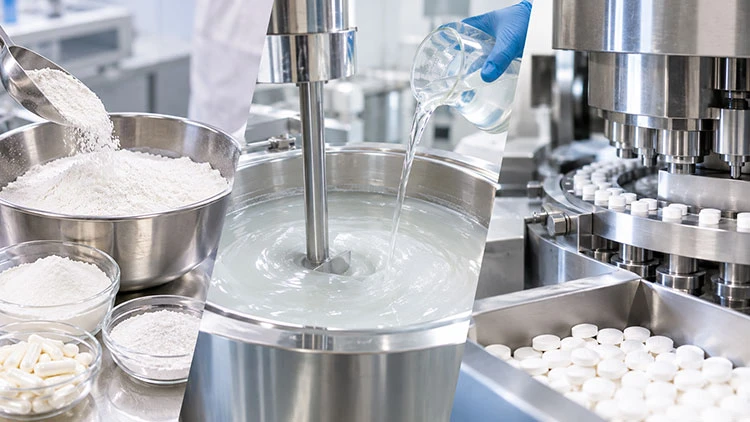
Guides the use of the ingredient with microcrystalline cellulose or silica glidants, especially to neutralize static electricity and to ensure uniform dispersion of the ingredient throughout the various batches of capsules.
2. Controlled Hydration Sequences:
Needs slow addition to warm water phases with continuous mechanical stirring before the addition of thickeners, to avoid local patchy clumping of particles and viscosity increases.
3. Direct-Compression Optimization:
Utilizes the compressibility of particles for tablet making, in addition to the use of conventional tablet binders, to reduce equipment wear, eliminate capping, and preserve tablet hardness on the high-speed rotary tablet press.
Dosage Factors and Ingredient Integration Parameters in Manufacturing
1. Elemental Yield Calculations:
Needs to make accurate calculations of elemental magnesium levels, based on molecular weights, to decide on exact percentages delivered per serving in commercial products.
2. Excipient Compatibility Ratios:
Adjusts inclusion percentages to maintain bulk density and flow properties to avoid over-compaction and ensure precise weight in automatic die-cavity filling.
3. Batch Homogeneity Verification:
Sets the most stringent mixing time parameters to achieve even mixing of the mineral powder in the high-capacity industrial ribbon blenders and V-blenders.
Physicochemical Stability and Environmental Storage Performance
1. Hygroscopic Moisture Management:
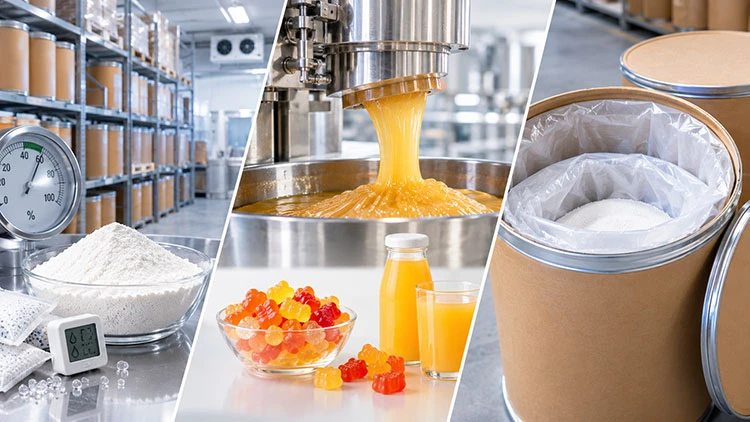
Requires storage in climate-controlled warehouse facilities where relative humidity levels do not exceed 60%, or moisture is absorbed onto the surface before it is even ready for sale.
2. Thermal Processing Endurance:
Very resistant to heat degradation, so that it can be incorporated into heated gummy slurry extrusions and into pasteurized liquid beverage bases without caramelizing.
3. Packaging Barrier Integrity:
Provides protection from oxygen and atmospheric vapor intrusion that can damage the active raw material by containing them in two polyethylene inner liners within heavy-duty fiber drums.
Sector-Specific Commercial Applications in Global Nutraceutical Markets
1. Effervescent Hydration Formats:
Delivers smooth dissolution in rapidly dissolving effervescent disk formulations due to rapid dissolution in cold water and a clean acid taste profile.
2. Direct-to-Mouth Sachet Sticks:
Uses optimized crystal structure to produce waterless, consumer-convenient stick-pack powders, which are free-flowing and do not cake.
3. Functional Confectionery Gummies:
Provides effective mineral fortification in pectin-based functional gummies in the last cooling stages before commercial molds are deposited.
What does magnesium malate powder do?
To sum up, magnesium malate powder is a non-neglectable, technologically sound raw material that enables enterprise manufacturers to develop high-quality, clean label nutritional supplements, functional beverages, and advanced nutritional delivery systems, with unparalleled processing efficiency and batch consistency.
Do you have a different opinion? Or need some samples and support? Just Leave A Message on this page or email donna.zh@kingsci.com to get free samples and more professional support!
FAQ
Q1: How does magnesium malate powder perform in direct-compression tableting applications?
A: It has good internal compressibility and low friction coefficients, which allow the formulator to get the desired tablet hardness, significantly reduce friability, and reach high production rates without increasing the amount of binder.
Q2: What is the recommended storage condition for bulk magnesium malate powder shipments?
A. Powder flowability should be maintained in commercial shipments by storing in tightly sealed original fiber drums with a dual PE liner, in a cool and dry place with a temperature of less than 25℃ and a relative humidity of less than 60%.
Q3: Can magnesium malate powder be utilized in clear liquid beverage formulations?
A: Yes, it has excellent aqueous solubility and it is very little sedimenting so it can be used in clear RTD liquids and functional shots without the use of heavy suspending agents.
Q4: Why do contract manufacturers prefer organic magnesium malate over inorganic mineral salts?
A: It has a much higher organoleptic neutrality, improved gastric tolerance, and enhanced structural stability with other moisture-sensitive companion actives in complex commercial premixes.
References
1. Smith, J. A., & Davis, R. M. (2021). Physicochemical characterization and stability of organic mineral chelates in functional food matrices. Journal of Food Engineering and Technology, 14(2), 112–125.
2. Wang, L., & Chen, H. (2022). Industrial processing parameters and tableting behavior of dicarboxylic acid-bound dietary mineral raw materials. International Journal of Pharmaceutics and Industrial Research, 29(3), 204–215.
3. European Food Safety Authority (EFSA) Panel on Dietetic Products, Nutrition and Allergies. (2020). Scientific opinion on the safety and bioavailability of magnesium sources used in food supplements and related manufacturing applications. EFSA Journal, 18(5), e06112.
4. Miller, K. E., & Thompson, S. B. (2023). Advanced formulation strategies for moisture-sensitive active ingredients in solid oral dosage forms. Nutraceutical Business Technology Review, 31(4), 45–58.


