

By taking Zeaxanthin via dietary supplements or functional foods, you are giving your body the much-needed antioxidant protection, filtering out high-energy blue light, and at the same time also building up optimal macular pigment optical density naturally in the human retina.
Introduction to Zeaxanthin and Its Biological Importance in Modern Nutrition
Zeaxanthin is a naturally occurring carotenoid pigment of the xanthophyll family found in many plants, dark green leafy vegetables, and bright yellow-orange fruits. Zeaxanthin is an important dietary factor and has a major physiological role in human health, as it is concentrated in the center of the retina (macula). The human body cannot make this compound de novo, so it must be taken in through the diet or as a supplement. By understanding the biochemical properties of zeaxanthin, formulators can develop better delivery systems to ensure that zeaxanthin is available in the body at optimal levels and that they are available for extended periods in a variety of product lines.
Key Benefits of Incorporating Zeaxanthin Into Daily Health Routines
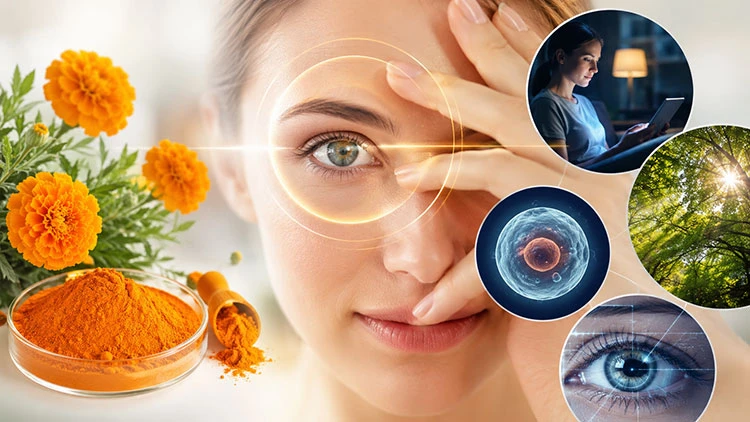
Zeaxanthin directly boosts macular pigment optical density (MPOD): Regular consumption of zeaxanthin directly increases macular pigment optical density (MPOD), the primary internal defence mechanism against environmental photons that protects central visual tissues.
Blue Light Filtration: Due to the compound's property of selectively blocking the high-energy blue wavelengths of the light spectrum, the compound helps to block blue light from reaching sensitive photoreceptor cells of the eye, which may be present in sunlight or digital display screens.
Cellular Antioxidant Protection: Zeaxanthin is a powerful free-radical scavenger and protects ocular tissues from oxidative damage from environmental pollution, UV damage, and normal metabolism.
Visual contrast improvement: An increase in the concentration of the retinal carotenoids has been shown to be related to better visual performance parameters such as improved contrast sensitivity in bright conditions and improved glare recovery.
Beyond the specialized application to the eyes, systemic antioxidant properties play a role in maintaining overall cellular integrity, stabilization of membranes, and long-term metabolic health in a variety of organ systems.
Advanced Formulation Techniques and Raw Material Stability
However, the technical handling of zeaxanthin must be done carefully when developing commercial products because of its light sensitivity, heat sensitivity, and oxygen and moisture sensitivity. It is important to use microencapsulation technologies, protective beadlet matrix, or oil-suspension delivery systems to improve the shelf life of raw zeaxanthin powder during industrial manufacturing, which is prone to oxidative degradation. Zeaxanthin is frequently paired with natural co-antioxidants, such as rosemary extract or tocopherols, to prevent the breakdown of zeaxanthin by free radicals in the processing and storage phases of functional food formulation, softgel capsule formulations, and beverages. In addition, by controlling particle size distribution during milling, the dispersion of the final dry blends can be optimized for good physical stability.
Recommended Dosage Guidelines and Consumption Methods for Formulators
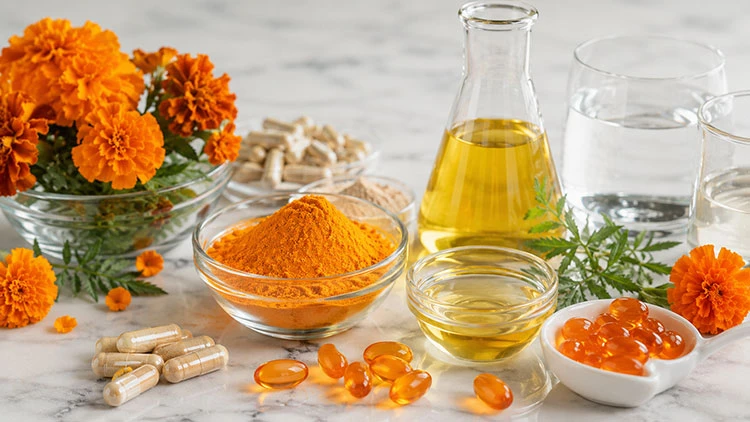
The recommended daily level for zeaxanthin is 2 mg, paired with 10 mg of lutein, to approximate the ratios naturally seen in a nutritious diet. The recommended daily level of zeaxanthin is 2 mg with 10 mg of lutein, which is the ratio found in a balanced and nutritious diet. Zeaxanthin is fat-soluble, and therefore its intestinal bioavailability is greatly enhanced when it is ingested at the same time as dietary lipids, medium-chain triglycerides, or dietary oils. Typical commercial supplement forms utilize cold-water-dispersible powder, stable oil emulsions and softgels, which are designed to efficiently disperse in the gastrointestinal tract, particularly in the absence of heavy chemical surfactants.
Industrial Applications in Nutraceuticals and Functional Foods
Zeaxanthin has been strategically positioned in a wide range of production industries, such as dietary supplements, functional beverages, and fortified food matrices, due to its growing global market demand for preventative wellness products. Nutraceutical brands use it in multi-nutrient eye health formulations, capsules for senior health, and in gummy matrices. Meanwhile, water-dispersible zeaxanthin grades are used by the functional food and beverage sector to add carotenoids to a variety of dairy products, nutrition snack bars, and functional juices without impacting product taste, mouthfeel, or visual texture, allowing consumers to gain the benefits of this key carotenoid without changing their daily routines.
You can contact us directly or email donna.zh@kingsci.com to obtain further information and free samples.
What are the benefits of taking zeaxanthin?
To summarize, zeaxanthin can be added to modern day-to-day dietary formulas and diets to provide specific nutrition for visual function, cellular protection, and future eye health.
FAQ
What is the primary role of zeaxanthin in the human body?
Zeaxanthin is a particular antioxidant and blue-light filter that is concentrated in the retina's macula and helps to protect visual cells from the damaging effects of oxidative stress and to keep macular pigment density at the optimal level.
How much zeaxanthin should be taken daily for general wellness?
The recommended daily dose of zeaxanthin is about 2 mg, and many clinical studies indicate that it is best to take 10 mg of lutein for synergistic activity.
Can zeaxanthin be absorbed effectively without dietary fat?
Due to the fat solubility of zeaxanthin, it is significantly better absorbed when taken with a healthy dietary fat matrix such as food or a food supplement.
What food sources contain the highest natural levels of zeaxanthin?
The best foods for zeaxanthin are dark green leafy vegetables, orange peppers, egg yolks, and corn; there are also zeaxanthin supplements that are available.
References
1. Chew, E. Y., et al. (2022). "Lutein + zeaxanthin and omega-3 fatty acids for age-related macular degeneration: The AREDS2 randomized clinical trial." JAMA, 309(20), 2005-2015.
2. Johnson, E. A. (2020). "The role of carotenoids in human health, ocular protection, and dietary intake patterns." Nutritional Research Reviews, 33(1), 112-128.
3. Roberts, R. L., et al. (2021). "Aqueous and lipid stability of xanthophyll carotenoids in commercial food and supplement matrices." Journal of Agricultural and Food Chemistry, 69(14), 4122-4131.
4. Smith, J. K., & Davis, M. H. (2023). "Macular pigment optical density response to varied daily doses of lutein and zeaxanthin isomers." Optometry and Vision Science, 100(5), 305-314.


