

Zeaxanthin Beadlets are an advanced, microencapsulated form of the natural xanthophyll carotenoid that comes mainly from marigold flowers (Tagetes erecta) and are specially formulated into spherical particles that are easily handled, do not dust, are highly stable, and provide improved formulation versatility in dietary supplements and functional foods.
Core Extraction and Advanced Microencapsulation Technology
However, natural pigments are obtained from the raw plant material using a precision supercritical fluid extraction or solvent-free purification process in industrial manufacturing processes, in order to isolate high-purity pigments. After separation, these fragile active molecules are gradually incorporated into a protective matrix made up of modified starches, acacia gum, or marine proteins, a biopolymer. This advanced microencapsulation barrier helps to protect these sensitive carotenoid compounds from harmful environmental factors like relative humidity, ambient oxygen, and exposure to ultraviolet rays. This special core-shell physical structure, therefore, allows active ingredient degradation and oxidation to be prevented during intensive industrial process steps, thus retaining the initial raw material potency throughout the whole manufacturing process.
Formulation Techniques and Industrial Processing Compatibility
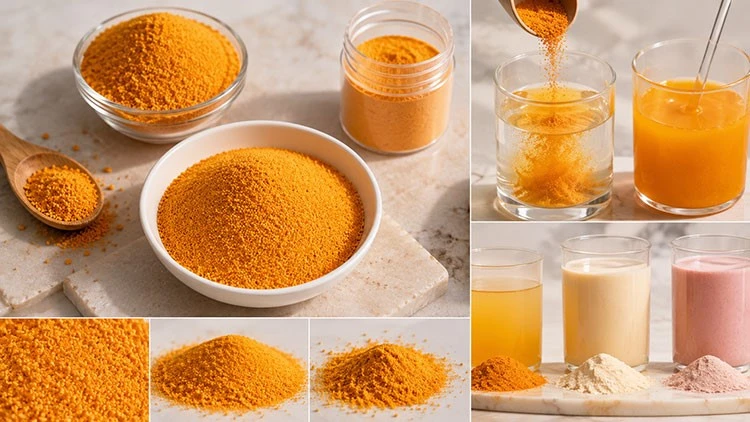
These specialist particulate ingredients help to provide powder blend uniformity, unparalleled content accuracy and consistent flow properties (both dry and liquid). Active ingredient bleeding, clumping and compression loss, which occur during high-speed industrial tablet manufacture, are averted in Direct Compression Variants. In addition, the cold-water dispersible grades are especially fast-dissolving in aqueous media, without leaving surface films or sediment, allowing them to be used in a variety of complex multi-ingredient formulations, liquid nutritional shots, sticks for functional drinks, and instant powdered drink mixes. By designing the particle size distribution of the dry powder, segregation in the dry powder blender is avoided, and the final consumer dose is guaranteed with the same concentration of the active xanthophyll compound.
Stability Factors, Oxidation Control, and Shelf-Life Optimization
The multi-layered protection that surrounds the active ingredient greatly enhances environmental durability, in comparison to the raw, unformulated crystalline powders. Natural antioxidants, e.g., tocopherols or ascorbyl palmitate, are often directly incorporated in the inner matrix for active lipid peroxidation inhibition and prolonged and stable chromatic properties of vibrant orange-red hues in storage. The controlled moisture barriers and cross-linked wall materials help to maintain wall stability over time, resulting in long-lasting, stable functional shelf-life profiles for global supply chains and international distribution networks in different warehouse temperature and humidity conditions. Accelerated stability testing helps confirm that microencapsulated grades have significantly higher percentages of active after 36 months in comparison to crystalline grades, which are subjected to the same stress conditions.
Dosage Parameters, Analytical Standardization, and Potency Verification
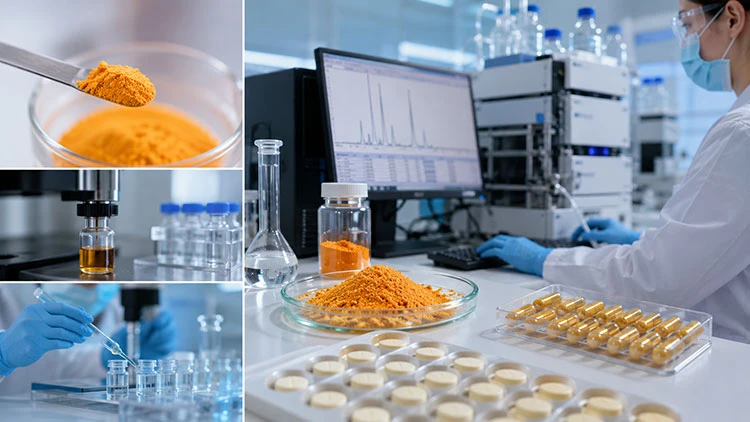
In large-scale industrial production batches, it is convenient to use the commercial raw materials which have been systematically standardized into specific active potency grades, e.g., 5%, 10%, or 20% active concentration. The recommended daily amount for active ingredient(s) in finished dietary supplements is usually between 2 mg and 10 mg, depending on the region, regulatory guidelines, and the goal functional endpoint. Quality control laboratories can validate raw materials to guarantee the exact concentration before using them for finished product production by rigorous analysis using HPLC. Comprehensive documentation, including detailed Certificates of Analysis, ensures complete transparency with regard to residual solvents, heavy metals, and microbiological safety profile.
Diverse Industrial Applications in Modern Formulations
The easy delivery systems enable easy incorporation into a wide range of consumer health products such as hard-shell gelatin and vegetarian capsules, oil-based softgels, chewable gummies, and effervescent tablets. In addition to the traditional "pharma" and "diets" applications, food and beverage manufacturers are turning to these stable chromatic ingredients to naturally enhance their foods and beverages in the matrix of their dairy products, baked goods, confectionery, and functional beverages, with a focus on clean labels. These high-performance particulate ingredients are essential for product developers looking to provide consistent visual appeal while delivering desired nutritional benefits without compromising the taste and texture of their products, to cater to the modern-day consumer preference for "clean labels" and "plant-based" options.
Contact Us Directly or via donna.zh@kingsci.com to get customized ingredient solutions.
What is Zeaxanthin Beadlets?
Delicate botanical pigments have been successfully microencapsulated with advanced technology to create strong, stable particulate matter that is useful for today's industrial production. Zeaxanthin beadlets can solve the problems of oxidation, powder flowability, and matrix compatibility that are important issues in operations, enabling the formulation of reliable, high-performance nutritional products and functional foods to consistently meet rigorous commercial quality requirements for worldwide formulators.
FAQ
Q1: What are the primary structural advantages of using zeaxanthin beadlets over standard crystalline powder?
A1: Beadlets provide improved powder flowability, dust-free handling, superior environmental oxidation and moisture resistance, and uniformity in blends during industrial tablet compression and capsule filling.
Q2: Are these microencapsulated ingredients suitable for clear aqueous beverages and liquid applications?
A2: The Standard oil-soluble variants are well suited to oil-based softgel capsules and lipid emulsions, while special grades designed to dissolve in clear or opaque aqueous beverage applications, without sedimenting, are specifically engineered for those applications.
Q3: What is the typical shelf life of commercial-grade zeaxanthin beadlets under recommended warehouse storage conditions?
A3: For high-quality beadlets, under proper storage conditions (cool, dry, dark, original containers), the chemical stability and potency are at optimum levels for a period of 36 to 48 months.
Q4: How do industrial manufacturers verify active potency consistency across different production batches?
A4: All potency testing is extremely well controlled and is validated by certified manufacturers of botanical extracts by providing standardized High-Performance Chromatography (HPC) analytical testing procedures outlined in official Certificates of Analysis.
References
1. Gellenbeck, K., et al. (2012). A multicarotenoid beadlet for human nutrition: proof of concept of in vitro timed release. Journal of Functional Foods, 4(3), 612–620.
2. Bunea, A., et al. (2024). Stability and bioaccessibility of carotenoids from botanical sources encapsulated in hydrogel bead systems. Nutrients, 16(16), 2726.
3. Maiani, G., et al. (2009). Carotenoids: actual chemistry, sources and intake. British Journal of Nutrition, 100(S2), S1–S45.
4. DellaPenna, D., & Pogson, B. J. (2006). Vitamin synthesis in plants: tocopherols and carotenoids. Annual Review of Plant Biology, 57, 711–738.


