

The antioxidant activity, versatility in formulation, environmental stress protection, and compatibility with contemporary botanical skin care systems are the primary benefits of Rhodiola rosea for skin.
Why Rhodiola Rosea Benefits for Skin Are Popular in Modern Cosmetics?
The increased popularity of rhodiola rosea in skin care formulations is due to the formulation flexibility and multifunctionality properties of cosmetics manufacturers seeking botanicals for their formulations. The root extract has salidroside and rosavin, flavonoids, and natural polyphenols, which are highly useful in cosmetic applications in the field of antioxidants.
The Rhodiola rosea extract can be used in light facial products, such as serums, facial mists, gel creams, facial masks, and beauty tonics-all of which are not as heavy as heavier botanicals. It is also compatible with water-based systems and therefore can be used in modern skin care textures used daily.
Antioxidant Rhodiola Rosea Benefits for Skin Formulas
Environmental Stress Support
Extracted from Rhodiola rosea, the extract is commonly included in cosmetic products that are meant for skin care in the city.
The antioxidants in botanical compounds can aid in some of the modern concepts of anti-fatigue skin care.
The extract is frequently mixed with plant extracts that have a high content of vitamins for wider cosmetic positioning.
To address the issue of eye protection, the Blue-Light and Daily Defense Products were created.
Rhodiola rosea is found in many skin care products and is a part of lightweight, daily-defense products.
Water-soluble extracts are particularly beneficial for toners, essence products, and gel serums.
The formula aligns well with the minimalism in skin care trends, with plant extracts that have multiple actions.
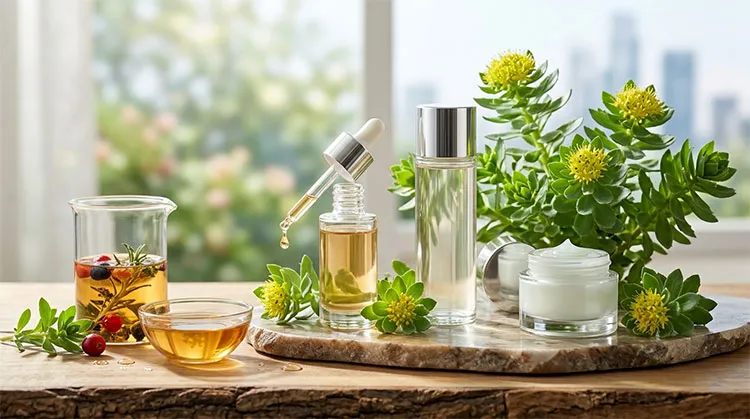
Rhodiola Rosea Benefits for Skin Hydration Applications
Compatibility With Moisturizing Ingredients
Rhodiola rosea extract is typically combined with other ingredients, such as glycerin, sodium hyaluronate, and aloe-based products.
It is a good hydrating agent for emulsions and hydrogel formulations.
Elegant texture and absorption are maintained by the use of a low inclusion rate.
Lightweight Texture Advantages
The extract is used to impart botanical functions while having minimal impact on viscosity.
This allows it to be used in spray mists and systems with high absorption rates for cosmetics.
Often, liquid extracts are standardized for greater dispersion stability for use in formulation.
Formulation Techniques for Rhodiola Rosea Benefits for Skin
Recommended Usage Levels
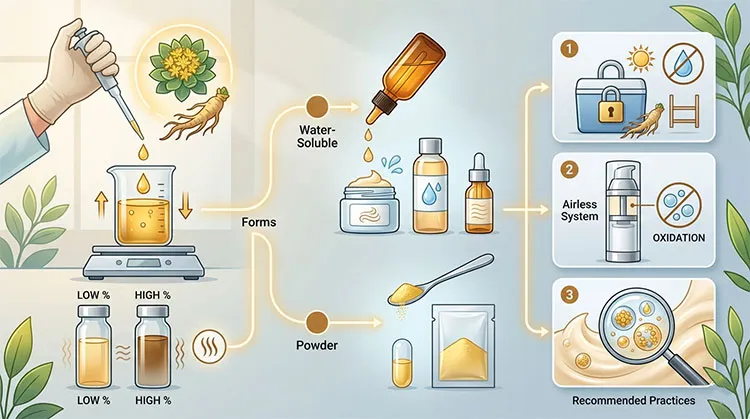
The Rhodiola rosea extract is usually applied at a determined proportion based on the plant's active ingredients.
Higher concentrations can impact the color of the product or the intensity of the botanical's smell.
Typically, concentration, texture, and stability values are trade-offs between formulators.
Examine the stability and packaging factors. Discuss the stability and packaging factors.
Rhodiola rosea extract is best when kept away from moisture, sunlight, and oxygen.
In the case of formulations that focus on the antioxidant activity, airless packaging systems are typically chosen.
Consistency of ingredients during shelf life is maintained by cool and dry storage.
Available in water-soluble and powder forms.In both water-soluble and powder forms.
Water-soluble extracts work great in creams, toners, and serums.
In most cases, powder extracts are incorporated into capsules, sachets, or nutricosmetics.
The technology of encapsulation is becoming more and more popular in high-value cosmetic products.
Industrial Applications of Rhodiola Rosea Benefits for Skin
Botanical Skincare Products
Rhodiola rosea extract is used in facial masks, antioxidant creams, eye products, and soothing eye serums.
The ingredient can be used in high-quality botanical brands in contemporary skin care lines.
Contract manufacturers appreciate that it is compatible with the natural and clean label cosmetics systems.
Beauty Supplement Market
Rhodiola rosea powder is gaining popularity in beauty from the inside products.
Collagen peptides, ceramides, or astaxanthin can be added to combination formulas.
Quality consistency is sometimes emphasised, such as in the form of standardised salidroside.
Market Trends Related to Rhodiola Rosea Benefits for Skin
Growth of Adaptogenic Beauty Ingredients
Botanicals, referred to as adaptogens, are still catching the eye of cosmetic innovation.
The skincare trends with a focus on environmental balance and modern lifestyles align with Rhodiola rosea.
The use of plant-based multifunctional ingredients is becoming more and more popular among consumers.
Clean Label Cosmetic Development
Traceable sourcing of botanicals and standardized quality of extracts are significant trends that cosmetic buyers are now looking for.
Rhodiola rosea is suitable for vegan use and clean-labeling.
It is also very flexible for a variety of formulation categories for manufacturers.
Rhodiola rosea benefits for skin
In conclusion, the use of Rhodiola rosea in the cosmetics industry is closely linked with antioxidant cosmetics design, formulating with lightweight ingredients and contemporary botanical skin care methods. It is a useful ingredient in modern cosmetic production, due to its versatility in various formulations such as serums, creams, and masks, as well as beauty supplements.
Do you have a different opinion? Or need some samples and support? Just Leave A Message on this page or Contact Us Directly to get free samples and more professional support!
FAQ
Is Rhodiola rosea extract suitable for sensitive skin products?
Rhodiola rosea extract is a common ingredient in mild, gentle, botanical skin care systems combined with hydrating ingredients and correct formulation concentrations.
What ingredients pair well with Rhodiola rosea in skincare?
Rhodiola rosea is frequently included with other active ingredients such as hyaluronic acid, Aloe vera, green tea extract, centella asiatica, and botanical antioxidant complexes.
Can Rhodiola rosea extract be used in beauty supplements?
Yes. The powdered variety of Rhodiola rosea is common in beauty products, such as capsules, tablets, and powdered sachets, as well as standard powdered supplements.
How should Rhodiola rosea extract be stored?
It is common practice for manufacturers to store the extract in a cool, dry, and dim place to ensure stability and consistency of the product.
References
1. Panossian, A., & Wikman, G. (2021). Effects of adaptogens on the central nervous system and stress-related disorders. Pharmaceuticals, 14(5), 456.
2. Chiang, H. M., et al. (2022). Botanical antioxidants and cosmetic applications. Molecules, 27(11), 3458.
3. European Medicines Agency. (2023). Assessment report on Rhodiola rosea L., rhizoma et radix. EMA.
4. Li, Y., Zhao, J., & Wang, X. (2024). Botanical ingredients in modern cosmetic formulations. Journal of Cosmetic Dermatology, 23(2), 411–420.


