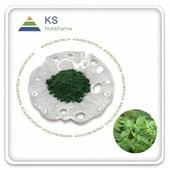
The Glabridin Powder is mostly insoluble in water and mostly dissolves in organic solvents or oil, and is normally dispersed in cosmetic formulations by the use of co-solvents, emulsification systems, or encapsulation.
Glabridin powder is a prenylated isoflavonoid, which is a derivative of the roots of Glycyrrhiza glabra (licorice). The solubility profile of glabridin powder is a crucial aspect in cosmetic science and ingredient manufacturing since it dictates the opportunities of the ingredient to be used in creams, serums, emulsions, and other skincare products. Glabridin is hydrophobically structured chemically, and this implies that it mixes with lipid or organic solvent systems more easily than pure water. Consequently, the glabridin powder is normally considered as an oil-phase or solvent-phase compound and not a water-phase additive by the formulators. Research and technical information suggest that glabridin is insoluble in water (approximately 0.05 g/L) but is well dissolved in, e.g., ethanol, DMSO, or propylene glycol.
With cosmetic chemists and B-end manufacturers, this solubility behavior has no restraining effect on the usefulness of the ingredient. Rather, it has an impact on formulation strategies. By proper dispersion techniques, relating to solvents or through encapsulation techniques, glabridin powder can be introduced into any one of a large variety of cosmetic products with stability and good distribution.
Solubility characteristics of glabridin powder in formulation systems
Limited water solubility of glabridin powder
Glabridin powder is categorized as insoluble in water, and traces of it dissolve at room temperature.
The hydrophobic nature of the molecule is the aromatic structure, which makes the molecule not very compatible with aqueous systems.
Good quality solubility in organic solvents.
Ethanol, methanol, and DMSO are all good solvents for the compound.
These solvents are common in the process of laboratory preparation or intermediate formulation.
Oil phase compatibility: Compatibility with oil-phase cosmetic ingredients.
The glabridin powder is lipophilic and, therefore, dissolves in oil phases of cosmetic emulsions.
This property enables formulators to add it at the mixing phase when the oil is in the liquid state.
Practical formulation techniques for using glabridin powder
Pre-dissolution in compatible solvents
It is common amongst formulators that glabridin is dissolved in ethanol or glycol and then incorporated into the formulation.
This measure is used to establish a homogeneous distribution and eliminate aggregation.
Incorporation of the oil phase of emulsions.
Glabridin powder can be dissolved in the oil phase before the emulsification in cream or lotion production.
This guarantees greater compatibility with the emulsion system.
Solvabilizers or carriers should be used.
Glabridin can be dispersed in water-based products with the help of surfactants or solubilizing agents.
These systems enhance the dispersion of the ingredients without affecting the base formulation.

Recommended usage levels of glabridin powder in cosmetic formulations
Low concentration effectiveness
The common use levels of cosmetics are between 0.5 and 0.01 percent, depending on the purity of extracts.
The low concentrations are used to ensure formulation stability, thereby providing functional properties.
Grade changes according to the grade of purity.
Purer grades will demand fewer additional levels in the formulations.
Standardized extracts enable the use of the same dose of extract among production batches.
Interaction with multi-active cosmetic systems.
Glabridin powder may be mixed with botanical extract powders, vitamins, and humectants.
The compatibility test is used to maximize the performance of intricate ingredient systems.
Stability considerations when working with glabridin powder
Sensitivity to light and oxidation
Similar to most of the phenolic compounds, glabridin is degraded by exposure to long-term exposure to light.
The stability of opaque packaging and controlled storage conditions is achieved.
Significance of monitored processing temperatures.
Overheating in the manufacturing process could affect the stability of the chemical.
The use of gentle heating during dissolution is commonly adequate when formulating.
Storage facilities for raw materials.
A storage of glabridin powder is usually done in closed places and in dry, cool conditions.
Efficient storage is a way of preserving the purity and shelf life.

Industry applications of glabridin powder in cosmetics
Skincare emulsions
Glabridin powder is usually added to creams and lotions that focus on botanical actives.
Ampoules and high-concentration serums.
The actives that are oil-compatible, like glabridin, are frequently used in concentrated skincare preparations.
Gel products and sheet mask essences.
Glabridin powder can then be incorporated in aqueous cosmetic systems when the powder is correctly solubilized.
Multi-extract biological complexes.
Glabridin is also used rather often by cosmetic manufacturers along with other plant extracts, forming a proprietary ingredient system.
Conclusion
To conclude, glabridin powder cannot be dissolved in water; however, it is quite soluble in organic solvents and oil-phase systems, which is why it is particularly appropriate in the cosmetic formulations based on emulsions or solvent-assisted dispersion. Knowledge of the solubility properties of glabridin powder will facilitate the formulators' selection of the appropriate mixing methods, solvents, and delivery systems. This botanical compound may be effectively incorporated into a great variety of contemporary skincare products with the aid of appropriate formulation techniques, including solvent pre-dissolution, incorporation into the oil phase, or the use of solubilizers.
Do you have a different opinion? Or need some samples and support? Just Leave A Message on this page or Contact Us Directly to get free samples and more professional support!
FAQ
Is glabridin powder soluble in water for cosmetic formulations?
Glabridin powder is usually insoluble in water. It is more soluble in organic solvents or oil phases, and thus formulators normally adopt co-solvents or emulsification systems when inserting it into water-based products.
What solvents are commonly used to dissolve glabridin powder?
Areas of common solvents are ethanol, DMSO, propylene glycol. These solvents assist in the making of a homogenous solution prior to the inclusion of the ingredient in the primary formulation.
What is the typical concentration of glabridin powder in skincare products?
In the majority of cosmetic preparations, glabridin powder is used at a concentration of about 0.01%-0.5% in relation to the purity of the extract and product design.
How can formulators improve the dispersion of glabridin powder in aqueous formulations?
The powder is frequently dissolved in a solvent that is compatible with the formula, or it is added to the oil phase before emulsifying. Dispersion could also be enhanced by solubilizers or encapsulation systems.
References
1. Chen, Y., Li, W., & Zhang, L. (2022). Phytochemical characteristics and industrial applications of licorice flavonoids. Journal of Natural Products Research, 36(18), 4763–4775.
2. Kim, J., Park, H., & Lee, S. (2021). Prenylated flavonoids from licorice and their cosmetic applications. Molecules, 26(9), 2581.
3. Wang, Z., Zhao, J., & Liu, Q. (2023). Advances in extraction and formulation technologies for licorice-derived bioactive compounds. Journal of Ethnopharmacology, 310, 116349.
4. Lee, Y., Kim, D., & Cho, J. (2024). Stability and formulation strategies for plant-derived flavonoids in cosmetic systems. Cosmetics, 11(2), 58.