

There is no direct evidence of the ability to structure or correct human eyesight with lutein, but there are formulations of this compound that are known to be used in eye nutrition systems for the support of general eye visual performance for light exposure and digital visual demand under everyday conditions.
Lutein Improves Eyesight: Functional Position in Ocular Nutrition Systems
In the lutein improve eyesight category, lutein isn't a structural vision-correcting ingredient, but rather a carotenoid ingredient for use in nutritional formulations.
Functional nutrient classification
Lutein is now marketed as a dietary carotenoid for inclusion in eye nutrition products for the general performance of the visual system in the context of today's lifestyles.
Light-related nutritional relevance
It is also studied in relation to the light exposure environments, where it is added to formulating systems for visual comfort support concepts.
Industry formulation role
Lutein is not used as a single ingredient to correct an eye nutrient deficiency, but is a component of multi-component eye nutrition systems used by manufacturers.
Lutein Improves Eyesight in Modern Eye Nutrition Product Design
Key word Lutein – eye nutrition product development trends – is strongly associated with lutein.
Screen-driven formulation demand
Lutein is now in the spotlight as demand for products containing the nutrient continues to rise, thanks to the surge in digital device usage that has placed them at the forefront of the visual workload support category.
Multi-nutrient system integration
Lutein is often partnered with carotenoids, vitamins, and plant extracts to form a comprehensive visual nutrition sensorium.
Delivery format diversification
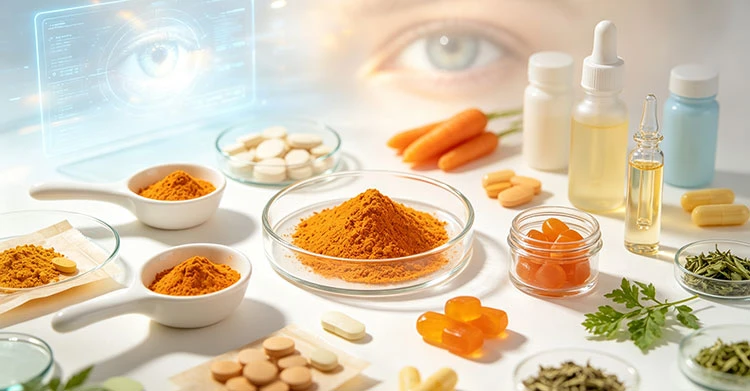
Available in different capsules, powder, gummies, and liquid emulsions to cater to different consumers' consumption preferences.
Lutein Improves Eyesight: Manufacturing and Formulation Engineering
In B2B manufacturing lutein improve eyesight products, it is important to design the product to be stable and homogeneous during the manufacturing process.
Oil dispersion systems
Lutein is usually added to lipid-based carriers to be used for producing softgels for uniformity and stability.
Microencapsulation technology
To preserve lutein in dry powder systems, there are many protection methods, such as spray-drying or beadlet encapsulation.
Blending uniformity control
In order to produce a uniform distribution in tablet and sachet formulations, high shear and stepwise mixing processes are used.
Excipient compatibility management
The compatibility of the various carriers (starches, fibres, or emulsifiers) is chosen by the formulators to assure good processing performance and minimize aggregation.
Stability Considerations in Lutein Improve Eyesight Formulations
Lutein is very susceptible to environmental influences, and stability engineering is a very important component of formulation development.
LSC systems
Production and packaging procedures are designed to reduce the quantity of light that the pigment comes in contact with to help keep the pigment intact.
Oxidation resistance strategies
To minimize degradation caused by storage and transportation, antioxidant systems are commonly added to formulations.
Thermal processing limitations
Low-temperature blending and a controlled drying process are preferred in order to ensure the stability of compounds.
Packaging protection design
To achieve stability on the shelf, aluminum foil bags, amber bottles, or nitrogen-fluxed systems are used.

Application Formats of Lutein Improve Eyesight Products
The lutein improves eye sight formulations are applied in various formulations, depending on the market positioning and the manufacturing capabilities.
Softgel capsule systems
Common format as a result of being stable in the oil-based dispersion systems.
Functional powder blends
Formulated into sachets & drink mixes that are easy to use, with flexible dosage instructions.
Gummy and chewable systems.
Popularly used in eye nutritional products because of its consumption.
Liquid emulsion systems
It was applied in a ready-to-drink or concentrated liquid formulation that needs better dispersion technology.
Market Positioning of Lutein: Improve Eyesight Category
The increase in the lutein category for improved eyesight is a reflection of the general trend in functional nutrition, clean-label, and ingredient transparency.
Plant-derived ingredient preference
Lutein is commonly touted as a naturally derived carotenoid ideal for "clean labelling".
Standardisation throughout the supply chain across the globe.
Consistent specification control is highlighted as a key element for manufacturers in order to enable large-scale international distribution.
Product differentiation strategy
Lutein is a unique ingredient used for a competitive nutrition product lineup as a key differentiator.
Multi-functional formulation trend
Lutein's application has grown into a multi-ingredient system, with greater and greater demand.
Can lutein improve eyesight?
Lutein does not have any structural or corrective effect on vision, but it has a major contribution in the formulation of eye nutrition products for overall visual performance in modern environmental and digital exposure. The benefit of lutein in improving eyesight product development is that it is flexible in formulation, stable in product development, and it can be incorporated into multi-component nutritional systems applied throughout the global supplement manufacturing markets.
Do you have a different opinion? Or need some samples and support? Just Leave A Message on this page or Contact Us Directly to get free samples and more professional support!
FAQ
Q1: Can lutein improve eyesight in a measurable way?
Lutein has been included in eye nutrition products but does not directly affect the structure or refractive status of the eye.
Q2: Why is lutein widely used in eye nutrition products?
As it is a carotenoid ingredient that is frequently incorporated into a multi-nutrient program for general visual support.
Q3: What are the most common lutein improve eyesight product formats?
The primary industrial delivery forms are softgels, powders, gummies, and liquid emulsions.
Q4: What affects lutein stability in formulations?
The factors that affect stability include light, oxygen, temperature, and packaging conditions.
References
1. Ma L, Lin XM. Dietary carotenoids and visual function: recent evidence. Nutrients. 2021;13(6):1999.
2. Ranard KM, Snodderly DM. Lutein and visual performance outcomes in supplementation studies. Nutrients. 2020;12(3):618.
3. Johnson EJ. Carotenoids in ocular nutrition and dietary applications. Am J Clin Nutr. 2022;115(4):1–10.
4. Eggersdorfer M, Wyss A. Carotenoids: biological roles and nutritional relevance. Arch Biochem Biophys. 2021;703:108838.


