

The answer to whether maca is better than ashwagandha may vary based on the formulation goals: Maca has been used more often in the development of broad-spectrum botanical products, while ashwagandha has been used more often as a plant-based 'standardized' ingredient in botanical formulations.
Is maca better than ashwagandha in botanical ingredient positioning
When it comes to a B2B manufacturing standpoint, the answer to "Is maca better than ashwagandha?" isn't a straight cut or twist, but rather with regard to the product design goals. Usually, maca is placed as a neutral, versatile botanical ingredient, that is appropriate for a broad range of consumers and clean label formulations. Ashwagandha, however, tends to be a part of more specific adaptogenic supplements. Manufacturers do not make their selection to compare; it is based on formulation strategy, regulatory positioning, and product category.
Is maca better than ashwagandha in formulation flexibility
Maca in product system design
Representing the maca in a product system.Representing maca in product system design.
Maca is readily adopted because it is very compatible to vary the delivery methods:
Powder systems: can be readily mixed into nutritional drink mixes and premixes
Powders: for use in standardised botanical preparations for use in daily applications.
Gummies: can be formulated into confections, flavored with a mask.
The standardized extract of Ashwagandha.Standardized extract of ashwagandha.
Ashwagandha is often more commonly consumed as a standardized extract:
If the extract is intended for use in a controlled-dose formulation, high-concentration extracts may be used.
Capsule systems: used for many botanical supplement products that are targeted towards specific applications
Other adaptogenic ingredients: frequently mixed with other adaptogenic ingredients

Is maca better than ashwagandha in processing and stability
Industrial production-wise, maca extract powder tends to be neutral during the processing and has stable blending properties, regardless of industrial production environments. It can be used in both dry and semi-dry production, and is used in large-scale production lines. Extracts of ashwagandha (as per standardization level) may need more controlled handling because of the need to concentrate the potency and specify the extract. This discrepancy has an impact on the way manufacturers develop production processes and the stability testing protocol.
Is maca better than ashwagandha in product application strategy
The way to apply the Maca in B2B markets.
Maca is used in a variety of things, including:
General wellness products for all types of consumers
Labeling lines that focus on plant-based ingredients.Clean-label product lines that highlight plant-based ingredients.
In such cases, blends of two or more botanicals are required to have neutral sensory properties.
The application strategies to be used for Ashwagandha in the B2B market.
Ashwagandha has various applications:
Optimize formulation systems for adaptogenic products – make sure you know where they are going to sit in the product
The categories that are used for stress management purposes (non-medical positioning)
High-quality standardised extract products that are needed for specific actives
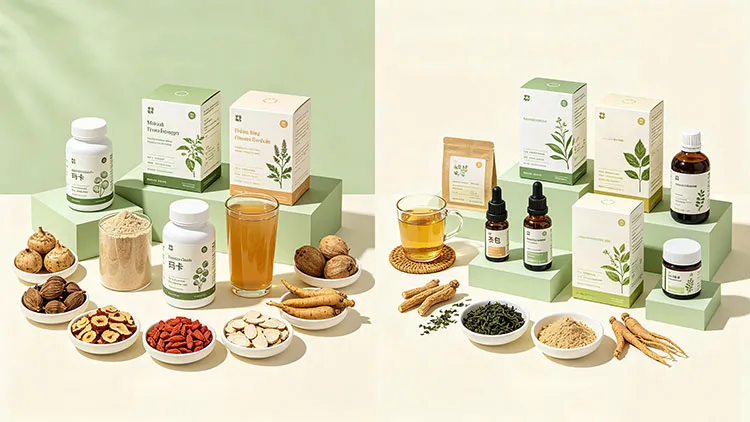
Is maca better than ashwagandha in clean-label and consumer positioning
Maca is a popular choice for clean-label products, as it is easily identifiable and readily accepted by consumers. It has good compatibility into low ingredient formulations, which are marketed heavily by transparency of ingredients. Ashwagandha also has a very good botanical recognition, but is more often than not placed in particular product lines. Maca provides manufacturers with increased opportunities to cross-market by using different categories with a brand, whereas Ashwagandha gives them opportunities to have a more established product narrative.
Is maca better than ashwagandha in global supply chain usage
Both maca and ashwagandha are traded plants used in the world as ingredients; they have various roles in the supply chain. Its versatility makes it an ideal ingredient for use in diverse products, often as part of multiple ingredient blends. Ashwagandha is more often used as an ingredient of standardised extract, where control on specification is more rigorous. This can have an impact on procurement strategy, supplier qualification, and formulation planning in manufacturing.
Is maca better than ashwagandha?
It is impossible to categorically say whether maca is better than ashwagandha because both of these ingredients have distinct functions when it comes to manufacturing botanical products. Typically, maca is used in flexible, clean-label, and multi-application formulations and is commonly used in a multi-application or standardized botanical system, whereas ashwagandha is used in a multi-application or standardized botanical. In actual industrial use, it is not necessarily the superior product, but rather, a formulation strategy, product positioning, and manufacturing needs dictate the decision.
Do you have a different opinion? Or need some samples and support? Just Leave A Message on this page or Contact Us Directly to get free samples and more professional support!
FAQ
Q1: Is maca better than ashwagandha for product formulation?
This is dependent on product design; maca has more versatility, while ashwagandha is more standardized.
Q2: Can maca and ashwagandha be used together in formulations?
Yes, frequently they are used in combination in multi-botanical blend systems.
Q3: Which ingredient is easier to process industrially?
Maca is considered to be easier to blend, as it has neutral processing properties.
Q4: Which is more commonly used in clean-label products?
Because Maca's botanical name is so simple, it is often employed in clean-label formulations.
References
1. Journal of Ethnopharmacology. (2021). Comparative overview of Lepidium meyenii and Withania somnifera in botanical applications.
2. Frontiers in Nutrition. (2022). Plant-based adaptogens and functional ingredient development trends.
3. Nutrients Journal. (2023). Botanical extracts in dietary supplement formulation systems.
4. Food Chemistry. (2020). Standardization and processing of herbal extract powders in industrial applications.


