

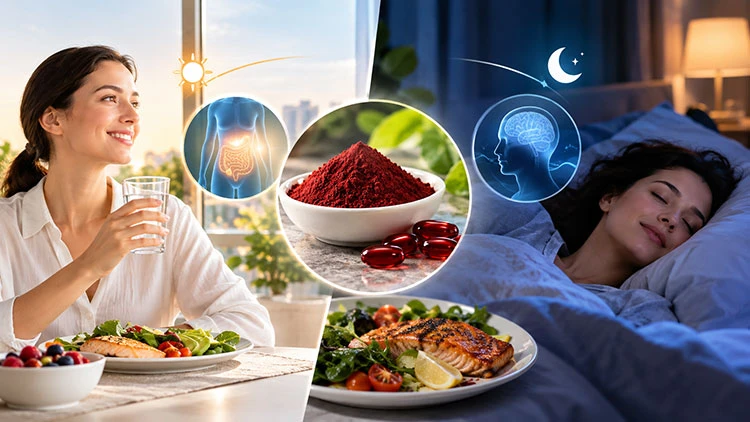
Yes, it's safe to take Astaxanthin at night. Even though the antioxidant benefits are significantly the same throughout the day, it's better to take it with fats from the food you have eaten. In the formulation of dietary supplements or functional foods with astaxanthin powder, it is necessary to take into account the exact details of the administration time, pharmacokinetics, and molecular stability in order to maximize the functions for both the end consumer and the commercial developer. This detailed overview examines the structure, formulation requirements, and usage recommendations for astaxanthin supplementation in different diets.
Pharmacokinetics and Absorption Dynamics of Astaxanthin
The xanthophyll carotenoid, astaxanthin, is a naturally occurring pigment with a unique molecular structure that determines its metabolism in humans. Its passage through the gut is totally dependent on lipid-based micellar incorporation because it is a strongly lipophilic compound.
1. Lipophilic Solubility Requirements:
As astaxanthin is not water-soluble, the presence of lipids in the diet is much more important than the time of day that it is consumed, as compared to whether it is eaten in the morning or at night.
2. Plasma Transport Mechanisms:
Absorbed astaxanthin is incorporated into mixed micelles and delivered to circulating lipoproteins such as LDL and HDL, which then transport astaxanthin to tissues. After absorption, astaxanthin is delivered to circulating lipoproteins, such as LDL and HDL, which subsequently deliver astaxanthin to tissues.
3. Tissue Accumulation Profiles:
Astaxanthin is unique in that its polar terminal rings traverse the whole cell membrane, providing structural protection to the hydrophilic and the hydrophobic layers of cellular tissues for long periods of time.
Timing Considerations: Morning Versus Evening Ingestion
One of the common questions consumers ask is, "Is it better to take it in the evening or in the morning?" but physiological tests suggest there are acceptable times of day.
1. Metabolic Independence from Circadian Rhythms:
Human clinical studies reveal that xanthophyll carotenoids are metabolically assimilated before and after nighttime supplementation without affecting or impeding metabolic assimilation during the day.
2. Meal Pairing Significance:
Those who have their main meal of fat at night can take astaxanthin powder or softgels at nighttime meals because healthy fats promote the most optimal bioavailability.
3. Absence of Stimulatory Compounds:
Pure astaxanthin does not contain any stimulants of the central nervous system, and won't compromise the natural sleep architecture when taken at night.
Chemical Stability Factors and Industrial Manufacturing Considerations
The stability of astaxanthin raw materials during formulation and/or storage is critical for successful commercialization for formulators and brand developers.
1. Light and Oxygen Susceptibility:
The unprotected astaxanthin has conjugated double bonds, making it prone to oxidation and photodegradation, requiring the use of opaque packaging and inert gas flushing during industrial production runs.
2. Esterified Versus Free Forms:
Haematococcus pluvialis- derived natural astaxanthin is mainly present in the form of esters with much higher thermal stability and resistance to oxidative stress than free astaxanthin is synthetic.
3. Advanced Encapsulation Technologies:
The protection that can be provided to the active compound from degradation in the stomach can also be increased considerably by the enhanced overall systemic bioavailability achieved by modern delivery systems such as lipid-based nanoemulsions and microencapsulation matrices.
Optimal Dosage Ranges and Commercial Application Parameters
Proper dose recommendations are crucial for product formulation, regulatory and compliance requirements, consumer satisfaction, and product quality consistency throughout the world.
1. Standard Dietary Supplement Doses:
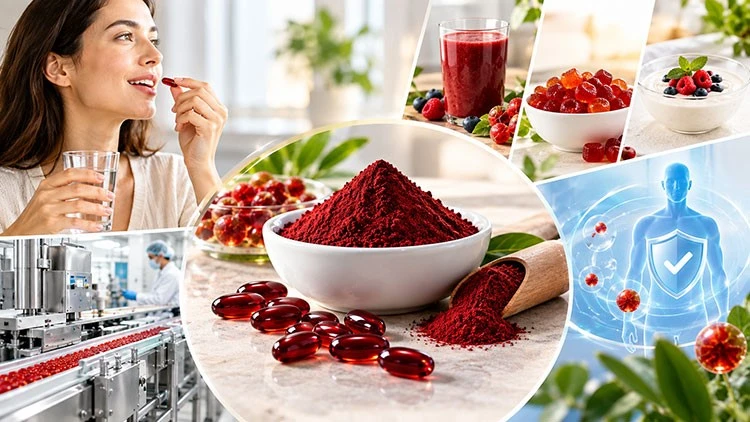
Most commercial preparations contain 4 to 12 milligrams per day, depending on the specific usage and positioning in the wellness marketplace.
2. Functional Food and Beverage Incorporation:
The inclusion of astaxanthin powder into oil-based matrices, functional gummies, or dairy alternatives is complicated by the need to carefully control the temperature during the production process to avoid premature degradation of the carotenoids.
3. Regulatory and Safety Compliance:
Long-term, extensive toxicological testing has demonstrated that high-purity natural astaxanthin has an exceptionally good safety profile with no adverse systemic buildup observed with long-term daily use.
Synergistic Ingredients in Advanced Formulation Design
In the formulation of products, astaxanthin is often formulated with other compounds to improve the overall effect and differentiate it from the other competitors in the market.
1. Omega-3 Fatty Acid Matrices:
When combined, astaxanthin and fish oil (or an algal source of omega-3 fatty acids) can provide the lipid carrier that is needed for carotenoid absorption, along with a synergistic nutritional benefit.
2. Tocopherols and Vitamin E:
The combination of natural derivatives of Vitamin E provides double protection as a free radical scavenger in the lipid matrix and improves the shelf life of the product.
3. Phospholipid Delivery Enhancers:
Lecithin or other phospholipids enhance the ability to form micelles in the gut, thus lowering particle size barriers and increasing the rate of uptake in the system.
Can I Take Astaxanthin At Night?
In summary, the question of whether or not it's suitable to eat in the dark comes out as a positive answer, as astaxanthin works effectively at any time of day. The use of proper utilization depends greatly on lipid accompaniment, product stability management, as well as strict scheduling constraints, and is not limited to formulation design. To achieve this, brands can follow the known manufacturing process and use the best possible delivery systems to incorporate astaxanthin into a variety of consumer regimens.
You can contact us directly or email donna.zh@kingsci.com to obtain further information and free samples.
FAQ
Q1: Is it better to take astaxanthin supplements in the morning or at night?
Taking astaxanthin supplements during the evening is not a disadvantageous time. The amount of absorption is determined by the amount of fat in the diet, not by the time of day, and therefore an evening dose taken with dinner is as effective as a morning dose.
Q2: Does taking astaxanthin powder at night interfere with sleep quality?
Pure astaxanthin powder and natural extracts are free of stimulants and caffeine, along with any compounds that affect the central nervous system, so taking them at night won't affect sleep patterns or cause insomnia.
Q3: What type of meal is best paired when consuming astaxanthin?
Astaxanthin is a fat-soluble xanthophyll, which means it needs dietary fats (avocados, olive oil, nuts, or fish) to be processed into mixed micelles in the gut and maximise its bioavailability when absorbed systemically into circulation.
Q4: How should raw astaxanthin ingredients be stored to preserve stability?
Bulk astaxanthin ingredients must be kept in airtight containers with a low oxygen content, and away from sunlight, heat, and humidity.
References
1. Capelli, B., & Cysewski, G. R. (2020). Potential health benefits of astaxanthin: A comprehensive review. Nutrients, 12(9), 2695.
2. Higuera-Ciapara, I., Felix-Valenzuela, L., & Goycoolea, F. M. (2021). Astaxanthin: A review of its chemistry and applications. Critical Reviews in Food Science and Nutrition, 61(14), 2315-2330.
3. Ambati, R. R., Phang, S. M., Ravi, S., & Aswathanarayana, R. G. (2022). Astaxanthin: Sources, extraction, stability, biological activities and its commercial applications-A review. Marine Drugs, 20(8), 512.
4. Williamson, G., & Manach, C. (2023). Bioavailability and bioefficacy of polyphenols in human health. Annual Review of Food Science and Technology, 14, 345-371.


